

You scrub the toilet before guests arrive, but the stubborn brown ring still makes the bowl look dirty. Why does it remain when the rest of the bathroom looks spotless?
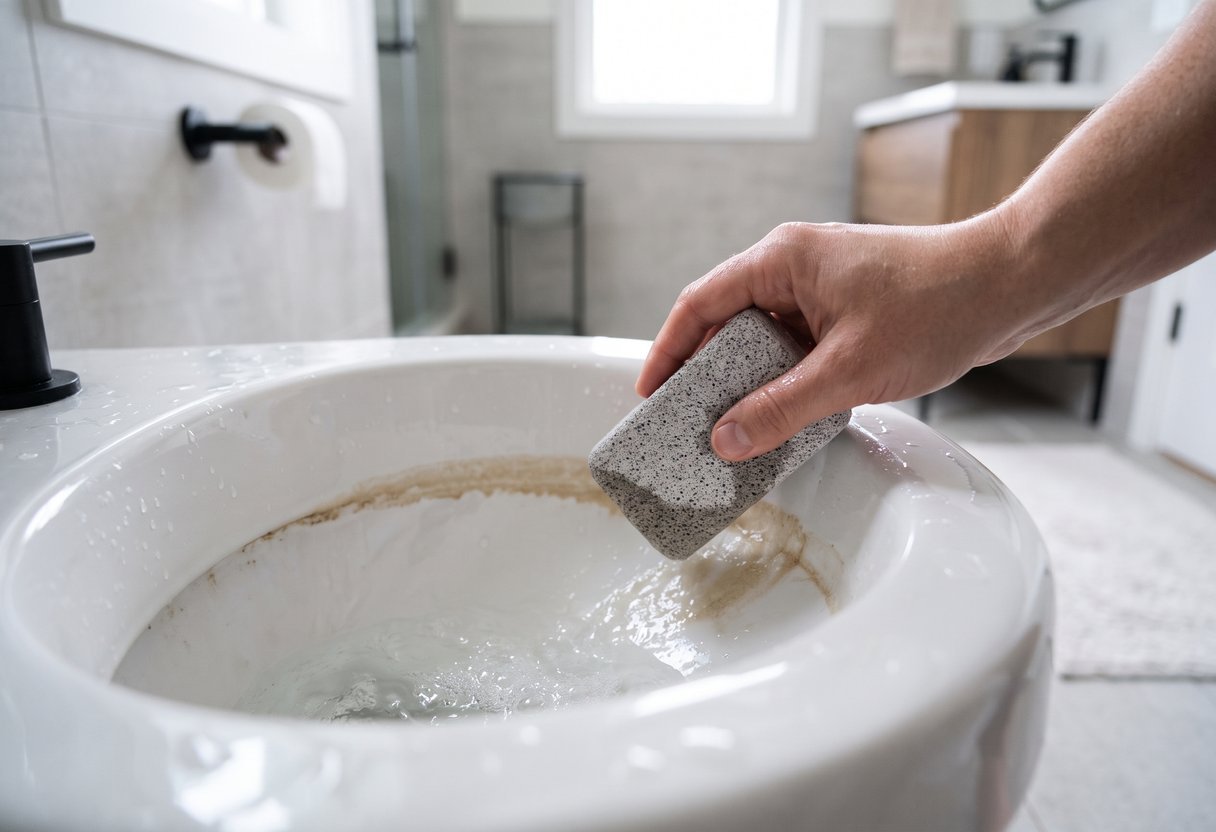
After a flush, a brown line remains at the waterline, even though the bowl looks clean everywhere else. Another dose of bleach may leave the mark untouched, and scrubbing harder may not help. A more targeted approach can make a difference, but the first step is figuring out what ordinary cleaning has missed.
A wet pumice stone removes stubborn mineral rings
A wet pumice stone is a practical way to remove a brown hard-water ring that bleach cannot dissolve and vinegar has not lifted. It scrubs mineral buildup off glazed porcelain without relying on another liquid cleaner. The water matters: it keeps the stone moving smoothly against the bowl and reduces the risk of scratches.
- Neither dish soap nor vinegar, the way to get the sticky label glue off jars you want to keep
- Your turkey shouldn’t thaw on the counter, and the fridge math is what most people get wrong
Thoroughly wet both the pumice stone and the stained porcelain. Rub the ring gently back and forth with light pressure, keeping both surfaces wet throughout, then flush away the loosened residue. There is no set scrubbing time; stop if the mark does not lift with gentle strokes rather than pressing harder.
Use genuine pumice only on a porcelain toilet bowl, not on a non-porcelain fixture or an unknown finish. Never scrub with a dry stone. If the surface appears damaged or the stain remains after gentle cleaning, switch to a toilet-bowl cleaner labeled for mineral stains instead of increasing the pressure.
Brown rings form when minerals collect at the waterline
Hard water carries dissolved minerals, including calcium, magnesium and iron. As water evaporates at the bowl’s waterline, deposits remain; rust from iron gives many rings their brown color. A gray or black waterline ring can also be mineral buildup, while a pink or orange ring may be associated with bacteria rather than limescale.
That difference explains why bleach alone is a poor choice for a brown mineral ring. Bleach disinfects and whitens, but it is not an acid and does not dissolve limescale. It may even darken a rust stain, so a ring that survives bleach calls for mineral removal, not more bleach.
A toilet-bowl cleaner offers another option for stubborn stains
Bar Keepers Friend Toilet Bowl Cleaner is made to cling to and dissolve hard-water deposits, rust stains and rings. Apply it only as directed on the product label, including the stated contact time, then brush and flush as instructed. Built-up stains may need another application rather than harder scrubbing.
Wear gloves and ventilate the bathroom when using a cleaning product. Keep children and pets away from the bowl during treatment, and never mix bleach with vinegar, ammonia or another cleaner. If a reddish-brown rust stain persists, consider a dedicated rust remover such as CLR only if its label permits use on that toilet surface.
Vinegar can help with lighter limescale
Vinegar is an acid, so it can dissolve some mineral buildup; it is not useless against toilet rings. It may be less effective on a thick, long-set ring or a pronounced rust stain, which is when wet pumice or a product made for those deposits is more useful.
For a lighter stain, one borax and vinegar method uses about 1/4 cup of borax spread over the stain with a toilet brush, followed by 1 to 2 cups of white vinegar. Scrub and flush after treatment, and do not use the mixture in a bowl containing bleach or another cleaner. For a stubborn brown ring, start with a wet pumice stone and light pressure rather than repeated bleach treatments.


Leave a Reply