

You rinse an empty pasta sauce jar for reuse, but a tacky patch where the label sat keeps grabbing at your fingers. A regular wash barely helps, and the reason it clings may surprise you.
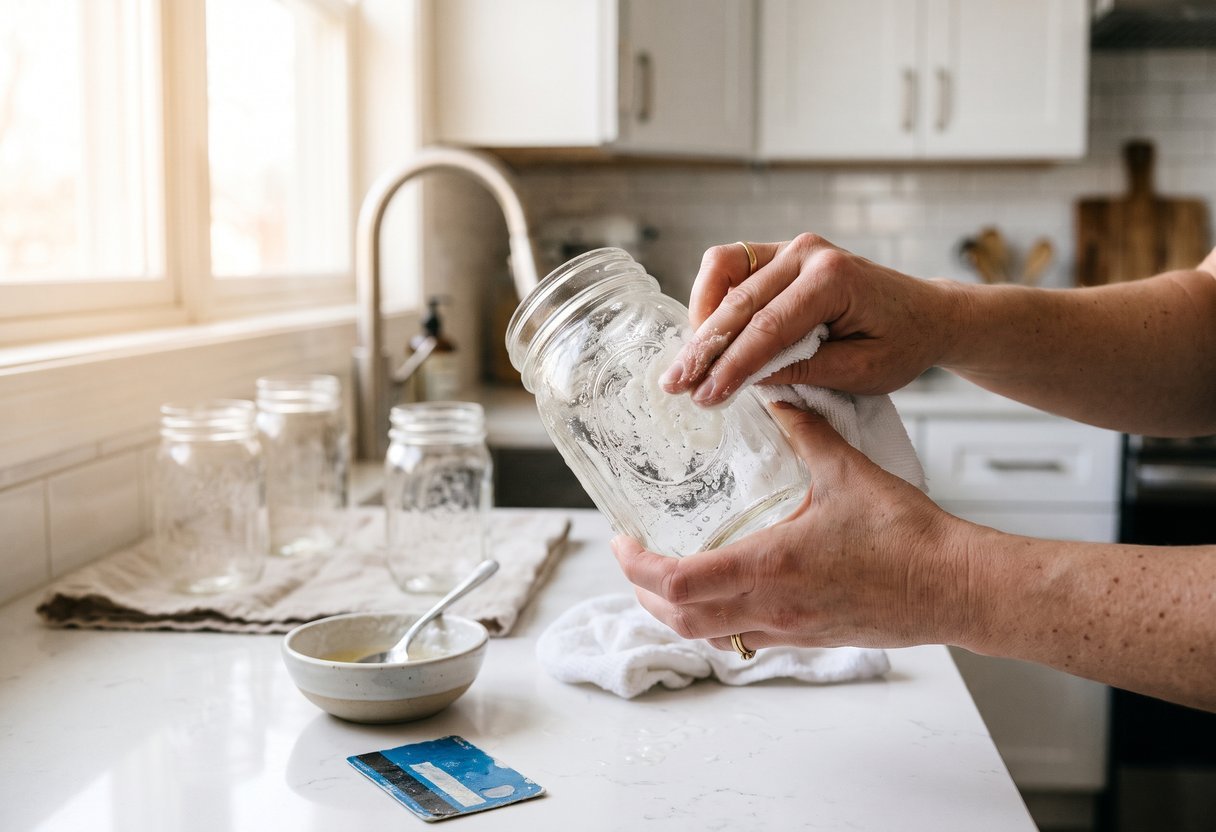
A pickle jar catches on a kitchen towel as it comes off the drying rack, even though the glass looks clean. Another wash with hot water and dish soap removes food residue but leaves the label’s sticky film behind. Scraping harder can scratch the glass without clearing the patch. A simple change in how the film is treated can make the jar ready to reuse.
Oil loosens the glue that labels leave behind
Vegetable oil and baking soda remove sticky label residue from glass jars because the oil loosens the oily adhesive and the baking soda helps scrub it away. The paste is useful after the paper label has been peeled off but a tacky film remains on the glass.
That film can make a clean jar unpleasant to handle and difficult to reuse. Treat the glue separately from the paper label: a soak may help lift the paper, but it may leave the adhesive behind.
- Your turkey shouldn’t thaw on the counter, and the fridge math is what most people get wrong
- Not bleach and not a magic eraser, the way to get a stubborn stain out of a laminate countertop
Soap and vinegar do different jobs
Sticker glue contains oily, nonpolar compounds. Water and plain vinegar do not dissolve that residue well, while oil is better suited to loosening it. Dish soap is still useful afterward because it washes the oil off the jar.
Vinegar may help loosen an intact paper label, and warm water with dish soap or baking soda can also make a label easier to peel. Those approaches are less dependable for the sticky glue left after peeling. If vinegar has been used, rinse the jar before using another cleaner; never mix bleach with vinegar or ammonia.
Oil and baking soda make a simple cleaning paste
For a bare glass jar, spread a generous amount of vegetable oil over the glue. Let it sit for 10 to 15 minutes, then wipe with a cloth or gently lift softened residue with a plastic scraper or old credit card. Coconut oil is another option: dab it onto the label and glue and leave it for at least 15 minutes before wiping.
If oil alone leaves sticky spots, mix 1 teaspoon of vegetable oil with 1 teaspoon of baking soda. Spread the paste over the residue, let it sit for 10 to 20 minutes, then rub gently with a cloth or fingers. The oil loosens the glue while the baking soda thickens the mixture and provides mild scrubbing action.
Wash the jar with warm water and dish soap after either treatment, then rinse away the oil and grit. Mix only what is needed for the job: a stored oil-and-baking-soda paste can separate, leaving a hardened layer of baking soda at the bottom.
Glass is a better surface for oil than porous materials
Keep oil-based treatments off unfinished wood and fabric, where oil can soak in and leave a stain. On glass, use a plastic scraper rather than a metal blade or steel wool, which can scratch the surface.
Some adhesives need another application rather than harder scrubbing. Keep the paste and any cleaning products out of reach of children and pets, and wash a jar thoroughly before using it for food storage.
Stubborn residue may need a different remover
If a second oil treatment leaves glue behind, a commercial adhesive remover from a hardware or home supply store is another option. Follow its label directions, including any surface and cleanup instructions, especially if the jar will hold food.
For a small amount of loosened residue, try warm, soapy water and a microfiber cloth before moving to another product. Work on the remaining glue rather than repeatedly soaking a label that has already come off.




Leave a Reply