

Your old dining table looks fine until afternoon sunlight catches pale scratches left by keys, plates, and everyday use. Why do some of those marks stand out while others seem to disappear into the wood grain?
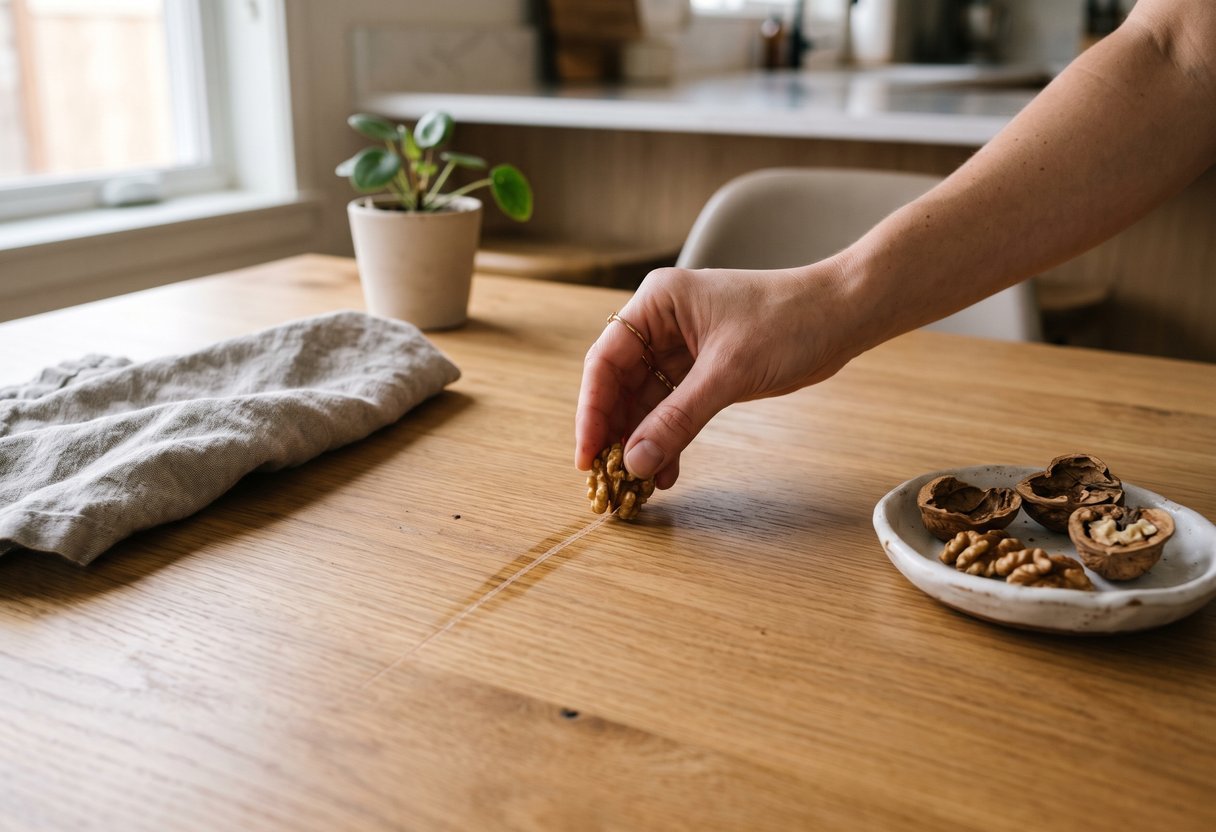
A thin mark on an old wooden side table is still visible after the dust is wiped away. More cleaning will not remove a scratch, while sanding the whole piece may be too much for a small blemish. A simpler approach may make a light mark less noticeable, but it cannot repair a deep gouge or a painted surface. The first thing to check is how far the damage goes.
A walnut can disguise a light scratch on wood furniture
Rubbing shelled walnut meat over a light scratch can make it less noticeable because the nut releases oil and brown pigment onto exposed wood fibers. This is a cosmetic fix for shallow surface damage, not a repair for a gouge that cuts deeply into the wood.
Everyday use can leave fine marks on tables, chairs, and other wood furniture, including marks from objects moved across the surface. A walnut is worth trying when the scratch is narrow and shallow, especially if its pale exposed fibers stand out against the surrounding finish. It cannot restore missing wood or make an uneven surface smooth.
Walnut oil and pigment help the scratch blend in
When walnut meat is rubbed against a scratch, it releases natural oils and brown pigments. These can soak into exposed fibers and darken the line, reducing the contrast between the scratch and the surrounding wood. The soft nut meat may also settle into tiny surface gaps, making a shallow mark less visible.
The effect depends on the furniture’s color and the depth of the damage. Walnut pigment may be too light, too dark, or otherwise noticeable against the existing finish. Try it first on a small, inconspicuous spot if a color change would be difficult to hide.
Rub the walnut along the wood grain
Use a shelled walnut or walnut half and a clean, soft cloth. Rub the nut meat firmly back and forth over the scratch, following the direction of the wood grain so the oil and pigment reach the length of the mark. The shell is not needed.
Leave the oil on the scratch for 1 to 2 minutes, then buff gently with the cloth to remove excess oil and blend the treated area. If a walnut half is available, press its freshly exposed, oily interior against the scratch while rubbing. Check the result after buffing rather than leaving loose nut pieces on the furniture.
Keep walnuts and loose pieces away from young children and pets, and avoid this method in a household where walnut exposure is a concern because of an allergy. A furniture touch-up product is a better choice in that situation.
Deep or painted damage needs a different repair
Walnut oil cannot fill a deep gouge or replace wood that has been torn away. Paint also prevents the oil from working into exposed wood fibers as intended, and the uneven mark can remain visible. Laminated surfaces likewise lack the exposed wood grain this method relies on.
For a deeper scratch, use a wood filler or wax touch-up stick suited to the surface. Extensive damage may call for sanding and refinishing, while a large or highly visible piece may be best handled by a furniture repair professional. Start with the walnut only when the mark is shallow enough that disguising its color would make a useful difference.
Leave a Reply