

You wipe up spilled coffee after breakfast, but a brown mark still clings to your laminate countertop. Scrubbing harder feels tempting, yet how do you tackle the stain without leaving the surface looking worse?
Afternoon light reveals a red ring where a sauce jar sat on the laminate countertop overnight. A quick wipe removes surface residue, but color left by a spill that sat too long can remain. Bleach may damage the finish, and abrasive sponges can dull a glossy surface. A gentler approach takes more patience, especially if the stain has been there for days.
A hydrogen peroxide paste can lift food and drink stains
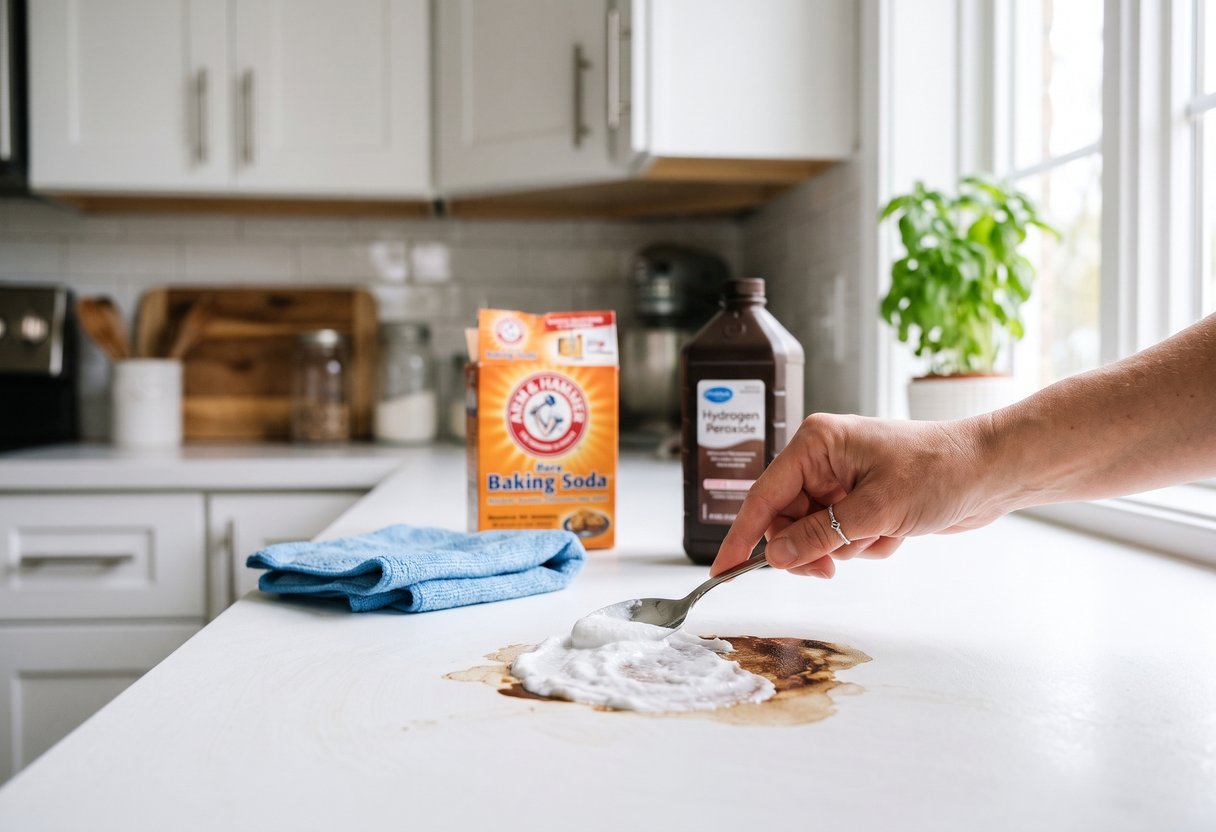
A baking soda and hydrogen peroxide paste is 1 way to treat a stubborn food or drink stain on a laminate countertop. Hydrogen peroxide helps break down the colored residue, while the paste holds it against the stain long enough to work. It is an alternative to bleach, which can damage laminate’s finish.
- Your box grater has four sides, and the one nobody touches is for something specific
- Not vinegar and not baking soda, the way to get the water spots off a stainless steel fridge door for good
Mix baking soda with enough hydrogen peroxide to make a spreadable paste, then cover the stain without scrubbing. Leave the paste in place to work, and gently wipe it away with a damp cloth. No tested ratio or set waiting time is established for this particular paste on laminate, so check the result before repeating the treatment rather than rubbing harder.
Laminate resists spills, but its surface can still stain
Laminate has a decorative layer protected by melamine resin over layers that include kraft paper. That finish provides some resistance to spills, but a colored liquid left on the surface can still leave a mark. Residue caught in scratches or along a seam can be harder to remove than a fresh spill on an intact surface.
Wipe up coffee, wine, and other colored spills promptly, then clean the area with a damp cloth. If the mark remains, a peroxide treatment is more appropriate than trying to scrape it away. A stain that has penetrated a damaged seam may not respond to surface cleaning.
A flour poultice gives older food stains more contact time
For a stubborn food stain, another option is a poultice made from flour and hydrogen peroxide. Mix them to a creamy, peanut-butter-like consistency, then spread the mixture about 1/4 inch (6 mm) thick over the stain, extending 1/4 inch (6 mm) beyond its edges. Leave it for 24 hours, then remove it gently with a damp cloth.
A stain less than 1 day old may lift after about 10 hours with a peroxide poultice, but older, darker stains can require repeated applications. Keep the treatment away from seams where prolonged moisture could reach the countertop’s paper-based layers. Keep children and pets away from a countertop while a poultice is sitting on it.
Harsh cleaners can make the damage permanent
Bleach can discolor laminate or damage its decorative finish. Steel wool and scouring pads can scratch it, while melamine-foam products such as Magic Erasers can dull a glossy surface because the foam is mildly abrasive. Avoid abrasive cleaning tools when treating a stain rather than increasing pressure when a gentle method fails.
Never mix bleach with vinegar or ammonia. Peroxide treatments are better suited to food stains than to discoloration caused by chemicals or damage to the finish; repeated cleaning will not repair a scratched or bleached surface. If gentle treatments leave the mark unchanged, stop scrubbing and ask a countertop professional whether the surface can be refinished.




Leave a Reply