

A pile of wrinkled work shirts can turn a quick chore into a long evening at the ironing board. Why does each shirt seem to need so many passes?
A shirt sleeve looks smooth under the iron, then shows creases when it is turned over. Another pass can smooth one side while the other still needs attention. Repeating that process takes time, but the iron is not necessarily the problem. A small change to the ironing setup may help.
Foil under the cover can make ironing faster
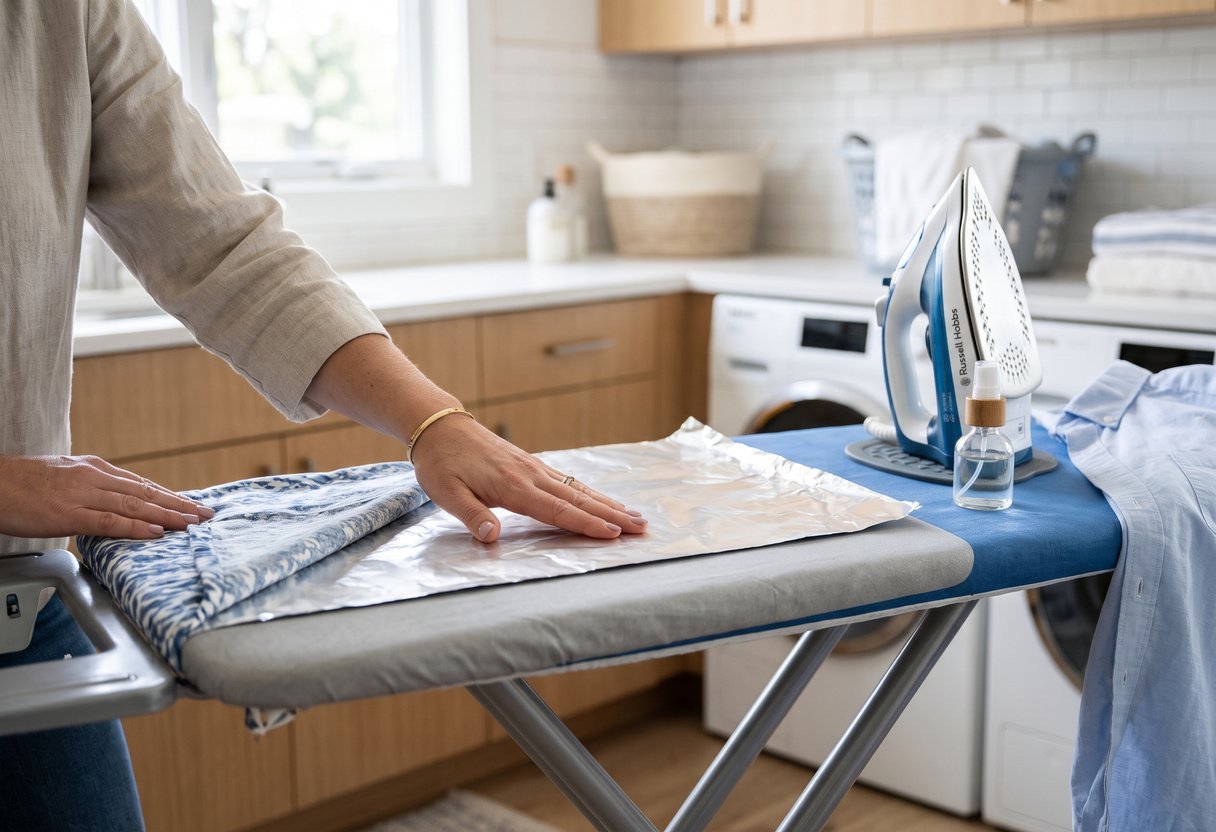
A sheet of aluminum foil beneath an ironing board cover reflects some of the iron’s heat back toward the garment, which may help smooth wrinkles with fewer passes. It sits between the board and its fabric cover, not against the clothes. The reflected heat reaches the underside of the fabric while the iron presses from above.
- Neither vinegar nor lemon, the way to get a cloudy glass coffee carafe clear again in ten minutes
- The grade on your maple syrup bottle changed meaning in 2015, and most people still buy by the old rules
Without that layer, some heat travels into the board and its padding instead of staying near the garment. Foil can reduce that heat loss, but it does not act like a second iron: the iron still supplies the heat and pressure. Claims that the method cuts ironing time in half should not be treated as a guaranteed result.
A flat sheet of foil belongs beneath the cover
Unplug the iron and let the board cool before removing its cover. Cut 1 sheet of aluminum foil large enough to cover the board’s top surface, then lay it flat with the shiny side facing up. Replace the cover snugly so the foil stays hidden and does not bunch beneath the fabric.
Iron as usual, following each garment’s care label for the appropriate setting. Start with a garment that normally needs several passes, and check whether wrinkles smooth out sooner. The foil may be more useful on cotton or linen than on fabrics that must be pressed at low heat, where there is less heat to reflect.
The cover protects the garment and iron
Do not iron directly on exposed foil. The fabric cover separates the garment and the iron’s soleplate from the metal, helping prevent snagging or marks. If the cover shifts or the foil wrinkles underneath, stop, let the board cool and refit both layers before continuing.
Foil’s high ignition temperature makes it unlikely to catch fire from a household iron in normal use, but it does not make an iron safe to leave unattended. Keep children and pets away from the hot iron and its cord. For delicate fabrics, use the care label’s setting rather than raising the temperature to get a stronger effect from the foil.
Fabric and board setup affect the result
A thick cover may limit how much reflected heat reaches the garment, while a low iron setting may make the difference hard to notice. If wrinkles still need repeated passes, check that the setting suits the fabric and that the cover lies flat. Do not turn the iron above the care label’s recommended setting just to press faster.
A heat-reflective ironing board cover, such as the Bo Nash Ironslide 2000, is another option for someone who irons frequently. For an occasional load, a flat sheet of foil under a secure cover is a simple way to try the approach without changing how the garment contacts the board.


Leave a Reply