

You follow the directions on a frozen dinner, but the center stays cold while the edges turn rubbery. Why does the same meal cook perfectly in one kitchen and disappoint in another?
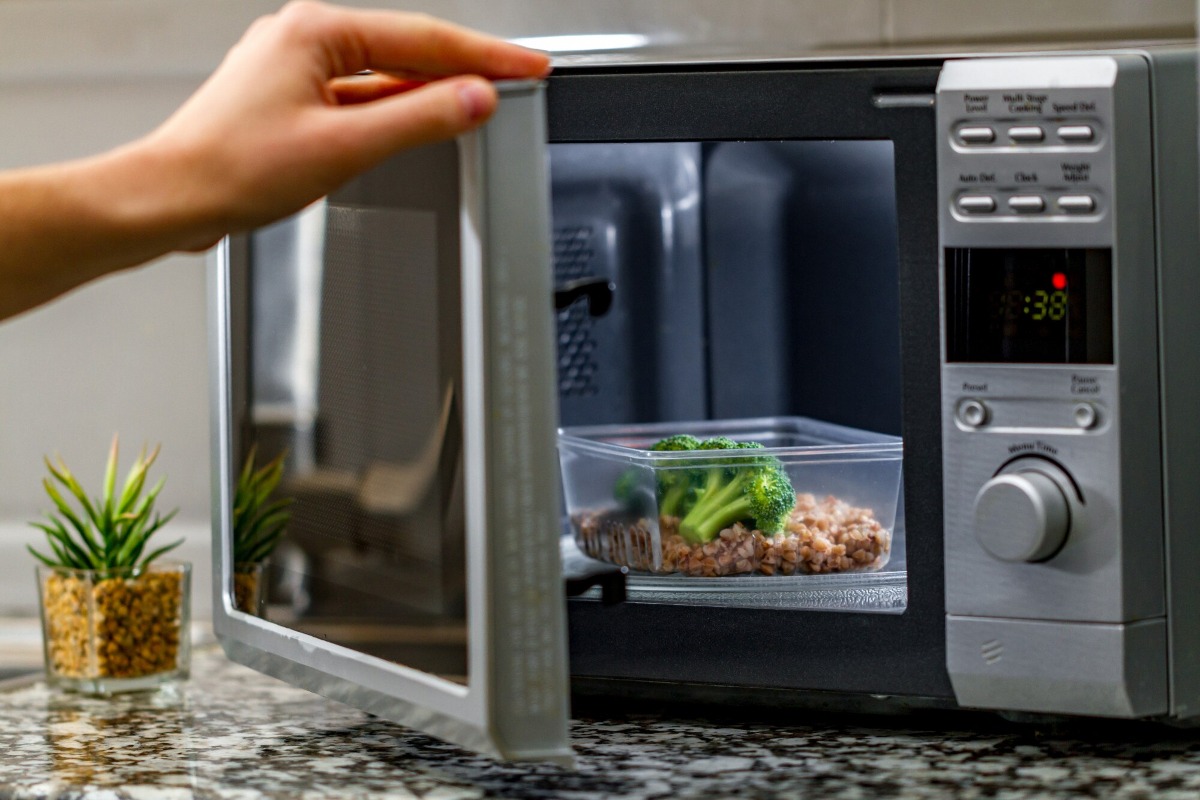
A bag of frozen vegetables comes out of the microwave steaming, but some peas are still cool when it is opened. The time printed on the bag seemed precise, so adding another minute feels like the only option. That guess can overcook some pieces without heating the rest evenly. A quick check before cooking can make the package directions a more useful starting point.
Microwave wattage changes how long frozen food needs to cook
Microwave wattage is the oven’s cooking power, and it matters because many frozen-food directions assume a microwave of about 1,000 watts. A lower-wattage oven generally needs more time to heat the food; a higher-wattage oven may need less. The cook time on a package is a starting point, not a guarantee that every microwave will heat the food equally.
- Lining your ironing board with foil under the cover, what it’s for and why it cuts ironing time
- Neither vinegar nor lemon, the way to get a cloudy glass coffee carafe clear again in ten minutes
Too little time can leave cold spots where harmful bacteria survive. Too much time can dry out parts of a meal before the center is hot. Check the package for a stated wattage and any restrictions before adjusting its directions.
The microwave’s label gives the best wattage estimate
Look for the wattage on the appliance’s serial number plate, often located inside the microwave door. The manual may also list it. Use that number rather than assuming the oven is 1,000 watts.
If neither is available, a boil-water test can offer a rough estimate. Heat 1 cup of water in a microwave-safe container at full power and note when it boils: less than 2 minutes suggests roughly 1,000 watts, while about 2.5 minutes suggests roughly 800 watts. Starting water temperature and the container can affect the result, so this test cannot establish an exact wattage. Handle the hot container carefully to avoid steam burns.
A time calculation provides a starting point
When the package states the wattage used for its directions, calculate a starting time this way: new time = (package time × package wattage) ÷ microwave wattage. If the directions specify 5 minutes in a 1,000-watt microwave and the oven is 800 watts, the result is 6 minutes and 15 seconds. The calculation aims to deliver roughly the same amount of energy, but it cannot correct for uneven heating.
If the package does not state a wattage, 1,000 watts may be a useful estimate, but it is not a universal labeling standard. Follow any package directions to stir, turn, cover or let the food stand, then check that it has heated throughout. Do not shorten or extend the time mechanically when the package warns against using an oven of that wattage.
Temperature checks matter more than the calculated time
Microwaves can leave cold spots even when the timer has finished. For reheated leftovers, USDA’s Food Safety and Inspection Service advises checking for an internal temperature of 165°F (74°C) with a food thermometer. For packaged frozen foods, follow the package’s cooking and temperature instructions rather than relying on appearance alone.
For thawing meat, poultry, fish or eggs, use the defrost setting or 30% power instead of full power. Some areas can begin cooking while others remain frozen, so cook these foods immediately after microwave thawing. A longer full-power cycle is not a substitute for careful thawing.
Some packages need another cooking method
A very low-wattage microwave may be unsuitable for a frozen meal if the package sets a minimum wattage or says not to microwave it. Use the listed oven or stovetop method instead; extra minutes alone cannot ensure even cooking. For foods that need precise cooking, including raw proteins or eggs, follow their specific directions and check doneness with a food thermometer.
Keep the package beside the microwave until the meal is done. Its wattage limits, stirring steps and temperature directions are more useful than a timer adjustment made in isolation.



Leave a Reply