

After carving a Halloween pumpkin, the kitchen counter is covered in stringy pulp and slippery seeds. The mess seems destined for the trash, but one part deserves a closer look before cleanup begins.
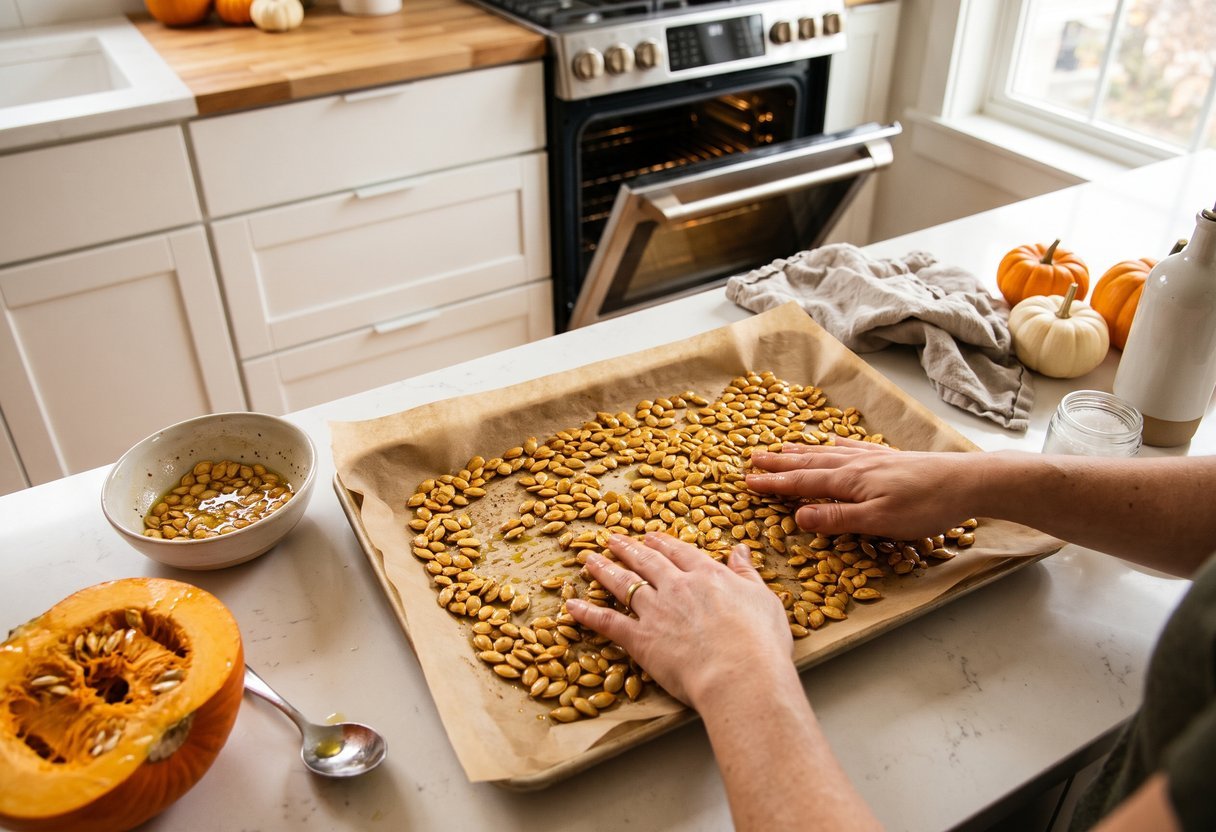
After a jack-o’-lantern is carved, its seeds often sit tangled in stringy pumpkin pulp beside the sink. Tossing the whole pile onto a baking sheet can leave damp pulp clinging to the seeds, while a very hot oven can scorch them before they roast evenly. A little preparation and gentler heat can turn those carving scraps into a crisp fall snack.
Jack-o’-lantern seeds make a useful snack
The seeds scooped from a carving pumpkin often go straight into the trash, but they can be roasted instead. Pumpkin seeds provide protein and calories, according to the University of Missouri Extension. Roasting also turns a slippery byproduct of carving into a crunchy snack that can be seasoned to taste.
Save the seeds as the pumpkin is carved, before it becomes a display. Seeds from a pumpkin that has sat outdoors or developed mold are not a good choice for food; use seeds from a fresh pumpkin instead.
Dry seeds roast more evenly
Preheat the oven to 300°F (150°C). Scoop the seeds into a colander, pull away the large strings of pulp, and rinse under cool running water. Pat the seeds thoroughly dry with a clean kitchen towel or paper towels; water left on their surfaces creates steam and can keep them from becoming crisp.
For every 1 cup of seeds, toss with 2 teaspoons olive oil and 1/4 teaspoon salt. Add pepper to taste, if desired. Spread the seeds in a single layer on a parchment-lined or lightly greased baking sheet so hot air can reach them evenly.
Roast for 25 to 30 minutes, stirring every 10 minutes. Check closely beginning at 25 minutes and remove the seeds when they look lightly golden and feel dry; oven performance and seed size can change the timing. If they still seem damp, continue roasting in short intervals rather than turning up the heat.
Seasonings and seed types can vary
For a savory batch, add onion powder or paprika before roasting. Cinnamon or a little coconut sugar offers a sweeter flavor, while chili powder adds heat. Seasonings containing sugar need especially close attention near the end because they can darken before the seeds are crisp.
Seeds from pie pumpkins and edible squash, including calabaza, can be prepared the same way. Their size may differ, so judge doneness by color and texture rather than the clock alone. Higher oven settings, such as 350°F to 375°F (175°C to 190°C), require more frequent stirring and make scorching easier; 300°F (150°C) gives the seeds more time to dry without browning too fast.
Use only pumpkins intended for food
Do not roast seeds from decorative pumpkins that may have been waxed or sprayed with chemicals, or from pumpkins with visible spoilage. If there is any doubt about how a pumpkin was treated, use a fresh, untreated pumpkin sold for cooking. Keep children and pets away from the hot oven and baking sheet, and let the seeds cool before eating or storing them.
Once cool, the seeds can be eaten plain or added to salads, soups, and trail mix for crunch. Store them in an airtight container at room temperature for up to 1 week, or refrigerate them for longer storage. Before putting the lid on, make sure they have cooled completely so trapped condensation does not soften them.
Leave a Reply