

While clearing out a kitchen cabinet, you find a familiar green piece that hasn’t been used in decades. Why do similar items at thrift stores sometimes carry surprisingly confident price tags?
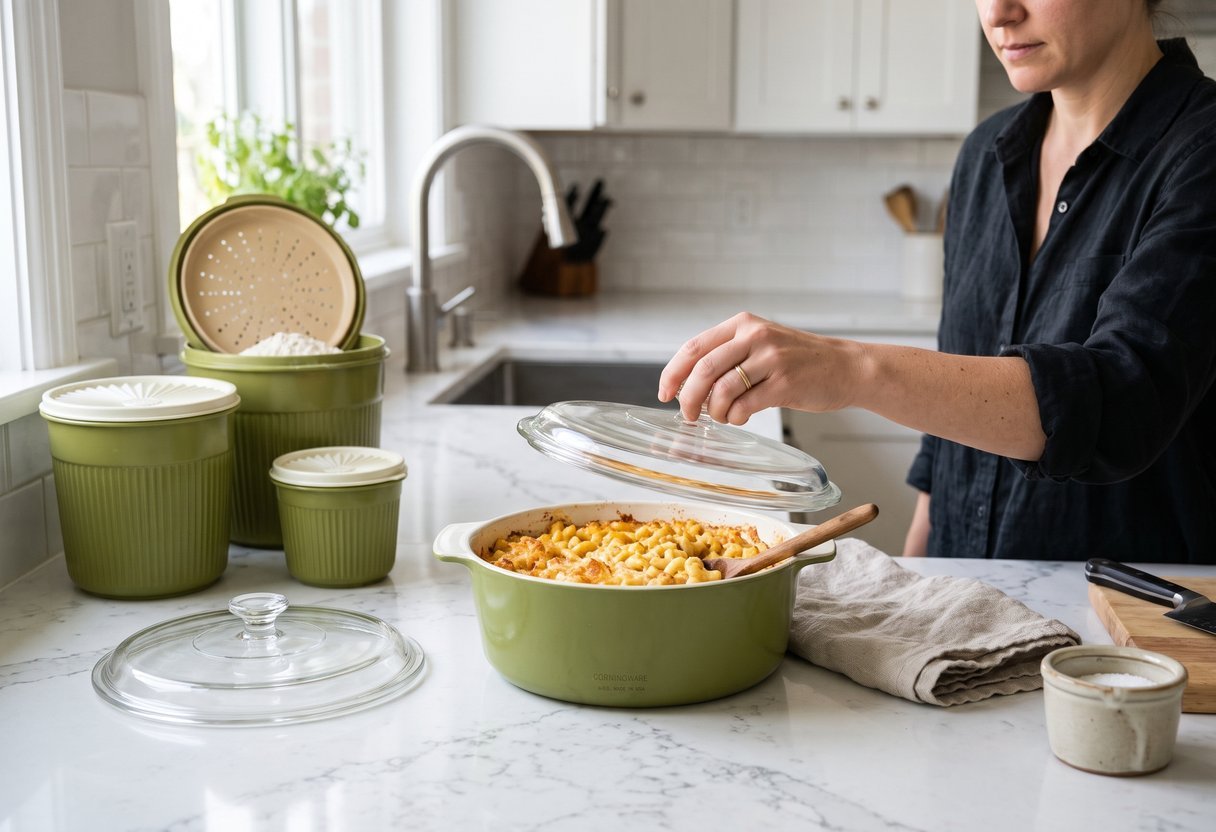
At a weekend yard sale, an avocado-green kitchen piece sits beside a handwritten sign calling it rare. Its familiar color makes the claim tempting, but a seller’s price does not show what someone will actually pay. Small details can make the difference between an ordinary find and one a collector wants.
Avocado green kitchenware recalls a recognizable era
Avocado green CorningWare and Tupperware are collectible because their color connects them to kitchens of the 1960s and 1970s. People seek these pieces for their retro appearance and, when the items are in good condition, for cooking or storage, but typical resale values are modest rather than the thousands of dollars claimed online.
General Electric introduced avocado green as a kitchen appliance color in 1966. It became a familiar sight in American kitchens during the following decade, appearing alongside similarly colored cookware and containers. The color later fell out of favor, which helps explain why an intact piece now stands out to someone furnishing or collecting a period kitchen.
Avocado green CorningWare has a practical history
Corning Glass Works introduced CorningWare in 1958 using Pyroceram, a glass-ceramic discovered by researcher S. Donald Stookey. Pyroceram resists thermal shock from sudden temperature changes, a useful property for cookware that moves between different cooking and serving conditions. That resistance does not make a chipped or cracked vintage dish safe to keep using.
Solid avocado green CorningWare casseroles from the 1960s and 1970s include pieces marked with model numbers such as P-701 and P-708. Their plain color distinguishes them from the better-known printed Cornflower Blue and Spice of Life patterns. A model number and a clear view of the dish and lid help identify what is being bought or sold.
Servalier canisters bring the color to storage
Tupperware’s Servalier line arrived in the 1970s and included avocado green pieces. The containers appeal to collectors looking for the colors that once filled kitchen shelves, while their lids and inserts make completeness worth checking. A three-piece Servalier set consists of a container, a perforated insert, and a lid.
A complete set typically brings $10 to $20, depending on condition. That figure should not be applied to every green Tupperware listing: a set with several canisters and lids is a different grouping from a single Servalier container with its insert and lid. Check that the parts shown in a listing match the parts described before comparing prices.
Sold prices give a better guide than asking prices
Claims that ordinary vintage CorningWare sells for $10,000 or more often rely on asking prices, which show what a seller hopes to receive rather than what a buyer paid. A completed sale for Spice of Life “La Marjolaine” casserole dishes with Pyrex lids was around $24.99. A value guide places an individual Cornflower Blue piece at an average of $15 to $45.
Those examples concern printed patterns, not a verified sale price for a solid avocado green casserole. They provide perspective, but they cannot establish the value of every green piece. For a closer estimate, compare completed sales for the same model, color, size, and included lid.
Condition should guide a purchase or sale
Look for chips, cracks, discoloration, and missing parts before setting a price. Check original markings and model details rather than relying on color alone, since similar-looking pieces may not be the same item. If cookware is damaged or its use instructions are uncertain, keep it for display instead of cooking with it.
For storage, inspect vintage plastic containers and lids for damage and a proper fit before using them with food. When those details cannot be checked, a current food-storage container is the more practical choice. A clear description of the exact pieces included, paired with comparable sold listings, gives buyers and sellers a sounder starting point than a striking asking price.
Leave a Reply