

Your glass coffee carafe looks cloudy again, even though you washed it right after breakfast. That stubborn film can make a perfectly good carafe seem ready for replacement, but it may not be.
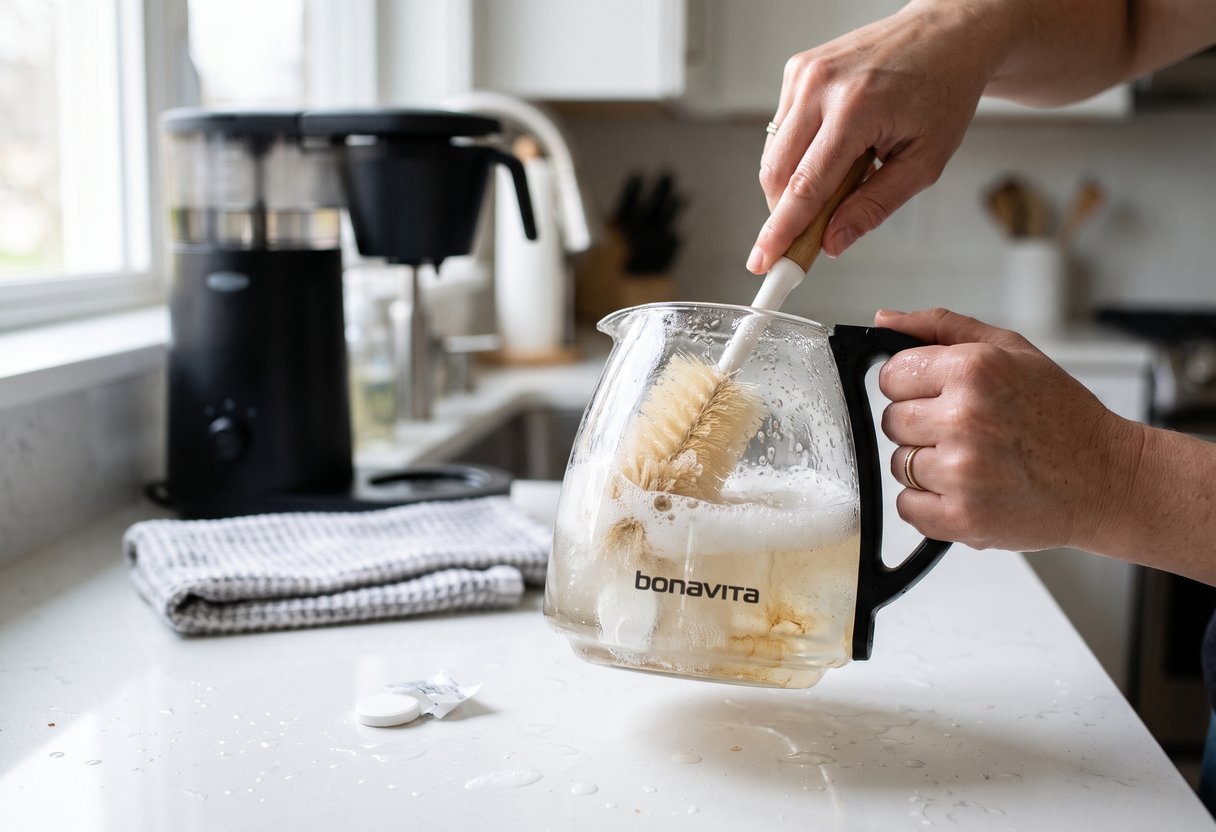
A brown ring inside the coffee carafe catches the light as the next pot brews. Another wash with dish soap may lift fresh coffee oils but leave older residue and mineral deposits behind. A simple change to the cleaning routine can help without vinegar or lemon, although the toughest stains may need more attention. Let the carafe cool to room temperature first, since a sudden temperature change can crack the glass.
Denture tablets can clean a cloudy glass carafe
To clean a cloudy glass coffee carafe without vinegar or lemon, fill it with warm water and add 2 denture cleaning tablets. The dissolved tablets loosen coffee residue and some mineral buildup, making the haze easier to scrub away. This is a cleaning option, not a guarantee that an older carafe will become completely clear.
- The grade on your maple syrup bottle changed meaning in 2015, and most people still buy by the old rules
- The milk glass your grandmother kept in the china cabinet is worth checking before you donate it
Let the tablets dissolve and leave the solution in the carafe for about 15 minutes. Swirl it gently, scrub the inside with a soft brush, then empty the carafe and rinse thoroughly with clean water before making coffee. A pack of tablets costs around $10, but cleaning the carafe requires only 2 tablets.
Coffee oils and hard water create different kinds of haze
Coffee oils cling to the inside of a carafe and can remain after a quick water rinse. Hard water leaves calcium and magnesium deposits that form a dull film as water dries. When both build up, ordinary washing may not remove every visible mark.
Denture tablets can help lift stains, but they may leave the oldest, toughest coffee residue behind. Their formulas can also contain citric acid, so they are not an acid-free choice even though they avoid vinegar and lemon. If cloudiness remains after cleaning, do not assume more soaking will fix it: mineral deposits sit on the glass surface, while permanent etching is damage to the glass itself.
Salt and ice can scrub stubborn coffee stains
For residue that remains after the tablet soak, let the empty carafe return to room temperature. Add 4 teaspoons of iodized salt, 1 scoop of ice and 1 tablespoon of water. Swirl the mixture for several minutes so the ice moves the salt against the glass, then empty and rinse the carafe thoroughly.
This method uses physical abrasion rather than a cleaning solution to loosen stains. It takes some effort and may not remove mineral haze or permanent etching. Handle the carafe carefully while swirling; if its glass is chipped or cracked, stop using it rather than trying to scrub it clean.
Temperature changes and cleaning chemicals need care
Do not put ice into a hot carafe or pour boiling water into a cool one. A sudden temperature change can crack or shatter glass, so let the carafe cool to room temperature before either method and use warm, not boiling, water for the tablets. Keep tablets and cleaning solutions away from children and pets.
Do not mix denture-tablet solution with other cleaners. In particular, never mix bleach with vinegar or ammonia. If a rinsed carafe still has a removable mineral film, use a cleaner labeled for that purpose and follow its directions; if the glass itself is etched, cleaning will not restore its clarity. For routine care, start with the 15-minute tablet soak and reserve salt and ice for residue that remains.


Leave a Reply