

At the grocery store, maple syrup labels can make a simple pancake purchase feel oddly confusing. Two bottles with different descriptions might leave you wondering what you’re actually paying for.
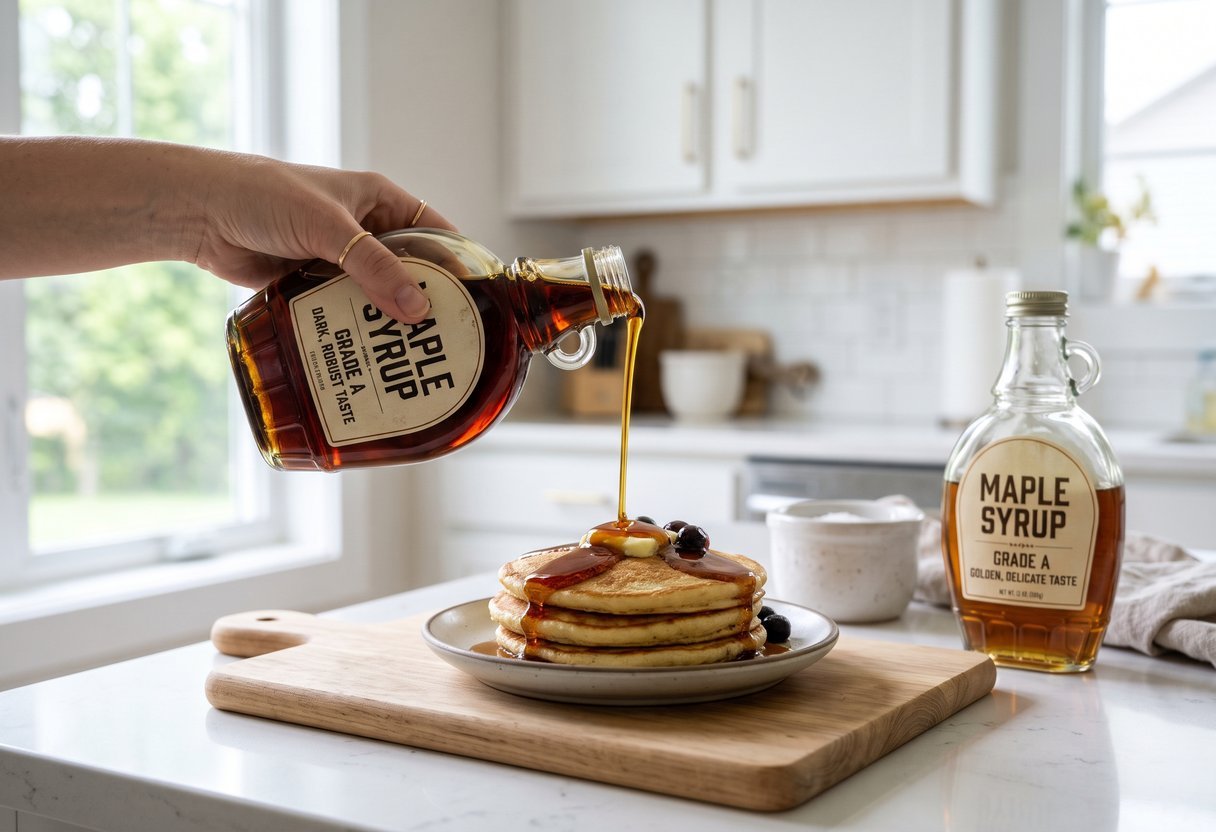
At breakfast, the maple syrup tastes stronger than expected, even though the bottle carries a familiar grade. Choosing by grade alone can miss the flavor a stack of pancakes or a recipe needs. A small detail on the label can make that choice clearer.
Why the maple syrup grading system changed
The USDA changed maple syrup grades in 2015 to make color and flavor clearer to shoppers and align U.S. standards with Canada’s. The change removed the old Grade B designation and gave darker syrup a place among the Grade A choices when it met the requirements for table use.
- The milk glass your grandmother kept in the china cabinet is worth checking before you donate it
- Neither Dawn nor vinegar, the way to get the orange stains out of plastic containers after spaghetti sauce
The International Maple Syrup Institute, which represents producers in both countries, requested the change. The revised USDA standards took effect on March 2, 2015. USDA noted that shoppers increasingly wanted the darkest syrup for cooking and table use, even though the old Grade B designation could make it sound like an inferior choice.
Today’s Grade A labels describe color and taste
Before the change, shoppers generally associated Grade A with lighter syrup and Grade B with darker, stronger-tasting syrup. Under the former federal standard, the category was officially called “Grade B for Reprocessing” and was not intended for retail sale in containers smaller than 5 gallons. The current system uses Grade A for syrup that meets its requirements, with 4 classes that describe what a shopper can expect:
- Grade A Golden, delicate taste: the lightest class, with light transmittance of 75.0% or higher.
- Grade A Amber, rich taste: a medium-color class, with light transmittance of 50.0% to 74.9%.
- Grade A Dark, robust taste: a darker class, with light transmittance of 25.0% to 49.9%.
- Grade A Very Dark, strong taste: the darkest class, with light transmittance below 25.0%.
Light transmittance measures how much light passes through the syrup: a lower percentage means a darker syrup. Color is linked to flavor, but it is not a quality ranking. Later-season sap can produce darker, stronger-tasting syrup after boiling because bacteria convert some of its sucrose into other sugars; dark color is not simply a sign that the syrup was cooked longer.
Dark syrup is not automatically lower quality
Putting the color classes under Grade A separates flavor preference from the idea that a higher letter means better syrup. It also gives producers in the U.S. and Canada more consistent terms for labeling and trade. A shopper choosing between Amber and Dark is choosing a flavor profile, not deciding which one is fit for the table.
There is a limit to what color can tell a shopper. Syrup with off-flavors or damage does not meet Grade A requirements and falls under Processing Grade, which is not intended for retail sale. A dark bottle should not be treated as the equivalent of that separate category simply because its flavor is strong.
Old Grade B recipes still have useful clues
Some recipes and shopping habits still use “Grade B,” though it is no longer a current grade on retail labels. For a recipe calling for dark, strongly flavored Grade B syrup, look first at Grade A Dark, robust taste, or Grade A Very Dark, strong taste. Those labels are more useful than searching for the old letter alone.
For a lighter flavor, look for Grade A Golden, delicate taste, or Grade A Amber, rich taste. Read both the color and taste words on the bottle before buying: they identify the flavor choice the current system was designed to make clear.



Leave a Reply