

Last night’s spaghetti leftovers are gone, but the plastic container still has an orange tint after a trip through the dishwasher. Before you toss it, there’s a less obvious way to tackle the stain.
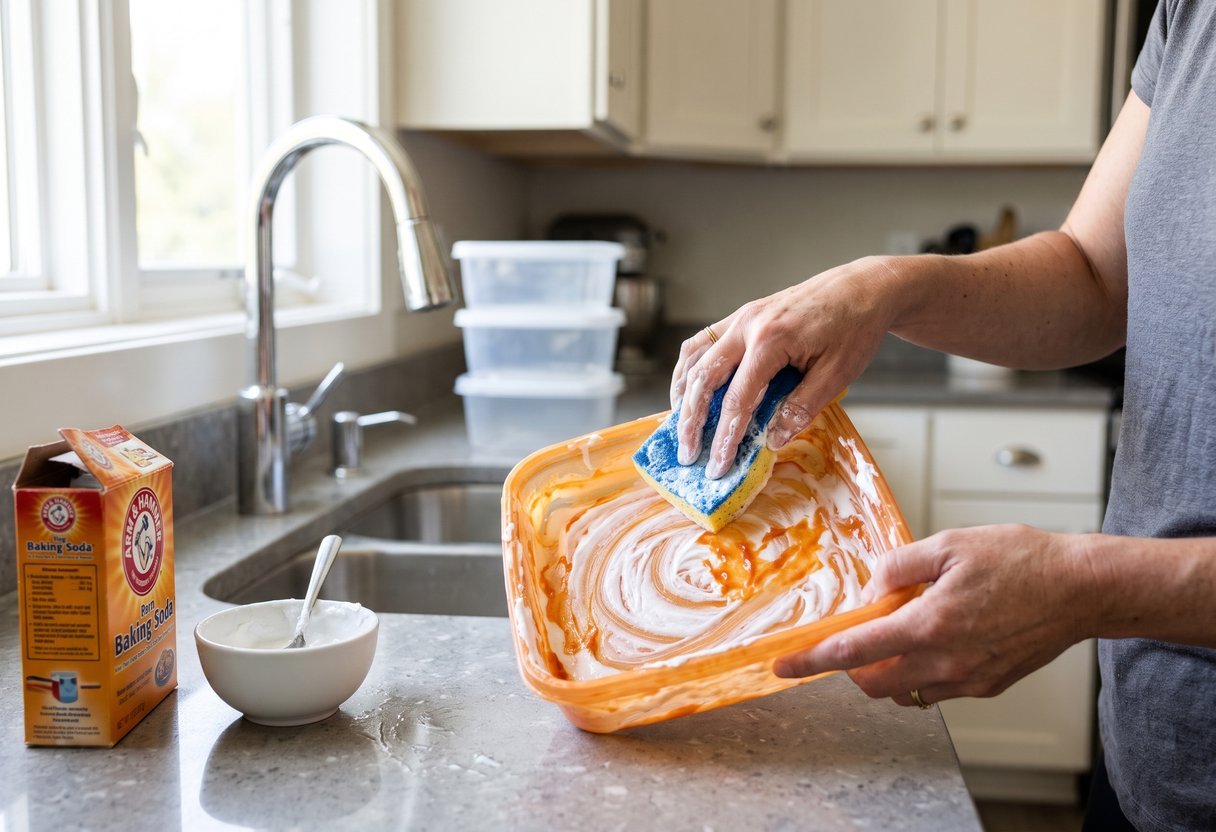
On the drying rack, a plastic container looks clean until an orange ring shows where spaghetti sauce sat. Another scrub with dish soap or vinegar may remove food residue but leave the color behind. The stain calls for a different, gentle approach rather than more scrubbing.
Baking soda and sunlight can fade orange stains
A baking soda paste is a practical first choice for orange tomato stains on plastic containers, with sunlight as another option for a container that remains discolored. Baking soda provides gentle abrasion to help lift residue, while direct sunlight can gradually fade the pigment. Neither method requires Dawn or vinegar.
- Does the “sanitize” cycle on your dishwasher do anything, or is it just a longer wash
- The blue cornflower Corning Ware in your mother’s cabinet can go from freezer to open flame, and the new ones can’t
For the paste, mix 2 tablespoons of baking soda with 1 teaspoon of water. Scrub it onto the stain with a non-abrasive sponge, let it sit for 15 minutes, then scrub again and rinse thoroughly with warm water. For a stain that needs more help, add 1/4 teaspoon of any dish soap to the paste before scrubbing; the soap helps remove oily residue, but it is not essential to the baking soda method.
Tomato pigment clings to plastic
Cooked and canned tomato sauces contain lycopene in tomato sauces, a strongly colored pigment that repels water. Lycopene is fat-soluble, and plastic also repels water. That combination helps explain why sauce can leave an orange mark even after the container has been washed.
The baking soda paste works by gently rubbing at the stained surface rather than dissolving lycopene like a chemical bleach. Use a non-abrasive sponge and moderate pressure: aggressive scrubbing can scratch plastic, leaving a rough surface that is harder to clean later. Wash and rinse the container after treatment so no paste remains before food goes back in.
Dish soap and vinegar have different jobs
Dish soap helps remove grease and fresh sauce residue, but washing alone may leave behind the orange pigment. Vinegar can be useful for mineral buildup, yet its acidity is not a reliable way to lift lycopene from plastic. Neither product needs to be treated as a substitute for the baking soda paste or sunlight.
For a lighter or newer mark, another option is to put warm water, a few drops of dish soap, and a crumpled paper towel in the container. Secure the lid, shake for about 30 seconds, and rinse thoroughly. The paper towel adds gentle friction as the soap loosens oily residue; an older, set-in stain may need more than this quick wash.
Sunlight can lighten stains that remain
Wash the container first, then place the still-stained container in direct sunlight for 4 to 6 hours. Light can gradually fade the orange discoloration, although results may vary with the stain and the amount of sun. Another approach is to coat the stain with lemon juice before setting the container in direct sun for 1 to 2 hours, then wash and rinse it before use.
Avoid making sun exposure a routine treatment: repeated sun and heat can eventually make plastic brittle. If the stain does not fade, repeated soaking or scrubbing may not restore the container. A sound but permanently discolored container can be used for small household items, while glass storage is less prone to tomato staining.
Cleaning should not damage the container
Do not apply undiluted bleach to plastic, which can yellow it, and never mix bleach with vinegar or ammonia. Keep cleaning products and treated containers away from children and pets. If a container becomes cracked or brittle, replace it for food storage rather than trying to scrub away the discoloration.




Leave a Reply