

A floral casserole dish from your mom’s cabinet looks a lot like the one on a store shelf today. But when dinner prep gets hectic, that resemblance can lead to a costly kitchen mistake.
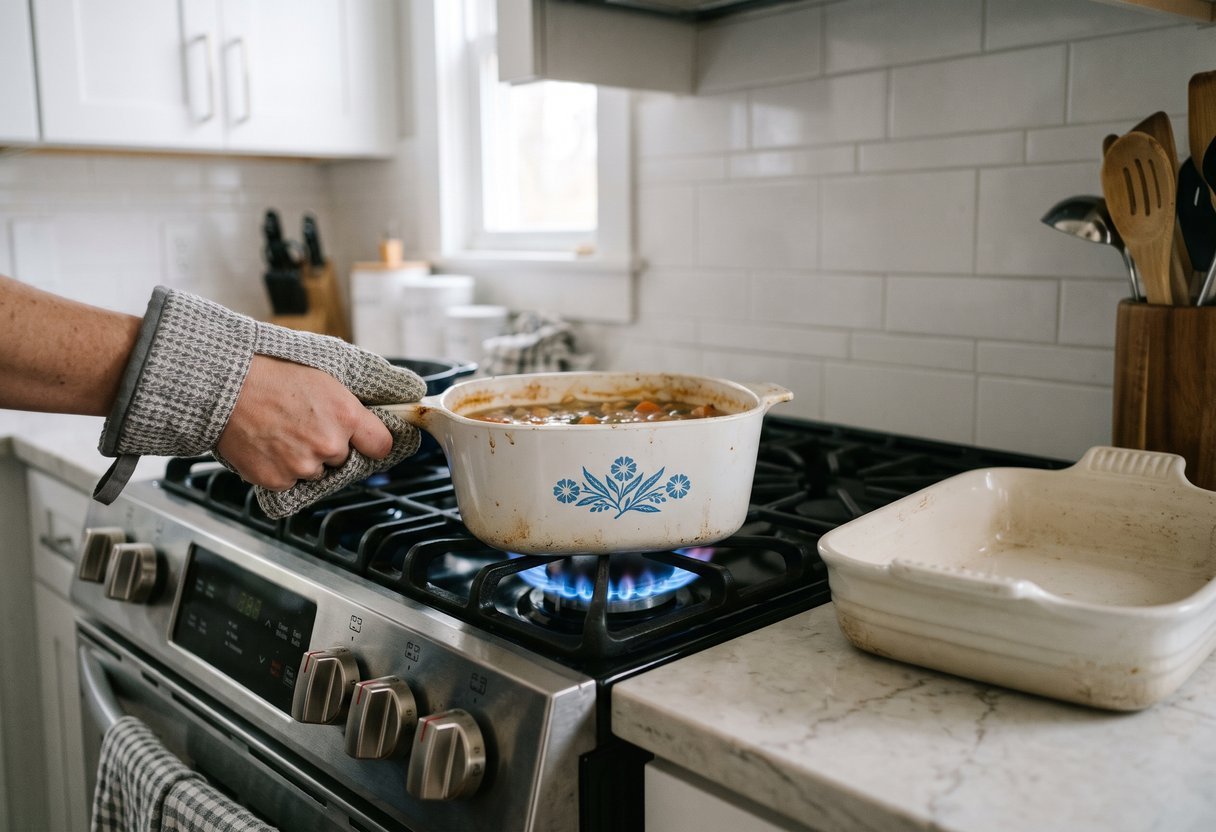
At 6 p.m., dinner is still frozen and a burner is already heating up. Reaching for a familiar-looking dish seems reasonable, but appearance alone cannot tell a cook which kinds of heat it can handle. One easy-to-miss detail matters more than the pattern on the side.
Vintage Blue Cornflower dishes can handle direct heat
Vintage Blue Cornflower Corning Ware was made from Pyroceram, a glass-ceramic that can tolerate direct stovetop heat and sharp temperature changes. That made the dishes useful for cooking food on a burner, baking it, and serving it at the table, while the common modern stoneware CorningWare line is not designed for stovetop cooking.
- Brown eggs cost more than white ones at your store, and the reason has nothing to do with what’s inside
- People run their washing machine empty with two dishwasher tablets, here’s what it does to the drum
The shared name and familiar shape can make the pieces look interchangeable. They are not: the material, rather than the floral pattern, determines where a dish can safely be used.
Pyroceram and stoneware respond differently to heat
Dr. Donald Stookey discovered Pyroceram at Corning Glass Works in 1953, and Corning Ware was introduced in 1958. The Blue Cornflower pattern was sold from 1958 until 1987 or 1988. Its glass-ceramic construction allowed the cookware to withstand the temperature changes involved in moving from a freezer to a heat source.
Most modern CorningWare bakeware is stoneware instead. Direct heat from a burner or broiler, or a rapid change in temperature, can crack or break a dish that was not made for those conditions. The difference is easy to miss when an older casserole and a newer baking dish sit side by side in a cabinet.
Markings help identify a stovetop-safe piece
Before putting an older dish on a burner, check its bottom for “range” or “stovetop safe” markings. Inspect the dish for chips and cracks as well; damage makes its performance less reliable, even if the material was originally intended for direct heat.
A sound, properly identified Pyroceram piece can be used for stovetop cooking and baking, and vintage Corning Ware was also advertised for freezer and microwave use. Follow any instructions specific to the piece rather than assuming every old dish has the same permitted uses. If its material or markings are uncertain, choose cookware clearly rated for the heat source instead.
Modern stoneware belongs in the oven, not on a burner
Corelle Brands describes its modern CorningWare stoneware as suitable for a preheated oven, microwave, freezer, and dishwasher. Its care instructions rule out stovetop use, broiling, and microwave browning elements. Those restrictions apply even when a stoneware dish resembles an older Pyroceram casserole.
Do not try to make stoneware stovetop-safe by starting with a low flame or heating it slowly. A burner still applies direct heat that the manufacturer does not approve, and a cracked dish can spill hot food. Follow the care instructions for the particular dish before moving it between cold storage and cooking.
Use rated cookware when a recipe needs a burner
If only modern stoneware CorningWare is available, heat food on the stovetop in a stainless steel pot or cast-iron pan, then transfer it to the baking dish if the recipe calls for oven cooking. Visions glass-ceramic cookware is another range-safe option when the specific piece is in good condition and its use instructions allow it.
The name CorningWare alone is not a stovetop rating: a Pyroceram-based CorningWare StoveTop line was reintroduced in 2008, so not every newer piece is stoneware. Check the material, markings, and care directions before turning on the burner.


Leave a Reply