

Your stainless steel sink can look dull and spotted even after you’ve scrubbed away the dinner dishes. Some cleaning habits that seem thorough may be making those stubborn marks harder to ignore.
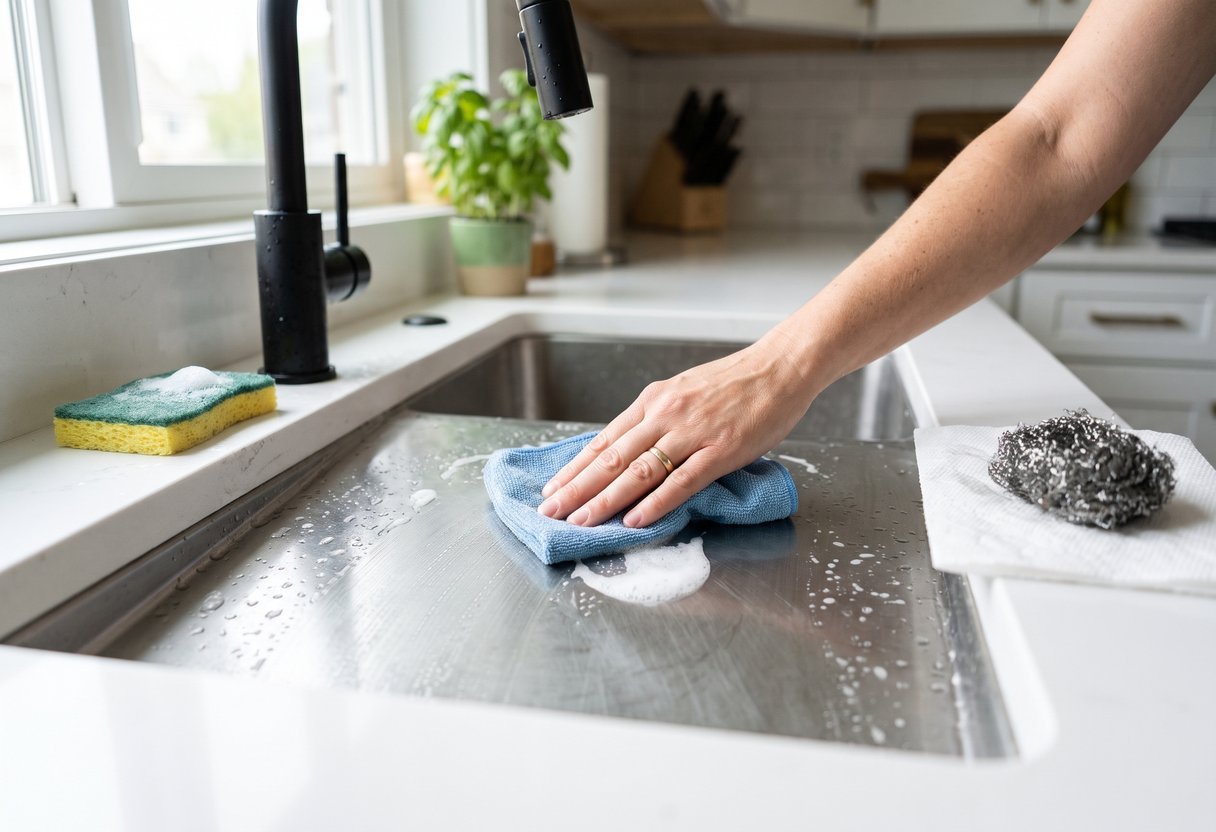
After dinner, cloudy water spots and stubborn marks stand out on the stainless steel sink. Steel wool may seem like the quickest way to scrub them off, but it can scratch the surface and leave behind tiny steel particles that rust. Scrubbing harder will not prevent new water spots if the sink stays wet. A gentler approach can clean the marks without damaging the surface.
Gentle cleaning protects a stainless steel sink
Stainless steel sinks resist corrosion, but they are not scratch-proof. Their protective chromium oxide layer helps keep the metal from rusting, while the visible finish can still collect scratches, water spots and stains. Cleaning away food residue and drying the basin helps preserve both the finish and the sink’s appearance.
Steel wool and bleach can damage the finish
Steel wool can scratch stainless steel and leave tiny bits of ordinary steel behind. Those particles can oxidize in a damp sink, creating rust-colored spots that appear to come from the sink itself. Rough scouring pads and stiff brushes can also dull or scratch the finish, so harder scrubbing is not a good substitute for the right cleaner.
Bleach can discolor or pit stainless steel, particularly if it sits on the surface. Avoid bleach-based cleaners unless the sink manufacturer specifically permits them; if bleach contacts the sink, rinse it away thoroughly. Never mix bleach with vinegar or ammonia, or apply vinegar to a sink that still has bleach residue.
Soap and a soft cloth handle everyday cleaning
After use, remove food scraps and wash the basin with warm water, a little mild dish soap and a soft sponge or microfiber cloth. Wipe in the direction of the finish’s visible grain rather than across it, then rinse thoroughly and dry with a clean cloth. Dish soap lifts grease, while rinsing removes cleaner residue that could dull the finish if left to dry.
Drying is especially useful where tap water leaves mineral deposits. A white film may be a hard-water deposit, while water with a high iron content can leave a brown stain that resembles rust. Neither stain necessarily means the sink itself is corroding.
Baking soda and vinegar can address specific spots
For a stubborn spot, mix 1/4 cup baking soda with water added a few drops at a time until it forms a spreadable paste. Apply it with a soft cloth, rub gently with the grain, then rinse with warm water and dry. Baking soda provides mild abrasion, but heavy pressure can still affect a delicate finish; check the sink’s care instructions before treating a large area.
For hard-water spots, use white vinegar only if the manufacturer allows it. Spray it on the affected stainless steel, leave it for 1 to 2 minutes, then wipe, rinse and dry. Vinegar helps loosen mineral deposits, but it will not repair scratches or pitting; keep it off nearby surfaces whose care instructions prohibit acidic cleaners.
Keeping the basin clear makes maintenance easier
Do not leave wet sponges, cloths, metal pots or rubber mats sitting in the basin. Trapped moisture, food particles and deposits can cause discoloration, so lift mats out, clean beneath them and let the sink dry. Keep cleaning supplies out of children’s and pets’ reach.
Rinse away debris and use soapy water as needed after daily use. Every 1 to 2 weeks, check for buildup that needs the gentler spot treatments above. If a stain remains or the metal appears pitted, stop scrubbing and consult the sink manufacturer’s care guide before trying another product.
Leave a Reply