

You turn on your gas stove to make dinner and notice the flame looks orange instead of its usual blue. Is it a harmless change, or does something need attention?
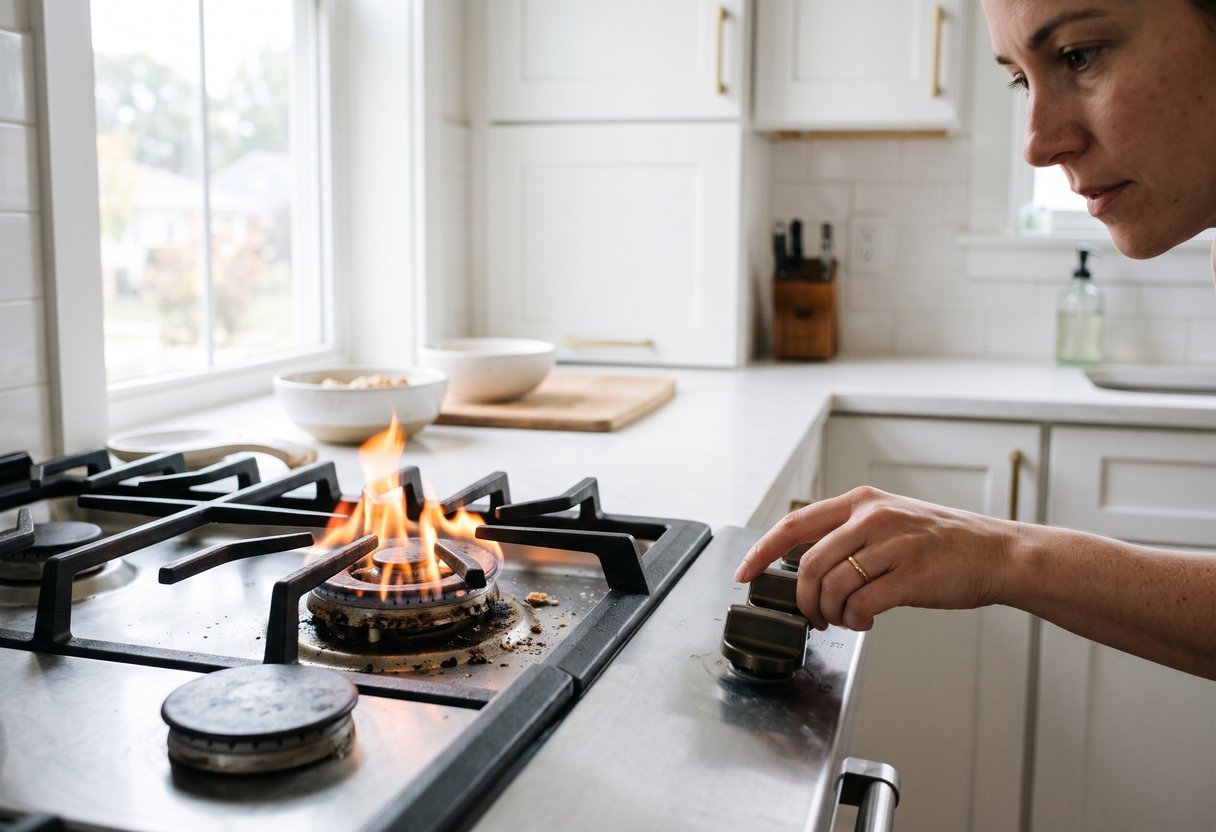
The burner lights under a pot of water, but its flame looks orange instead of blue. Wiping away visible crumbs may help if debris is the cause, but it will not fix a poor fuel-to-oxygen mix, which can lead to incomplete combustion and carbon monoxide. A nearby humidifier can also affect flame color, so the color alone does not explain what is happening. One simple check can help determine whether the change needs a technician’s attention.
Why flame color matters
A properly operating gas stove usually has a mostly blue flame. Blue indicates that gas is burning with enough oxygen for efficient combustion. A steady orange or yellow flame can mean the fuel and air are not mixing properly, which may allow incomplete combustion.
Incomplete combustion can produce carbon monoxide, a colorless, odorless gas that can be fatal. Flame color alone cannot confirm whether carbon monoxide is present: airborne minerals can also turn a flame orange. A working carbon monoxide alarm provides an important warning, but it does not replace an inspection when a flame stays orange.
Orange flames have several possible causes
Too little oxygen in the fuel-air mixture can lower the flame’s temperature and give it a yellow or orange appearance. This can happen when the stove needs adjustment or when airflow around a burner is obstructed. Such problems are not reliably fixed by turning up the flame.
Grease, food scraps, and dust can block burner openings and disrupt the flow of gas. A burner cap that sits crooked after cleaning can also interfere with the flame, so its position is worth checking against the stove’s instructions.
A nearby humidifier offers another possibility. Fine mist from some humidifiers can carry minerals from tap water into the air, and those minerals can change a gas flame’s color. This effect does not prove the stove is safe, particularly if the flame remains orange after the humidifier is turned off.
Cleaning and a humidifier check can help identify the cause
Turn off all burner controls and, if the stove’s gas shutoff valve is readily accessible, close it before cleaning. Wait until the stove is completely cool, then remove any burner caps according to the owner’s manual. Use a small wire brush or sewing needle to gently clear visible debris from the burner ports without enlarging them or poking the gas orifice.
Wipe the burner surface with a cloth dampened with soapy water, then wipe away soap and dry all parts completely before replacing the caps. Moisture left in the burner can interfere with ignition. If a cap is damaged, do not try to repair it with tools or sealant; arrange for the correct replacement.
If a humidifier is running nearby, move it to another room or turn it off and check the flame again when the stove is used. Lowering the humidifier’s output or using distilled water may reduce airborne minerals. If the flame stays orange after these checks, stop using the burner and have a licensed gas technician inspect the stove and its ventilation.
Gas odors, soot, and symptoms call for prompt action
If orange flames occur with soot buildup, turn the stove off and arrange a professional inspection before using it again. A headache, dizziness, or nausea could indicate carbon monoxide exposure. Get everyone, including pets, outside and call 911 from outdoors rather than staying inside to troubleshoot.
If there is a rotten-egg gas odor or a suspected gas leak, leave immediately without operating stove controls, switches, or phones indoors. Call the gas provider or 911 from outside; do not return until responders say it is safe. Keep children away from a stove with an unexplained flame change, and use a different cooking appliance until the cause is resolved.
Leave a Reply