

You open the freezer for dinner and find a sheet of ice beneath the groceries, with packages stuck to the bottom. Why does it keep coming back, even after you clear it away?
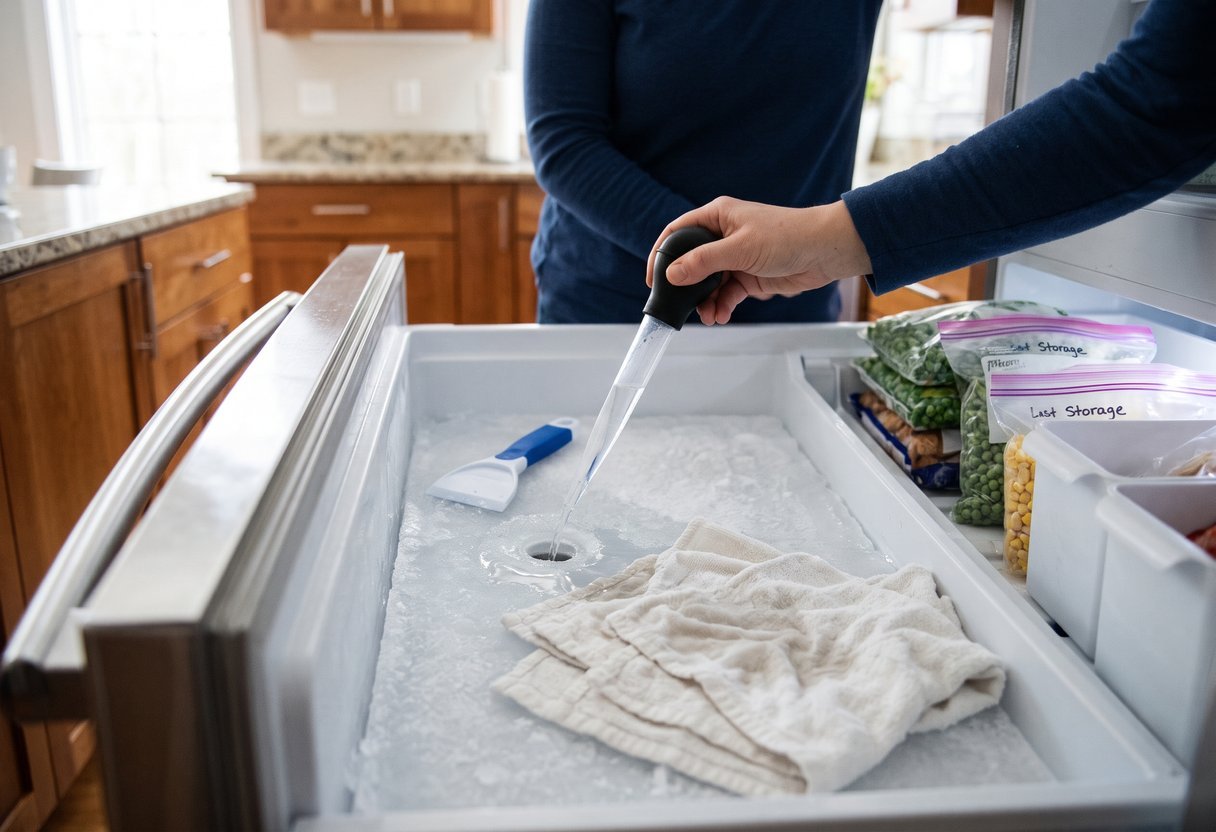
A frozen pizza sticks to the bottom of the freezer, held in place by a thin sheet of ice. Scraping the ice away may clear the space for now, but it can return if meltwater has nowhere to drain during the freezer’s defrost cycle. A quick check can help identify whether a blocked drain is the cause. If the ice keeps coming back, the door seal or defrost system may need attention.
Warm air and blocked airflow cause freezer ice
Ice forms when moist air enters a freezer and its water vapor freezes on cold surfaces. A door that does not close fully, a dirty or worn gasket, or repeated door openings can let that air in. A box pressed against an interior vent can also disrupt circulation, allowing frost to collect in one area.
Where the ice forms offers a clue. Frost across packages and walls points toward an air leak or blocked vent. A flat sheet on the freezer floor often points toward water that could not leave through the defrost drain.
A clogged defrost drain can create a sheet of ice
In a frost-free freezer, the defrost system periodically melts frost from the evaporator coils. That water normally runs through a drain tube to a pan beneath the appliance, where it evaporates. If ice or debris blocks the drain, the water can spill onto the freezer floor and refreeze.
The drain is often near the back of the freezer, but its location and accessibility vary by model. Check the owner’s manual before removing any panel. A drain hidden behind a panel may take more than 5 minutes to reach and is not a reason to force the panel loose.
An accessible drain may be cleared in a few minutes
Unplug the appliance before clearing ice or water, and place towels where meltwater could spill. Move food to another freezer or an insulated cooler if the job will take longer than a brief door opening. Keep the work area clear of children and pets, especially while using hot water.
- Find the drain using the owner’s manual. Gently lift loose ice and debris from around the opening with a plastic or wooden tool, not a knife or metal scraper.
- Fill a turkey baster with hot tap water, not boiling water. Slowly squeeze 1 basterful into the drain, then wait for it to flow through. Repeat only if the water begins draining; stop if it backs up or leaks outside the drain.
- Wipe the freezer floor and drain area dry with a clean cloth, then restore power and return the food.
Hot water can melt a small ice blockage, but it will not repair a damaged tube or a failed defrost system. Do not use a heat gun or pour boiling water onto freezer parts. If the drain stays blocked or cannot be reached without dismantling the appliance, consult a qualified appliance repair specialist.
Clear vents and a sound gasket help prevent new ice
Leave space around interior vents rather than packing food tightly against them; a freezer about three-quarters full leaves room for circulation. Close the door on a dollar bill and pull gently. Little resistance may mean the gasket needs cleaning or replacement, though a single test spot does not check the entire seal.
Do not place steaming food directly in the freezer, where it adds moisture. Divide cooked food into shallow containers and refrigerate or freeze it within 2 hours rather than leaving it out until it reaches room temperature. If a floor sheet returns after the drain is cleared, arrange a repair check of the drain and defrost system instead of repeatedly chipping away the ice.
Leave a Reply