

After frying bacon, you notice sticky grime around the range hood and a lingering smell in the kitchen. The mess inside can seem daunting, but cleanup may be simpler than you expect.
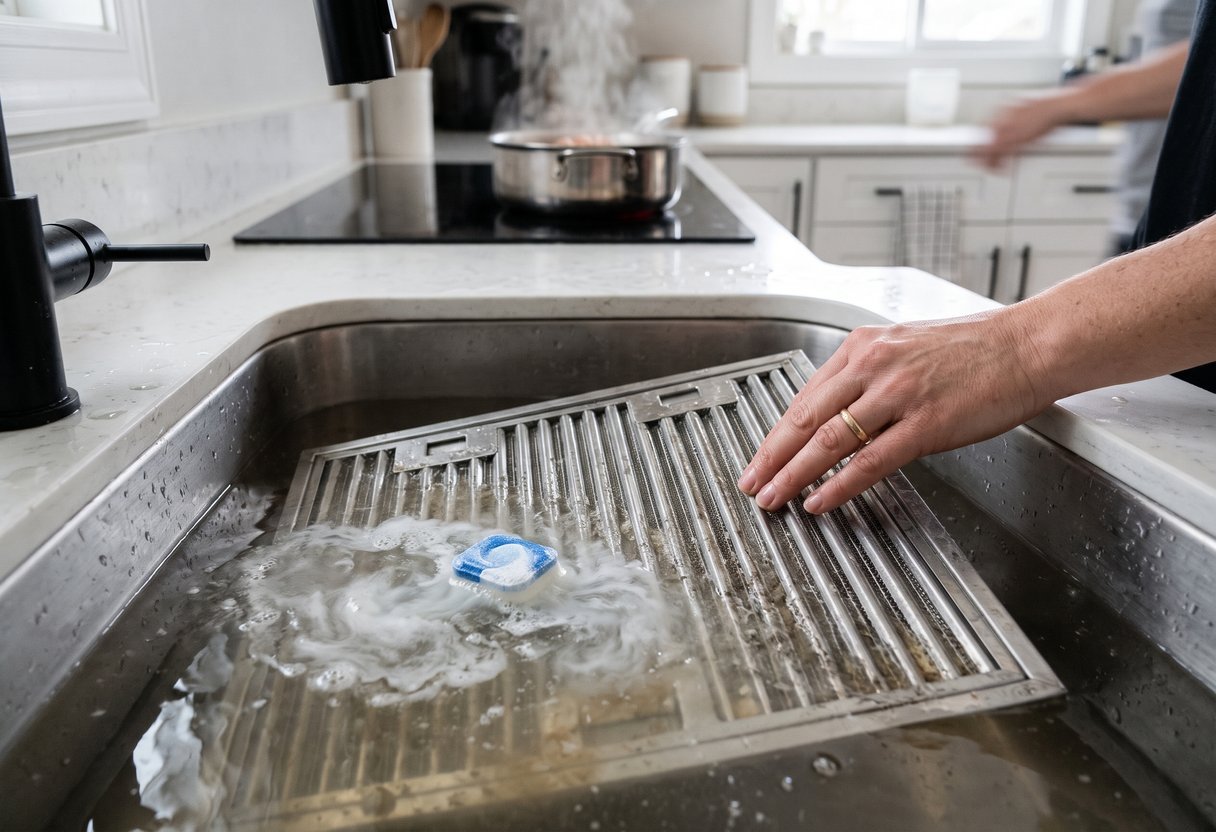
While a pot of pasta boils, the metal mesh beneath the range hood looks darker than it did last month. A quick wipe reaches only the surface, while hard scrubbing can damage the mesh without clearing the grease caught inside it. A less hands-on approach can loosen that buildup during dinner prep, though it is not suitable for every type of filter.
A dishwasher tablet soak loosens grease on range hood filters
A dishwasher tablet dissolved in warm or hot water can loosen grease on a washable metal range hood filter. The filter traps grease from cooking, and soaking it helps remove buildup that can restrict airflow. The tablet does not make grease disappear on contact; the loosened residue still needs to be rinsed away.
Grease left on a filter can contribute to odors and become a fire hazard. Check for visible buildup or grease drips near the hood rather than waiting for airflow to decline. For a hood used in daily stovetop cooking, cleaning the metal filters once a month is a useful schedule.
Surfactants and enzymes help release stuck-on residue
Dishwasher tablets combine surfactants, which help lift grease so water can carry it away, with enzymes that break down fats and other food residue. Warm or hot water dissolves the tablet and lets the cleaning solution reach the filter’s mesh or baffles. Heavy buildup may need more soaking time because the solution must reach grease trapped inside the filter.
This method is for removable metal grease filters, not every part of the range hood. Before soaking, check the hood manual: some manufacturers recommend a mild detergent solution instead, and metal filters are not automatically dishwasher-safe.
A 30-minute soak gives the cleaner time to work
Turn off the hood and remove the filters according to its manual. Fill a sink, bucket or basin with enough warm or hot water to cover them, using water that is not boiling. Add 1 dishwasher tablet and stir until it dissolves, then place the filters in the solution.
Soak the filters for at least 30 minutes. Check for remaining grease and leave them longer if buildup is still stuck on. Rinse thoroughly under running water to remove loosened grease and cleaner residue, then let the filters air-dry completely before reinstalling them.
Filter material and surface condition set the limits
Do not soak charcoal or fabric filters; replace them according to the hood manufacturer’s instructions. Avoid abrasive pads on metal filters and nearby glass because they can scratch the surfaces. If gentle cleaning leaves a metal filter heavily clogged, replacement may be more practical than repeated soaking.
Keep the tablet and soaking container away from children and pets. Do not add other cleaners to the solution, and never mix bleach with vinegar or ammonia. Rinse the work area after cleaning so detergent residue does not remain where food is prepared.
The manual can point to another cleaning method
If the soak does not remove the grease, check whether the manual permits cleaning the filter in a dishwasher; some metal filters can go through a hot cycle with detergent. A kitchen-appliance degreaser used according to its label is another option. If the filter remains clogged after an approved cleaning method, replace it before putting the hood back into regular use.
Leave a Reply