

You open the pantry for cereal and spot a tiny moth fluttering above the shelves. Before you toss everything or reach for a spray, there’s one detail worth checking.
A fine, sticky thread clings to the rim of an oats bag, even though the pantry shelves were just cleaned. Wiping away crumbs may tidy the cupboard, but it cannot address a problem that remains in stored food. A closer look at a few pantry staples can help identify what needs attention without spraying insecticide near food.
Pantry moths usually arrive in groceries
Pantry moths usually enter a home in an already-infested package of food, not because they originate in the cupboard. The Indian meal moth (Plodia interpunctella), the most common pantry moth in US homes, can arrive with grains, cereal, nuts, flour, dried fruit, or dry pet food. Finding adults near a shelf often means eggs or larvae were in food before the moths became noticeable.
Packaging that looks clean does not rule out an infestation. Once moths are in the pantry, females lay eggs on or near stored food, allowing larvae to spread to nearby items.
Larvae cause the damage in stored food
Adult moths are a warning sign, but larvae do the feeding. They spin silken threads that bind food particles together and contaminate food with feces and shed exoskeletons. Webbing, clumps, or visible insects in a package call for discarding it rather than trying to remove the affected portion.
Check more than flour and cereal. Beans, birdseed, spices, chocolate, candy, and pet food can also harbor pantry moths. Inspect packages near the affected item because larvae may have reached other food before adults appeared.
Freezing can kill eggs and larvae in dry goods
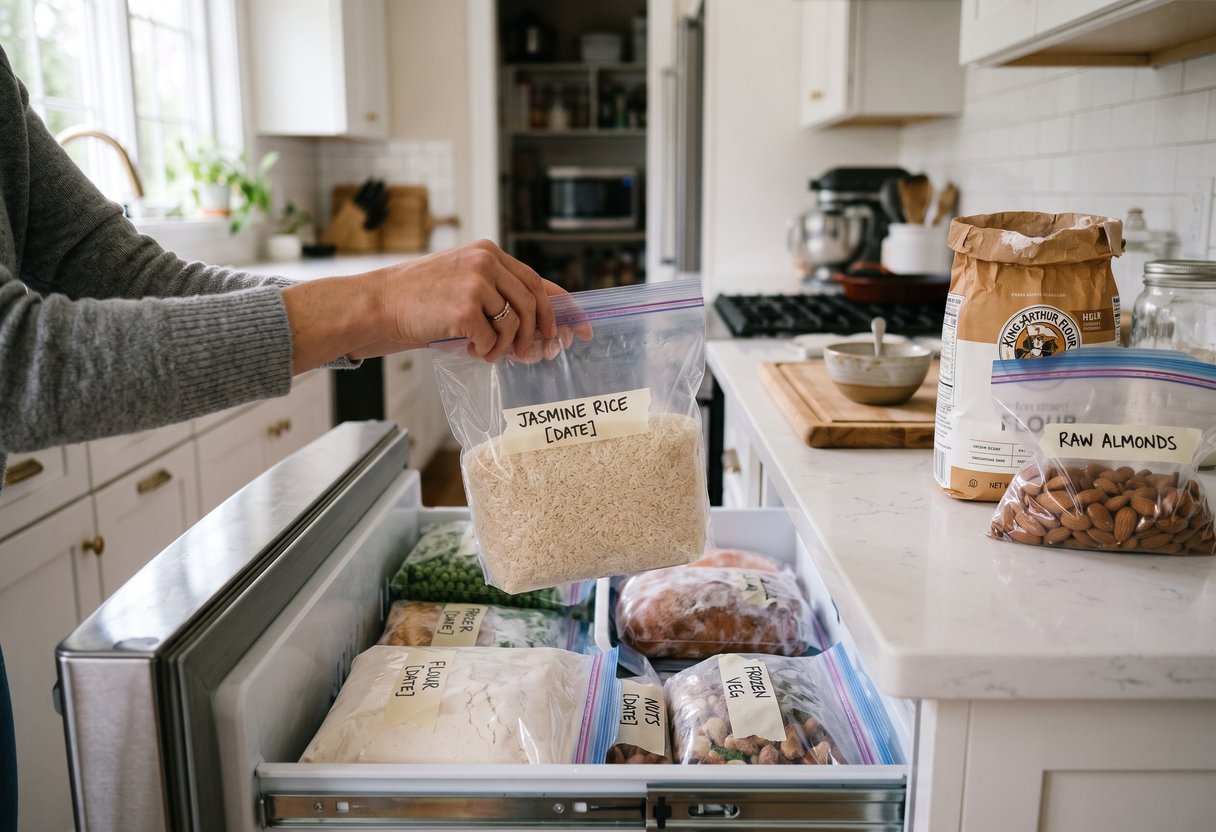
Freezing newly purchased dry goods can stop hidden eggs and larvae before they develop into an infestation. Place grains, flour, nuts, or dried fruit in a freezer set to 0°F (-18°C) or lower for at least 4 days. The National Pesticide Information Center recommends a full week, which provides a more cautious margin, particularly for larger packages that take longer to chill throughout.
Use this approach especially for bulk or unpackaged purchases, then keep the food in an airtight container after freezing. Freezing kills eggs and larvae already in the item, but it does not keep moths from laying new eggs if the food is later stored where pests can reach it.
Freezing does not make contaminated food usable
Do not freeze food in hopes of saving a package with webbing, clumping, visible larvae, or an unusual odor. Cold may kill the insects, but it cannot remove their waste, shed skins, or damage. Discard affected food and inspect nearby packages before deciding what to keep.
Skip insecticide sprays on or near stored food. The risk of contaminating food makes them a poor choice for pantry moth control. Keep discarded, infested packages away from food and out of reach of children and pets.
Cleaning removes food and pests left behind
If moths continue to appear, inspect nearby dry goods again, including pet food and birdseed. Discard infested items, seal unaffected food in airtight containers, and empty the storage area. Vacuum cracks and crevices where food particles or pests may remain, then wash shelves with soapy water and let them dry before replacing food.
A freezer treatment will not clear an infestation in packages that were never checked. Start with the food source, then clean the shelf and protect what remains.
Leave a Reply