

A stubborn stain on the kitchen counter can send you searching under the sink for a stronger cleaner. But an ordinary cleaning routine can carry a risk that isn’t obvious until you’re already scrubbing.
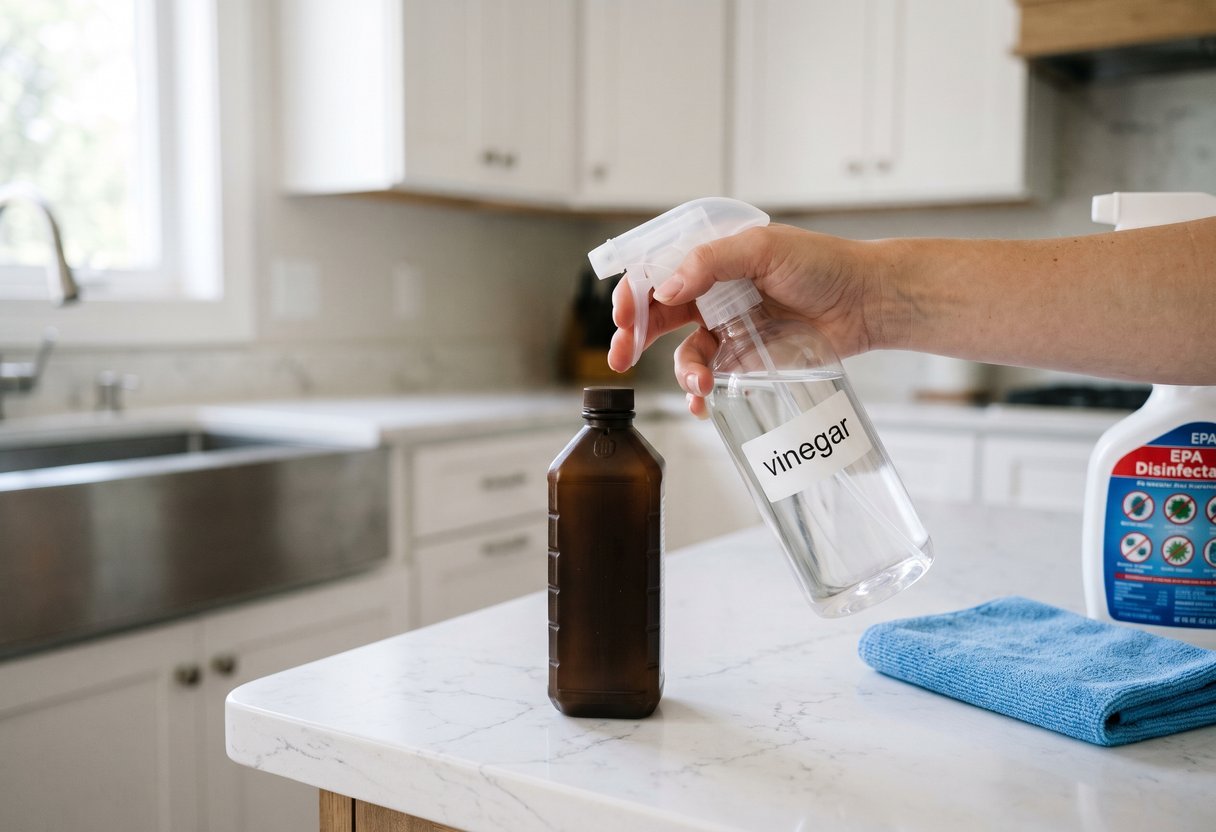
The bathroom sink still looks grimy after a quick wipe, and vinegar and hydrogen peroxide are both under the counter. Pouring them into one spray bottle may seem like a way to make a stronger cleaner, but the mixture forms peracetic acid, which can irritate the eyes, skin, throat, and lungs. A small change in how those bottles are used can make the cleanup safer.
Vinegar and hydrogen peroxide are not safer when combined
Vinegar and hydrogen peroxide are inexpensive household cleaners, but “natural” does not mean safe to mix. Combining them in 1 bottle or bucket can form peracetic acid, a chemical that can irritate the eyes, skin, throat and lungs. Keeping the products separate avoids a reaction that does not make routine cleaning safer.
The reaction can create an irritating chemical
Vinegar contains acetic acid. When it comes into contact with hydrogen peroxide, the 2 can react to produce peracetic acid. The Alabama Department of Public Health and experts at the University of Technology, Jamaica, have warned against this combination. Peracetic acid can irritate on contact, and its vapors can be especially troublesome in a poorly ventilated room.
The risk is not limited to a homemade spray bottle. Pouring 1 product into a container that still holds the other, or applying both to a surface without wiping between them, can bring the chemicals together. A small accidental splash does not necessarily mean a serious exposure, but irritation is a reason to stop cleaning and move away from the area.
Separate cleaners are better choices for routine jobs
For ordinary dirt and grime, use a suitable cleaner on its own and follow its label. Castile soap can help lift everyday soil; baking soda can provide gentle abrasion for some scrubbing jobs. Neither should be assumed to disinfect a surface. Vinegar and hydrogen peroxide may have cleaning uses individually, but combining them is not needed to get those benefits.
When disinfection matters, such as after someone in the household has been ill, choose an EPA-registered disinfectant labeled for the surface and the intended use. Clean visible dirt first if the label calls for it, then follow the product’s directions for application and the required time the surface must stay wet. A quick wipe may remove soil without giving a disinfectant enough contact time to work.
Labels and separate storage help prevent exposure
Never mix bleach with vinegar or ammonia-containing cleaners. Bleach and vinegar can release chlorine gas, while bleach and ammonia can release toxic chloramine fumes. Bleach should not be mixed with rubbing alcohol, either. Labels may identify ingredients that are not obvious from a product’s name, so check them before using cleaners in the same area.
Keep cleaners in their original labeled containers, closed and out of reach of children and pets. If an accidental mixture causes coughing, burning eyes or trouble breathing, leave the area for fresh air and contact Poison Control or seek medical care; urgent breathing problems need emergency help. For the next cleaning job, use 1 product as directed rather than trying to make it stronger by adding another.
Leave a Reply