

The dishwasher beeps while you’re cleaning up after dinner, but the warm, damp interior makes you pause. Should you leave the door open or close it?
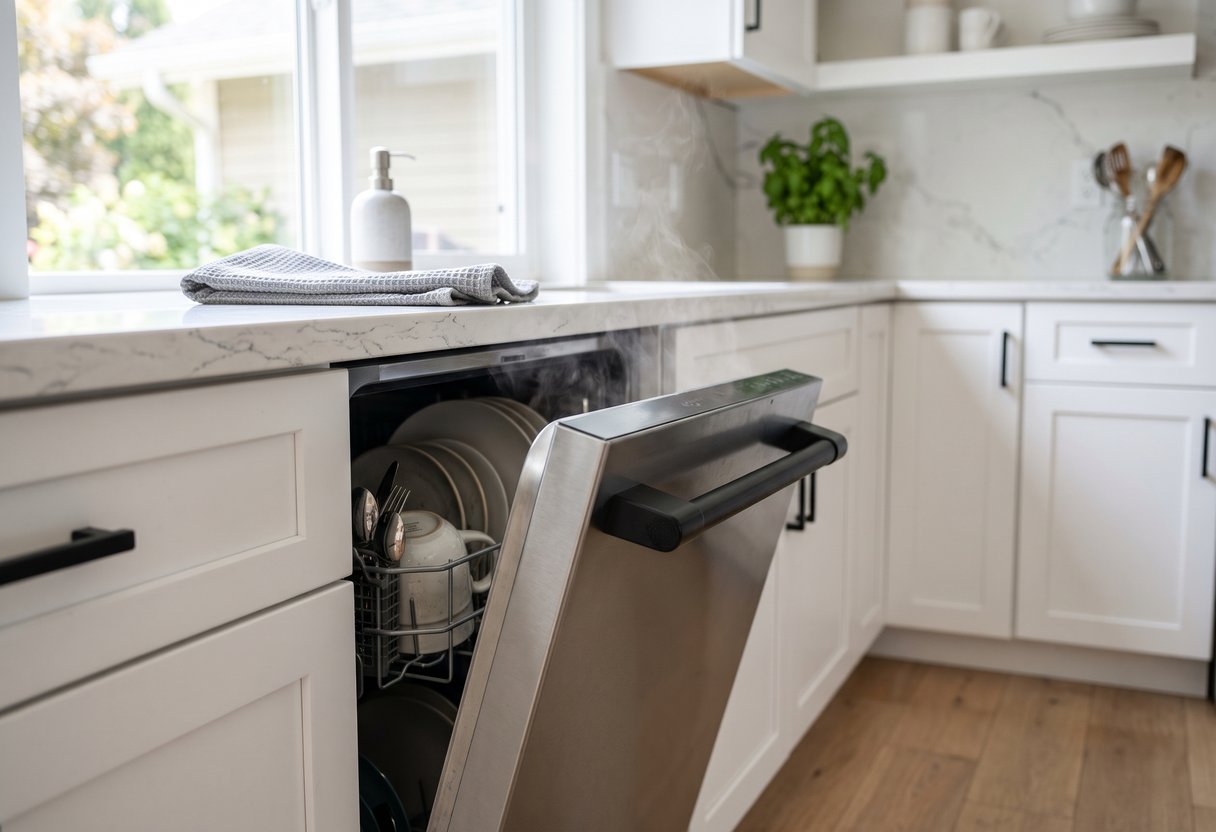
The next morning, a musty smell rises from the dishwasher as the clean plates are put away. It is easy to blame how the door was left overnight, but that assumption can overlook other causes of odor. A blanket rule for every dishwasher falls short, too. One detail worth checking can make the choice clearer.
The right choice depends on how the dishwasher dries
If a dishwasher does not open or vent its door automatically, cracking the door after the cycle finishes helps trapped moisture escape. If it has an automatic door-opening feature, let that feature work as designed and follow the model’s instructions. The goal is to improve drying and keep the warm interior from staying damp for hours.
There is no need to pull the door wide open immediately. Steam released at the end of drying can be about 140 to 150°F (60 to 65°C), so stand back when opening it and keep children and pets clear. An open door can also be a trip hazard in a busy kitchen.
Automatic door features handle ventilation differently
On KitchenAid models with Auto Door Open, the door opens 4 inches after the dry cycle ends. That gap releases water vapor and lets air circulate, improving drying without a separate step.
Whirlpool’s Door Open Dry opens the door a few inches after the washing phase to let hot air escape and fresh air enter. Select Samsung models open automatically at the end of a cycle to discharge steam, and Samsung does not recommend turning that function off. Bosch’s AutoAir also releases the door at the end of drying so moisture can escape.
These features are model-specific, not standard across every dishwasher from those brands. A door that stays shut may be normal for 1 model and a drying-feature problem for another. Check the owner’s manual before changing a setting or assuming the door should have opened.
A clean dishwasher matters more than door position alone
Leaving the door closed is not usually the main reason a dishwasher smells. Lindsay Taylor of Yale Appliance identifies a dirty or clogged filter, food residue, growth on the door gasket, and a clogged drain as likely sources of odors. Opening the door may dry the interior, but it will not remove food caught in a filter or clear a drain.
Clean the filter regularly according to the manual, and check the door seal for residue when odors appear. Taylor also suggests baking soda or vinegar for monthly cleaning or lingering smells; use only a method allowed by the dishwasher manufacturer. Never mix vinegar with bleach, and never mix bleach with ammonia.
If the smell persists after accessible parts have been cleaned, check the manual’s drain troubleshooting instructions or arrange service. Repeatedly airing out a dishwasher with standing water will not fix the underlying problem.
A quick model check gives the best routine
Find the model number and consult its manual or the manufacturer’s website for drying and door-care instructions. Let an automatic opening feature run normally; otherwise, wait until the cycle fully finishes, then crack the door carefully to let moisture out. Keep cleaning the filter and seal even when dishes come out dry.
Leave a Reply