

Your washing machine can start smelling stale even when every load comes out looking clean. Before you try a popular quick fix, take a closer look at what might be happening inside the drum.
A damp cloth comes away gray after a quick wipe inside the washing machine drum. Wiping the visible surface may help, but it misses buildup in places a cloth cannot reach. That makes an unlikely household product tempting, especially when the water changes color. But a visible result does not show what is happening elsewhere in the machine.
Dishwasher tablets can loosen residue but pose risks in washers
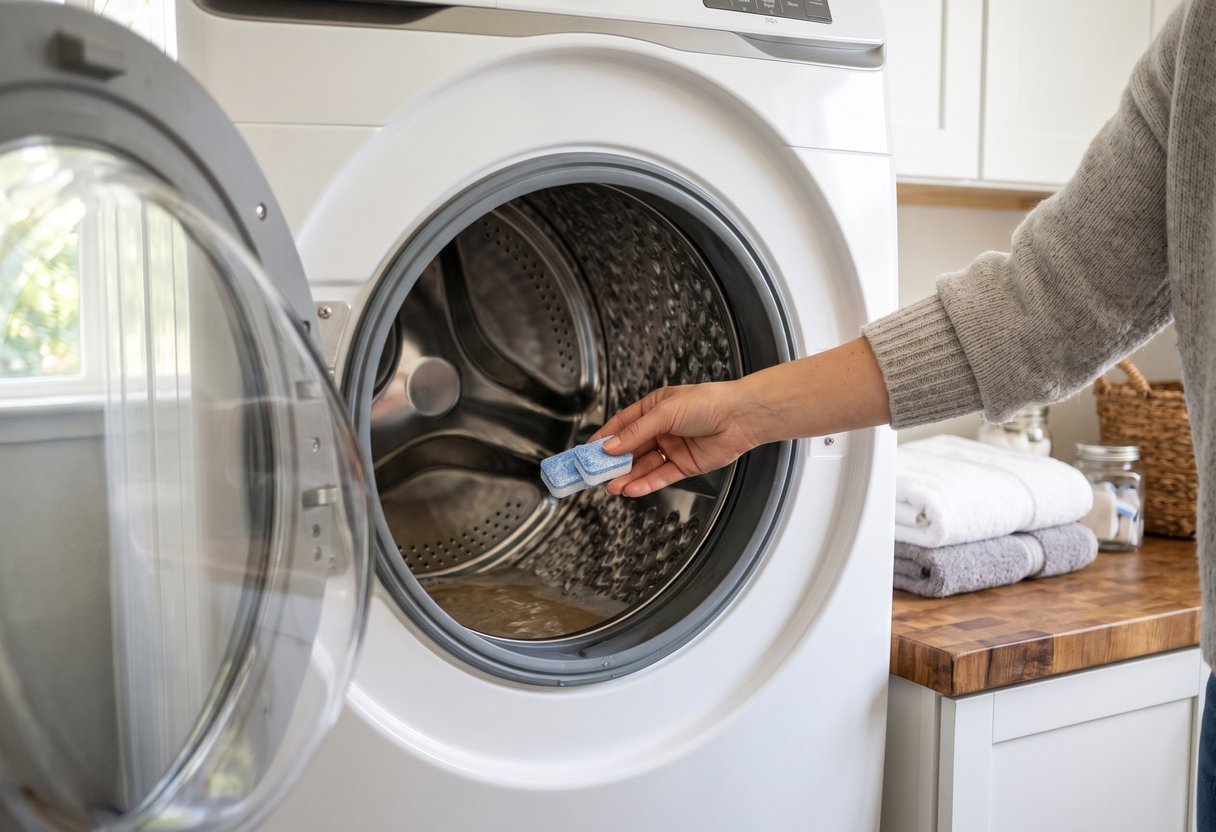
The dishwasher tablet method puts 1 or 2 tablets in an empty washing machine drum and runs the hottest available cycle to loosen buildup. Brown water may appear as detergent residue and soap scum wash away, but that visible result does not mean the method is safe for the machine. The American Cleaning Institute does not recommend using dishwasher tablets to clean a washer.
- How long does a refrigerator actually last, and the sound it makes before it dies
- KitchenAid mixers hide the year they were built in the serial number, and some from the 1980s still run daily
Dishwasher tablets are made for dishwashers, which operate differently from washing machines. A hot cycle may lift some grime, but the tablet may not dissolve or rinse away completely. Any detergent left behind can affect the next load of laundry.
Residue builds up during ordinary laundry cycles
Detergent and fabric softener can leave deposits inside a washing machine over repeated loads. Those deposits can contribute to odors and make a clean drum look less clean than expected. Regular cleaning helps remove buildup before it becomes harder to address.
Dirty-looking water during a cleaning cycle is a sign that material has entered the water, not proof that every part of the washer is clean. It also cannot show whether a dishwasher tablet has left its own residue behind. Cleaning the drum with a product intended for washers is a more reliable approach than judging results by water color.
Dishwasher tablets may leave suds and residue behind
Appliance experts warn that dishwasher tablets can produce excess suds in a washing machine, with potential consequences for seals and other components. Undissolved detergent may also clog sensors or remain in the machine for later washes. Those risks matter even if the drum looks cleaner after 1 cycle.
Using more tablets does not resolve the mismatch between the product and the appliance. The method is not recommended by the American Cleaning Institute, and an appliance expert identified as Morrison advises using a washing machine cleaner instead. Before putting any cleaning product in a washer, check the machine’s care instructions and the product label.
Washer cleaners offer a purpose-made option
Purpose-made products such as affresh Washing Machine Cleaner and Tide Washing Machine Cleaner are options for cleaning a washer without using dishwasher detergent. Follow the washer manufacturer’s directions for the cleaning cycle and the cleaner’s directions for the amount to use. Whirlpool’s affresh guidance calls for a cleaning cycle monthly or every 30 wash cycles.
Do not add another household cleaner to the cycle unless both sets of directions explicitly allow it. In particular, never mix bleach with vinegar or ammonia. If odors or visible residue remain after a properly run cleaning cycle, consult the washer manual for the next cleaning or maintenance step rather than adding dishwasher tablets.


Leave a Reply