

After frying dinner, the pan holds a pool of oil that still looks usable. Pouring it out feels wasteful, but keeping it raises a question most home cooks face sooner or later.
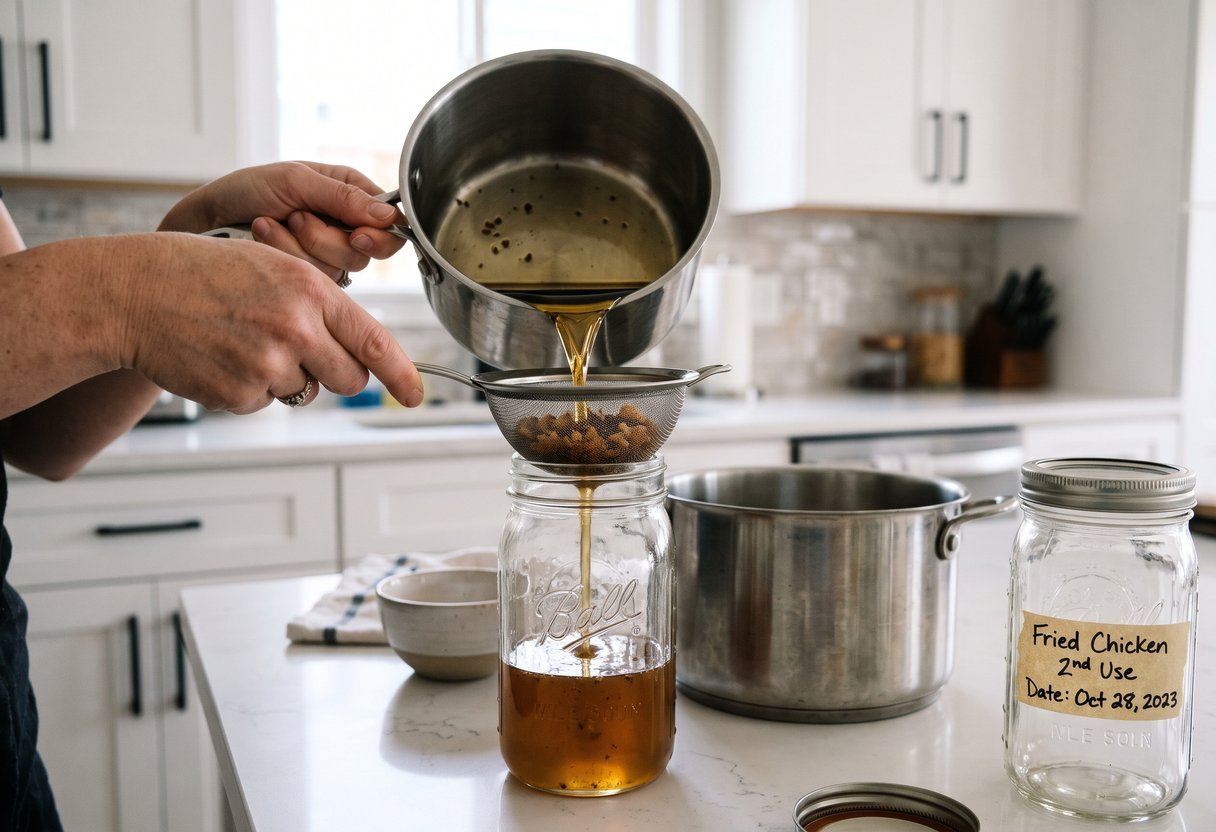
A jar of used frying oil comes out of the refrigerator as a pot of potatoes is readied for the stove. Counting how many times the oil has been used seems like an easy way to decide whether to keep it, but that tally can be misleading. A simple check before heating the oil again can make the decision less of a guess.
The number of times frying oil can be reused depends on the food
Oil used for breaded or battered foods can generally be reused 3 to 4 times, while oil used for cleaner-frying foods such as potato chips may last through 8 uses or more. These are guidelines, not guarantees: the oil’s condition and how it was handled matter more than the count alone.
Reusing oil can reduce waste and the cost of frying, but a fresh-looking batch is not automatically suitable for another round. Check the oil each time rather than relying only on a number written on the container.
Heat and food particles gradually change frying oil
Repeated heating changes oil and produces degradation compounds, including polar compounds, that can affect flavor and smell. Every batch also leaves something behind. Flour and batter shed particles, while food releases moisture and fat into the oil.
In a comparison using canola oil, flour-dredged chicken began tasting greasy and developing off-flavors after the fifth batch. Potato chips remained consistent through 8 batches, when testing stopped. The difference helps explain why oil used for battered food usually has a shorter useful life than oil used for cleaner-frying food.
Straining and storage help preserve usable oil
After frying, let the oil cool before handling it, then strain out crumbs with a fine-mesh sieve or coffee filter. Removing particles keeps them from remaining in the oil through storage and reheating, but straining cannot undo damage caused by excessive heat.
Transfer the strained oil to a sealed container and refrigerate it to preserve quality, as USDA Food Safety and Inspection Service frying guidance advises. Label the container with the date, what was fried, and the number of uses. Keep hot oil and cooling containers out of reach of children and pets.
Cloudiness, foam, and off odors mean it is time to discard oil
Discard used oil if it becomes cloudy, foams during frying, or develops an unpleasant smell or taste. If oil smokes during heating, it has reached a temperature at which it begins to break down; do not save that batch for reuse.
Oil used to fry fish is also a poor candidate for reuse because its flavor can carry into the next food. Neither filtering nor a low use count makes smoking or bad-smelling oil suitable again. Allow unwanted oil to cool before handling it for disposal.
Gentler frying leaves less to clean out later
Avoid crowding the pan, which can make the oil temperature fluctuate and leave more food debris behind. A cornstarch slurry can trap particles for removal, but it cannot restore oil that already smells off or smokes. For routine cleanup, straining cooled oil is the simpler choice.
Before the next batch, read the container label and inspect the oil. Use the food-based reuse range as a starting point, then discard the oil whenever its condition gives a reason to stop.
Leave a Reply