

Your milk spoils sooner than expected, and your refrigerator seems to run nonstop. The problem may be hiding in plain sight, even if the door looks firmly shut.
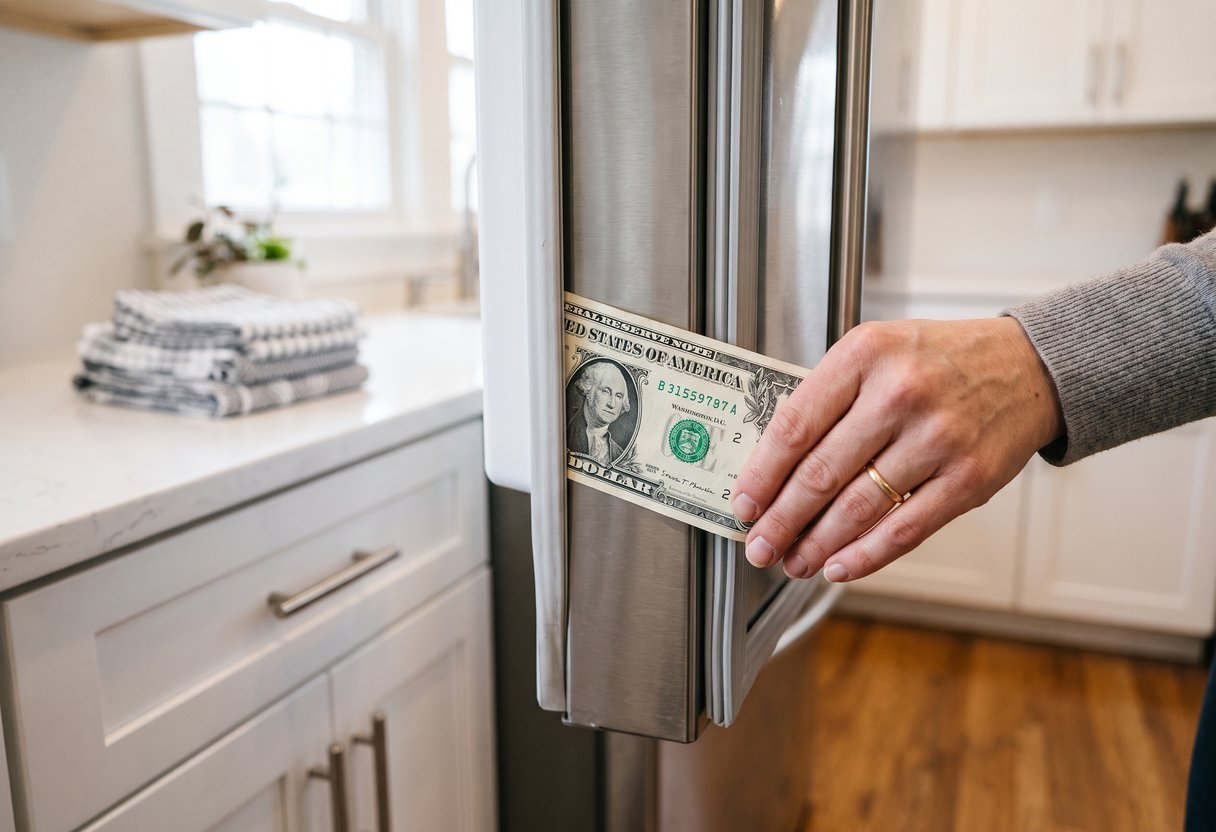
The refrigerator door closes with a soft thud, but the compressor seems to run longer than usual. Turning the temperature dial colder will not stop chilled air from escaping past a dirty or worn door gasket, and it may increase energy use. A quick check with a dollar bill can help show whether the seal needs cleaning or further attention.
A refrigerator door seal keeps warm air out
The flexible gasket around a refrigerator door presses against the cabinet to keep cold air inside and warm air out. If it no longer closes evenly, the compressor may run longer to maintain the set temperature, increasing energy use and wear. A poorly sealed door can also allow temperatures to fluctuate, putting perishable food at risk.
Gaskets can flatten or tear with use. Grease, crumbs and sticky spills can also keep the gasket from making full contact with the cabinet, even when the rubber is still in good condition. That makes cleaning worth trying before buying a replacement.
A dollar bill can reveal weak spots
Open the refrigerator door and place a $1 bill across the gasket so that about half remains outside. Close the door on the bill, then pull it out slowly and steadily. A strip of similar paper works if a bill is not handy.
Repeat the test along the top, bottom, both sides and each corner. Check each door separately on a side-by-side or French-door refrigerator. Testing only 1 spot can miss a gap elsewhere along the seal.
Resistance is a clue, not a diagnosis
Noticeable, steady drag suggests the gasket is pressing against the cabinet at that spot. If the bill slips out with little resistance, the contact may be weak there. Mixed results around the door call for a closer look at the areas where the bill slides free.
The bill test does not measure the refrigerator’s temperature or prove that the gasket needs replacing. Dirt can interfere with the seal, and an item inside the refrigerator can prevent the door from closing fully. Check for obstructions and inspect the gasket for cracks, folds or sections that have pulled loose before deciding what to fix.
Clean and retest before replacing the gasket
Wipe the gasket and the surface it meets with warm water and mild dish soap, paying attention to the folds where grime collects. Wipe away the soap, dry both surfaces completely and repeat the bill test at the same spots. Moisture or residue left behind can affect contact, while cleaning will not repair torn or permanently flattened rubber.
Do not mix bleach with vinegar or ammonia when cleaning the door. If checking a freezer gasket, test after the door has remained closed for a while; cold rubber is less flexible, and repeated openings can affect how the door settles. Keep cleaning supplies and a loose bill away from young children and pets.
A persistent gap needs a closer look
If the bill still slips out after cleaning, check the refrigerator’s model number before ordering a replacement gasket or asking an appliance professional to inspect the door. Replacement estimates range from $50 to $440, depending on the model and the work required. A gasket will not solve a door-alignment problem or every cooling problem.
Keep an appliance thermometer in the refrigerator and check that it holds at or below 40°F (4°C); a firm bill test alone cannot confirm food is being stored safely. If the temperature is too high, address the cooling problem promptly rather than relying on the door test.
Leave a Reply