

After dinner, you load the dishwasher and notice the sanitize button beside your usual cycle. Before choosing a longer run, you might wonder whether pressing it actually changes anything.
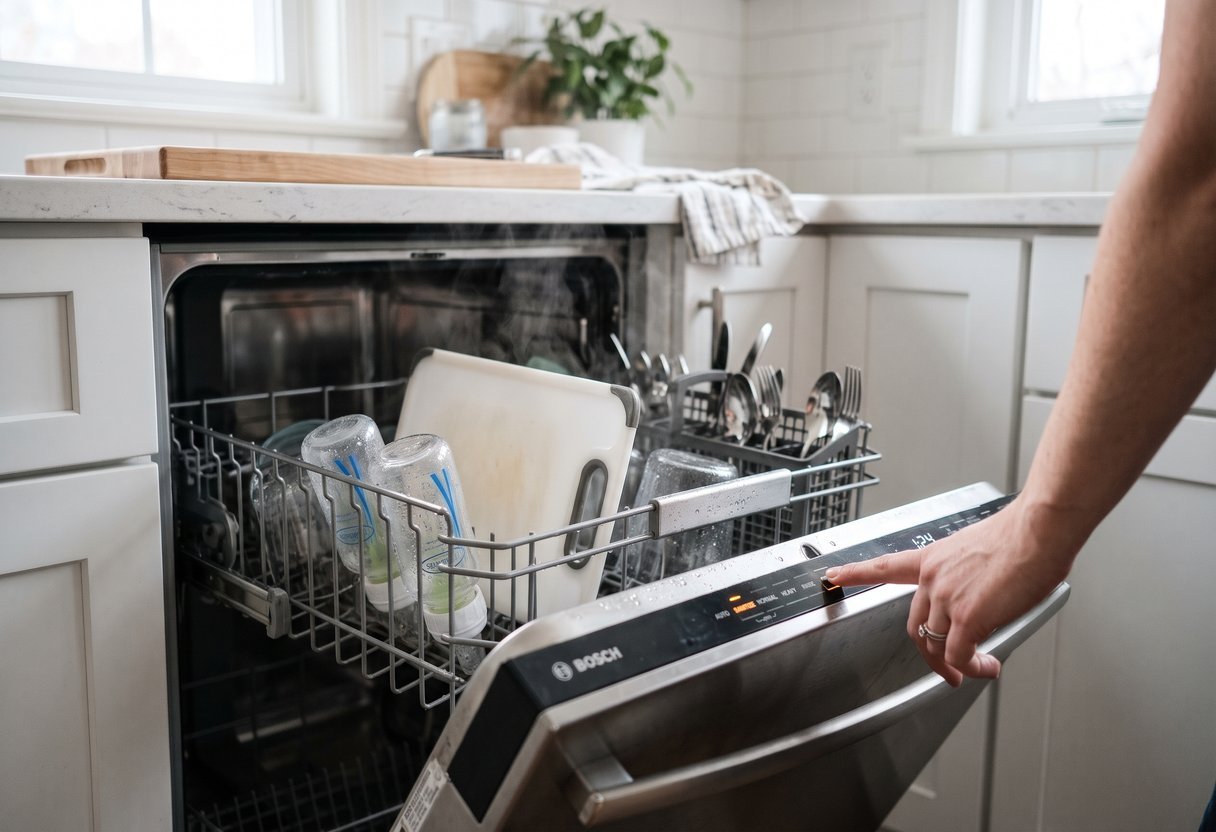
The dishwasher door opens to a rack of spotless plates, just as it does after a regular wash. Comparing how clean the dishes look cannot show whether the extra time accomplished anything. One detail that is easy to overlook can help determine whether the setting is worth using.
A certified sanitize cycle reduces bacteria beyond a regular wash
Yes, a dishwasher’s sanitize cycle can make a measurable difference: on a model certified under NSF/ANSI Standard 184, that cycle must reduce bacteria by at least 99.999% and reach a final rinse temperature of at least 150°F (66°C). It is there to reduce bacteria on dishes and utensils, not to make them sterile. The certification applies to the sanitize cycle, not to every cycle on the same machine.
- The blue cornflower Corning Ware in your mother’s cabinet can go from freezer to open flame, and the new ones can’t
- Brown eggs cost more than white ones at your store, and the reason has nothing to do with what’s inside
For everyday dishes, a regular cycle is generally sufficient. The sanitize setting is most useful when a load calls for extra attention, because reaching and maintaining the higher temperature takes more time and resources.
Higher heat gives the cycle time to sanitize
Sanitize settings raise water temperature during the wash, the final rinse, or both. The heat is what makes the verified bacteria reduction possible; simply running a regular wash longer does not give it the same certification. A standard cycle may use water at about 120°F to 150°F (49°C to 66°C), but it does not carry the sanitize-cycle guarantee.
Temperatures vary by model. GE says its Sani Wash final rinse reaches up to 155°F (68°C) and stays there long enough to meet NSF requirements, while Maytag lists a wash temperature up to 140°F (60°C) and a final rinse of 156°F (69°C) for its sanitize cycle. Waiting for the necessary heat can add up to 60 minutes compared with a standard cycle.
Higher-risk loads are a good reason to use it
The extra heat can be useful for dishwasher-safe baby bottles, cutting boards and utensils used with raw meat, or dishes washed after someone has been ill. Load items as directed by the dishwasher and item manufacturers so wash water can reach their surfaces. A sanitize cycle does not undo contact between raw meat and food that is ready to eat, so those foods and utensils still need to be kept separate during preparation.
For routine loads, the added time, energy and water may not be worthwhile. Whirlpool describes the setting as useful for tough loads and occasional deep cleaning, and recommends using it as directed or at least once a month rather than for every wash.
The cycle has limits even when the label says sanitize
Sanitizing is not sterilizing. Sterilization requires holding a temperature of at least 250°F (121°C) for several minutes, which a home dishwasher does not reach. A sanitize-labeled option on an uncertified model also does not come with NSF/ANSI 184’s verified bacteria-reduction claim.
Insufficiently warm incoming water or an interrupted cycle can prevent the machine from meeting its sanitizing conditions. On models with a “Sanitized” indicator, check that it lights at the end; if it does not, the load should not be treated as sanitized. Avoid touching hot dishes or escaping steam immediately after the cycle, and keep children away from the open door.
Certification and the indicator help guide the choice
When shopping, check the specific model against the NSF/ANSI 184 residential dishwasher listing rather than relying on a “sanitize” or “steam sanitize” label. Models and settings differ, and the certified result depends on running the designated cycle successfully. For a load that needs the extra precaution, select that cycle and confirm the “Sanitized” indicator before putting the dishes away.


Leave a Reply