

Your favorite glass baking dish looks sturdy enough for any weeknight casserole, until dinner prep takes an unexpected turn. Could the dish you trust most have a hidden weakness?
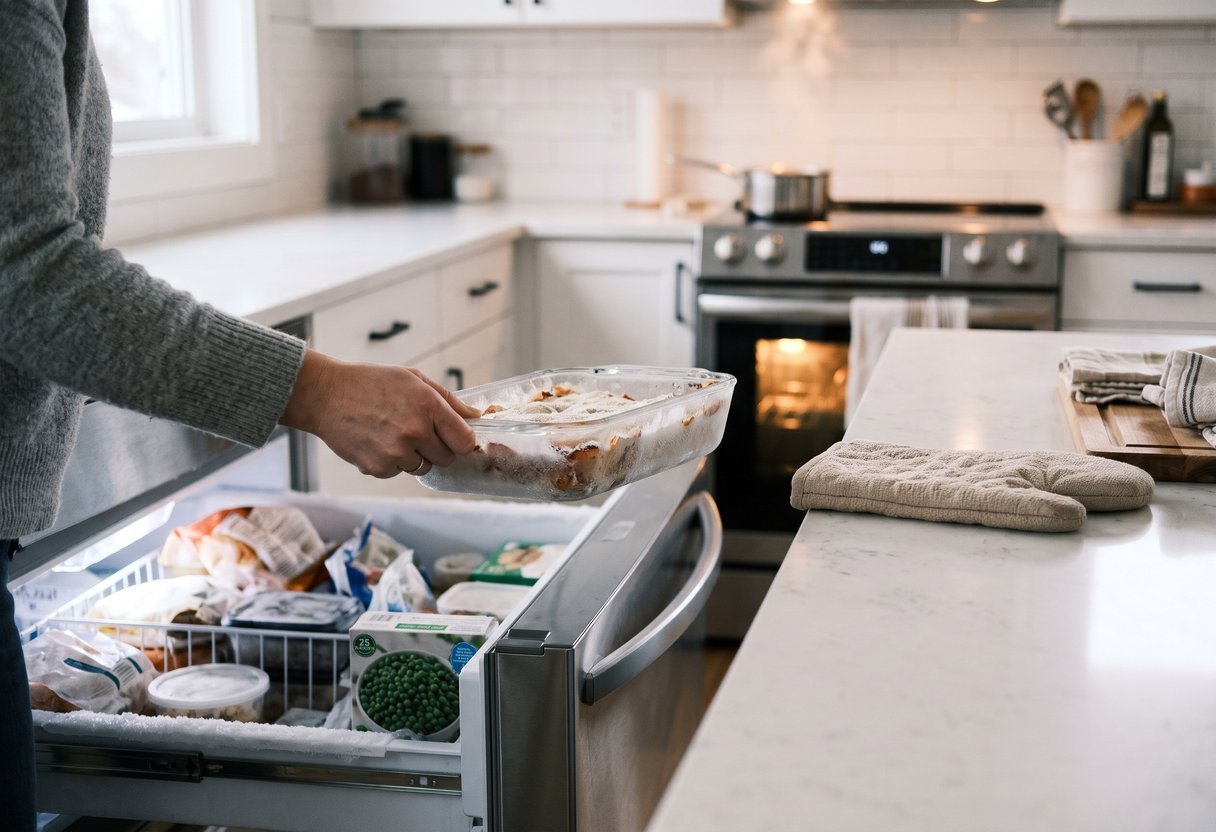
A Pyrex casserole dish comes out of the freezer just as the oven finishes preheating. Putting it straight into the oven may seem routine, but the Pyrex name does not mean every dish handles sudden temperature changes the same way. Older and newer dishes can be made from different types of glass, and rapid heating can cause glass to shatter. Before moving a dish between temperature extremes, a small detail on its marking is worth checking.
Modern Pyrex can break during sudden temperature changes
A glass baking dish may look sturdy enough to move straight from the freezer to the oven, but that change can cause it to shatter. The outside of the glass heats and expands before the inside does, creating stress within the dish. This risk is especially important with modern Pyrex bakeware sold in the United States.
The type of glass makes a difference
Corning’s original clear Pyrex ovenware was made from borosilicate glass, which expands relatively little when its temperature changes. Most modern U.S. Pyrex kitchenware is made from tempered soda-lime glass. It is suitable for everyday baking when used as directed, but it is less resistant to abrupt temperature changes than borosilicate glass.
The history is not as simple as all old Pyrex being borosilicate. Corning also made some vintage Pyrex kitchenware, including patterned opaque pieces, from tempered soda-lime glass. After Corning moved away from making consumer kitchenware, other manufacturers continued producing Pyrex under license, so the age and appearance of a dish do not establish what glass it contains.
Markings offer clues, not proof
Older clear pieces often carry an uppercase “PYREX” mark, while newer U.S. kitchenware often uses lowercase “pyrex.” That distinction can help when examining a thrift-store or estate-sale find, but the logo alone is not a reliable material test. Lowercase branding has existed for decades, and uppercase marks also appear on products made outside the United States.
Check any packaging or manufacturer information that came with the dish. If its material or intended use remains unclear, treat it as ordinary glass bakeware rather than assuming it can withstand a freezer-to-oven transfer. A vintage dish also needs careful handling because chips, cracks and prior damage can weaken glass.
Gentle temperature changes protect glass bakeware
Do not put a frozen glass dish into a hot oven. Let an empty dish come to room temperature before baking, and preheat the oven before placing it inside. If the dish holds frozen perishable food, thaw the food in the refrigerator and transfer it to a room-temperature, oven-safe dish rather than leaving the food on the counter to warm.
Keep Pyrex off stovetop burners and out from under the broiler, where concentrated heat can stress the glass. Set a hot dish on a dry towel or wooden trivet, not a wet surface, and do not pour cold liquid into it. Borosilicate bakeware is an option for greater thermal-shock resistance, but it can still break and must be used according to its manufacturer’s directions.
Broken glass calls for a careful cleanup
If a dish shatters, keep children and pets away and let hot pieces cool before cleanup. Wear thick gloves, pick up large pieces carefully, then use a damp paper towel to collect small fragments. Wrap the shards securely before putting them in the trash.
Discard any food exposed to the breakage because tiny glass fragments can be difficult to see or remove. Before the next bake, check the dish’s condition and use directions rather than relying on its Pyrex mark alone.
Leave a Reply