

You pull out the box grater while making dinner and reach for the same familiar side without thinking. What is that neglected panel meant to do, and could you be missing a useful shortcut?
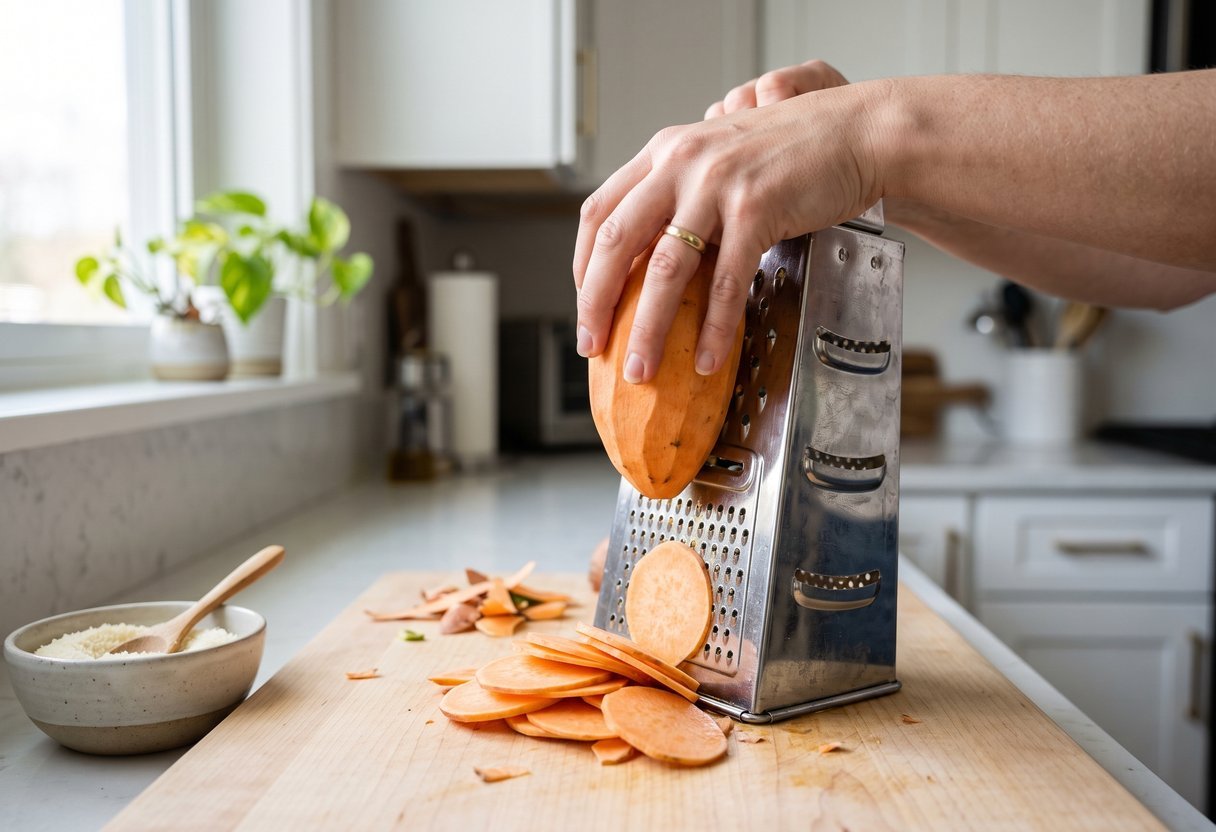
A mound of thick cheese shreds collects on the cutting board while the rest of dinner’s ingredients wait nearby. Running everything over the same large holes would give much the same coarse result, whether or not the dish needs it. The box grater’s quieter sides offer other options, including 1 that may save a trip to the utensil drawer.
The slicing side makes even pieces of firm produce
The side with 1 or more long blades is for slicing, not shredding. It makes slices of firm vegetables, fruit, and cheese, giving a box grater a job that might otherwise require a knife or separate slicer. It is often the least-used side, even though similar-sized pieces can cook more evenly than irregular knife cuts.
- Not vinegar and not baking soda, the way to get the water spots off a stainless steel fridge door for good
- The copper-bottom Revere Ware you inherited has a stamp underneath, and the pre-1968 ones are the keepers
Try it with a sweet potato, zucchini, cucumber, radish, or eggplant. Set the grater upright on a stable cutting board, hold the produce firmly, and move it steadily across the blade with moderate pressure. Keep fingers clear of the slot, and stop when the remaining piece becomes too small to hold safely.
The blade produces a fixed thickness, so it cannot make the range of cuts an adjustable mandoline can. Soft produce may crush instead of slicing cleanly. For very thin or precisely sized pieces, use an appropriate knife or adjustable slicer with its hand guard.
The star-shaped side removes zest and grates small ingredients
The side covered in tiny star-shaped points is for zesting citrus and finely grating firm ingredients. Rub a lemon, lime, or orange lightly against it to remove the flavorful outer peel, then turn the fruit before reaching the bitter white pith. The small points take off fine bits rather than the broad strips made by the slicing side.
This side also handles nutmeg, cinnamon sticks, garlic, ginger, chocolate, and hard cheese such as Parmesan. Its fine openings can clog with soft food, and small pieces bring fingers close to the sharp surface. Use a food holder when practical, or switch to a suitable zester or knife as the ingredient gets smaller.
The 2 shredding sides make different textures
The largest holes turn a block of cheese into thick ribbons for tacos, salads, or baked pasta. They can also break down a tomato into pulp for sauce or shred frozen butter into small pieces for biscuit dough. Cold, firm ingredients generally pass through the holes more cleanly; soft cheese or melting butter can smear across them.
The medium holes make finer shreds. Use them when cheese needs to melt more readily into a sauce or casserole, or when smaller pieces of zucchini or carrot would blend into muffin or cake batter. They are less useful for spices or citrus zest, which need the much finer star-shaped side.
A stable grater and prompt cleaning make each side easier to use
Keep the grater on a flat surface while working; a non-slip base or a damp paper towel underneath can help prevent slipping. A food holder or cut-resistant kitchen glove can add protection, but neither replaces careful hand placement. Keep the grater out of children’s reach when it is not in use.
Wash the grater promptly after use, before food dries in the holes. Use warm water, dish soap, and a brush, working carefully around the sharp edges, then rinse and dry it. Next time a recipe calls for sliced vegetables, check the slot side before reaching for another tool.
Leave a Reply