

You’re sorting through your grandma’s kitchen cabinets and find a copper-bottom saucepan you haven’t used in years. It looks ordinary, but one easily overlooked detail could make you think twice before donating it.
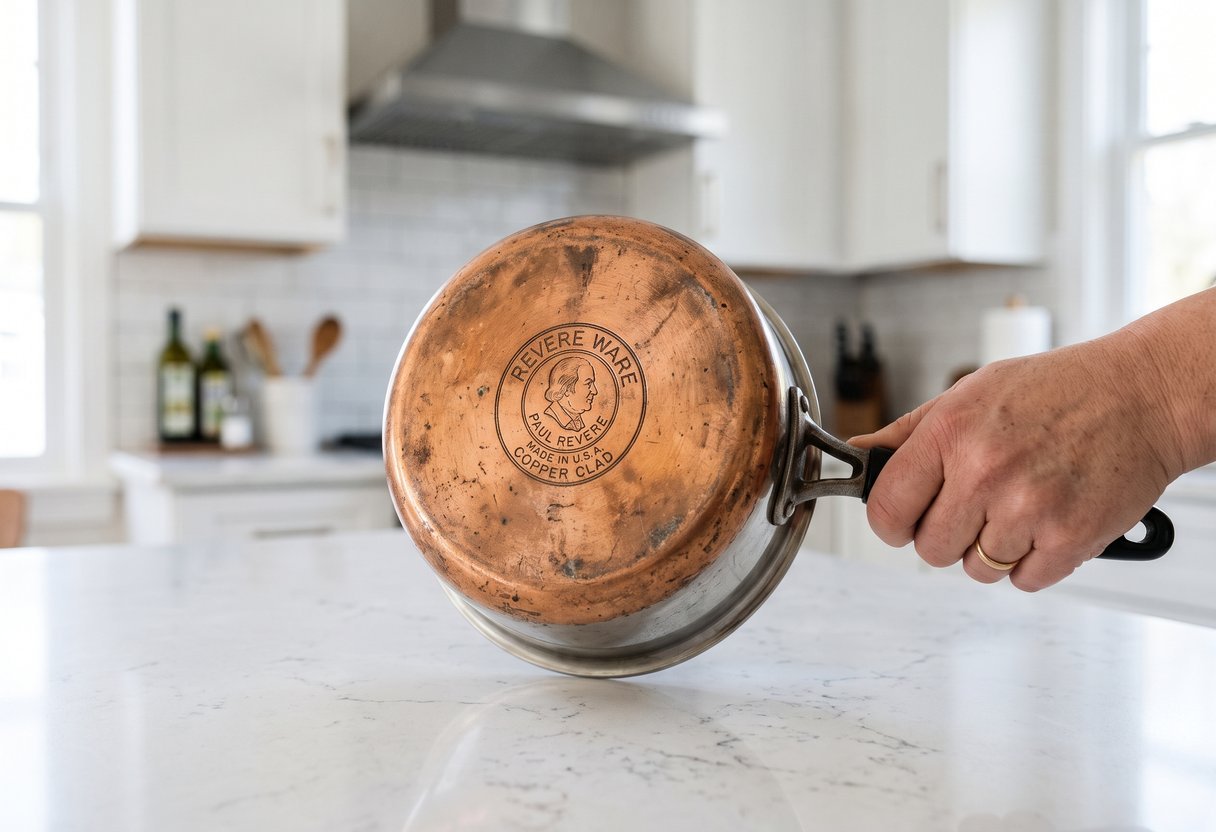
At a thrift store, 2 copper-bottom saucepans sit side by side, one polished and one dull. Choosing the shinier pan seems sensible, but tarnish says little about how either pan was made. A less obvious detail may tell a different story.
The bottom stamp identifies the most sought-after pieces
For the Revere Ware pieces collectors particularly seek, look underneath the pan for Paul Revere’s left-facing profile inside 2 circles, along with the words “Process Patent” or “Made Under Process Patent.” This maker’s mark helps identify cookware from 1946 to 1968 and distinguish it from later pieces. The stamp may also say “Revere Ware” and name a manufacturing location, such as Rome, New York, or Clinton, Illinois.
- A ball of aluminum foil in the dishwasher cutlery basket, what it’s for and why so many people swear by it
- Not in the fridge door and not in the carton on the shelf, where eggs keep the longest
Check the entire bottom, not just the copper color. A post-1968 pan can also have a copper bottom, but its simpler logo has no circle or patent wording. If the stamp is too worn to read, the pan’s appearance alone cannot establish its manufacturing period.
Copper cladding explains the cooking appeal
Revere Copper and Brass Corporation introduced Revere Ware at the Chicago Housewares Exposition in 1939. Its design paired a copper-clad base with heat-resistant Bakelite handles and a rounded interior that was easier to clean. Copper spreads heat across the bottom of the pan, helping reduce hot spots during cooking.
In 1968, Revere reduced the amount of copper used in the bottom to save money. That change is why collectors often prefer the earlier, thicker-copper pieces for cooking as well as for their history. It does not mean every later pan is unusable, or that a patent-era stamp guarantees a pan is in good condition.
Earlier Revere Ware needs a different dating check
“Pre-1968” covers more than 1 style of stamp. Revere applied for patent protection on its copper-cladding process in 1938, received the patent in 1942, and marked cookware made while the application was pending with “Pend.” The double-ring Paul Revere mark began in 1946, so an older pan without it should not automatically be dismissed as a later piece.
Manufacturing location is another clue, but it is not a date by itself. For example, the Clinton, Illinois plant opened in 1950 and continued producing some Revere cookware until 1999. A Clinton stamp therefore needs to be read alongside the logo and patent wording.
Condition and markings both matter when buying
At a thrift store, garage sale, or antique shop, turn the pan over and read the stamp before judging it by its copper finish. Check that the bottom sits flat and that the handle is secure. A desirable mark identifies an era, but it cannot make a damaged pan practical to cook with.
There is no single dollar value established by a double-ring stamp alone. Condition, completeness, and the ability to verify the markings all matter when assessing a particular find. If the mark is unclear or the handle is loose, pass on it as a cooking pan and keep looking for a clearly stamped, sound piece.


Leave a Reply