

You pull a kitchen towel from the dryer, but it still smells sour when you wipe down the counter. An ordinary laundry habit may explain why the odor lingers while the rest of the load smells fresh.
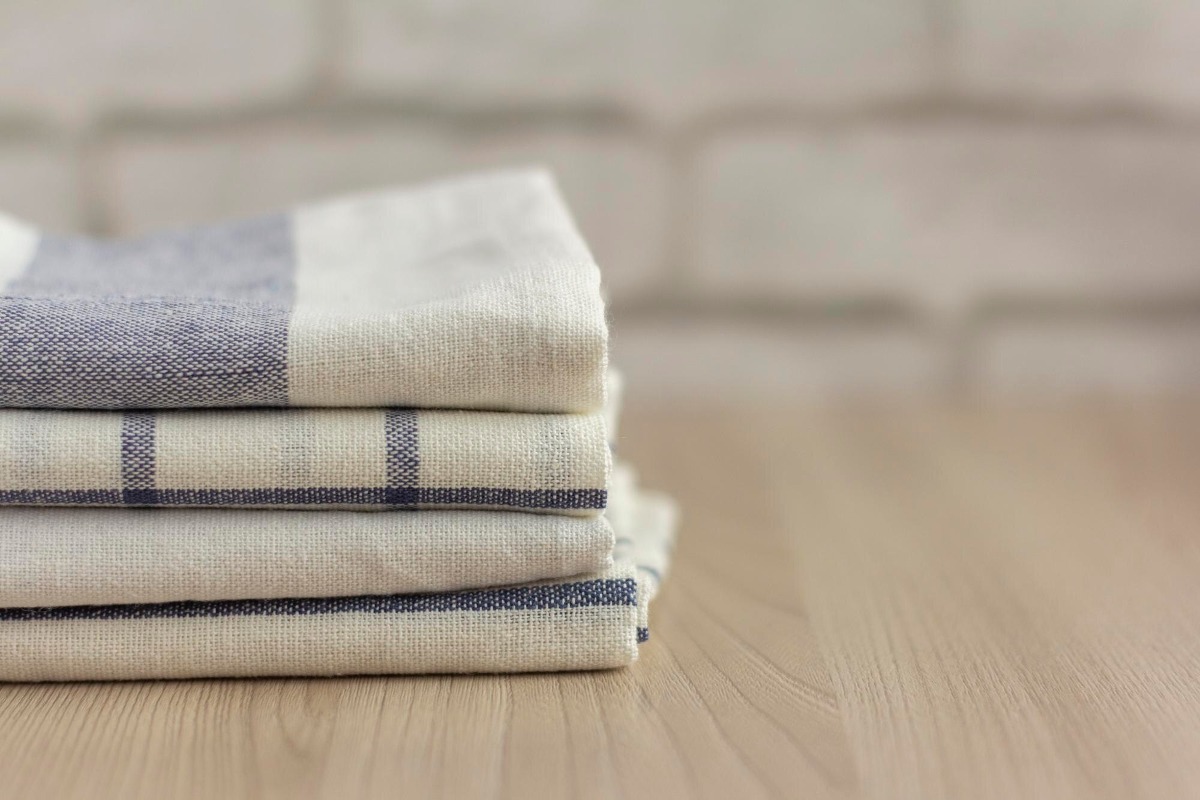
At breakfast, the dish towel hanging beside the sink smells sour again when it gets damp. Another regular wash may leave the source of the odor in the fabric, even when the towel looks clean. A small change in the laundry routine can help, but adding a stronger scent is not the answer.
Two separate hot washes can remove sour towel smells
Wash sour-smelling kitchen towels in hot water with 1 cup of white vinegar, then run a separate hot wash with 1/2 cup of baking soda. The vinegar helps loosen odor-holding residue, while the baking soda helps neutralize smells and lift remaining dirt. Keeping them in separate cycles prevents the 2 ingredients from reacting with each other instead of working on the towels.
- Onions and potatoes should never share a bin, and the sprouting is the clue
- Not oven cleaner and not steel wool, the way to get the brown film off your gas stove grates overnight
Use the hottest water the towels’ care labels allow, ideally at least 140°F (60°C). Add the vinegar to the first wash, then sprinkle the baking soda over the towels before starting the second wash. Dry the towels completely with heat before using or storing them; leaving them damp gives bacteria an opportunity to grow again.
Moisture and laundry residue help odors return
Kitchen towels pick up moisture and food particles during ordinary use. When a towel stays damp, bacteria can grow, and sour smells may persist even after laundering. A University of Arizona study of 82 used kitchen towels found detectable coliform bacteria on 89% and detectable E. coli on 25.6%.
Detergent and fabric softener buildup can make the problem harder to wash away. Fabric softener coats towel fibers, reducing absorbency and trapping dirt and minerals; too much detergent can leave residue as well. Vinegar’s acidity helps break up mineral deposits and grime, while alkaline baking soda helps loosen dirt and grease.
Hot water and vinegar have limits
A hot setting does not guarantee that every washer reaches 140°F (60°C), and some towels cannot tolerate that temperature. Check the care label and washer settings rather than assuming a cycle disinfects the fabric. Vinegar and baking soda are odor treatments, not substitutes for sound kitchen hygiene or a guaranteed way to eliminate harmful bacteria.
Iowa State University Extension and Outreach advises changing kitchen towels daily, machine washing them in hot water, and drying them with heat. Put a used towel aside for laundry rather than leaving it damp on a counter. Never mix vinegar with bleach, and never mix bleach with ammonia; keep laundry products out of children’s and pets’ reach.
Persistent odors call for a closer look
If a towel still smells sour once fully dry, repeat the separate washes and check whether detergent or softener residue is building up. A soak of 6 hours or more in a deodorizing solution is another option for stubborn odors, followed by laundering and complete drying. Soaking alone does not replace washing, and the water will not stay hot throughout the soak.
If freshly washed towels repeatedly pick up the same smell, inspect the washer for visible residue or mold and clean it according to its instructions. Store only fully dry towels in a clean, dry space. Keeping a fresh towel available each day is more useful than trying to rescue one that remains damp between uses.





Leave a Reply