

Dinner prep stalls when the vegetables you bought last week already look ready for the trash. Before you blame the grocery store, take a closer look at your pantry.
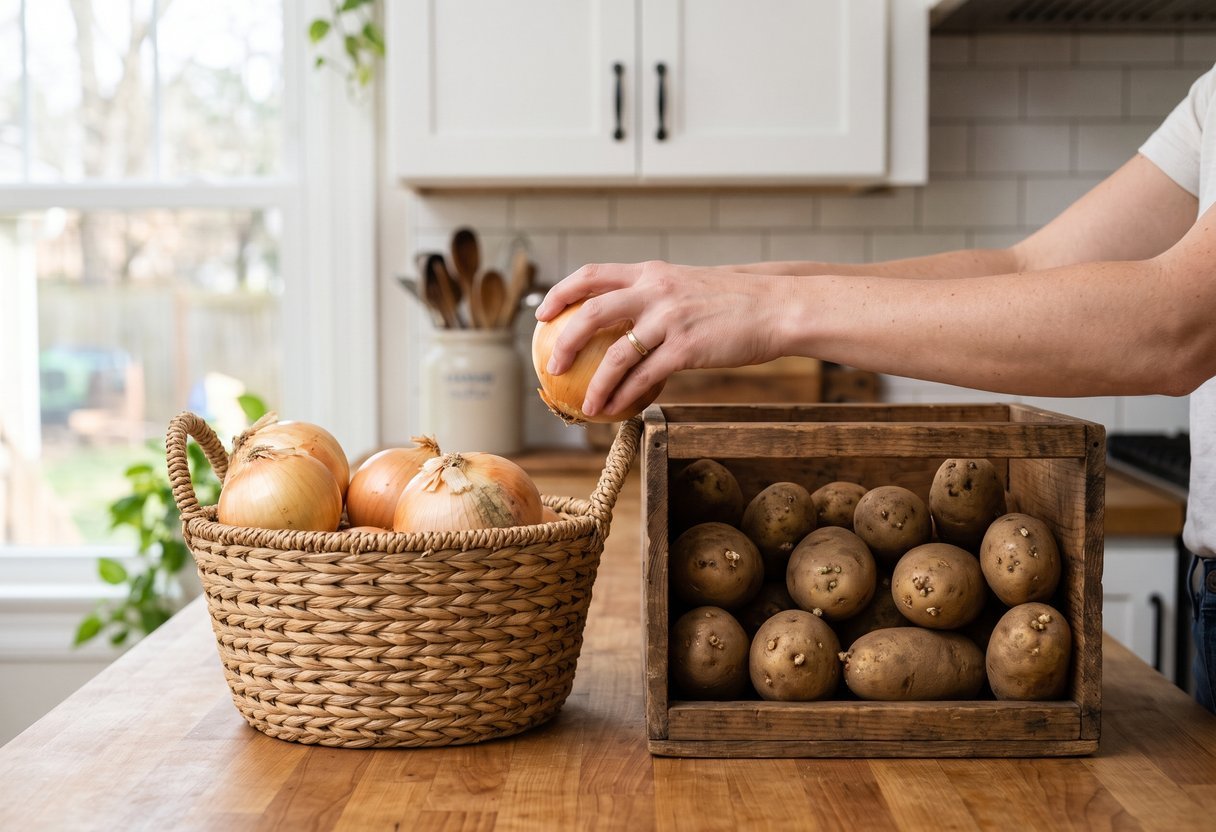
Pale sprouts poke through a bag of potatoes, and an onion in the pantry feels soft. Buying smaller bags may help use them sooner, but it does not address conditions that make them deteriorate faster. A simple change to the storage setup can help both last longer, though it cannot reverse spoilage that has already started.
Keeping onions and potatoes apart slows spoilage
Store onions and potatoes separately to help both last longer. When they share a bin, potatoes may sprout or soften sooner, while onions may turn brown and mushy. Separation reduces the effects of ethylene gas, moisture and onion odor on nearby produce.
- Not oven cleaner and not steel wool, the way to get the brown film off your gas stove grates overnight
- Onions or ground beef first in the pan, home cooks are split and only one order works
Sprouting is not proof that onions caused a potato to age. Warmth and light also affect stored potatoes, so moving the onions is only part of the fix. Check the storage conditions for both vegetables if either one deteriorates quickly.
Ethylene and moisture affect the vegetables differently
Onions release ethylene, a plant hormone that can influence how nearby produce ages. Exposure can contribute to early sprouting and soft spots in potatoes, although the relationship is not as simple as ethylene always causing sprouts. Both vegetables produce relatively little ethylene, and its effects on potato sprouts can vary with storage conditions.
Moisture is another reason to keep them apart. Potatoes contain substantial moisture, which can contribute to browning and softening in nearby onions; badly affected onions may even liquefy and leak. Onion odor can also be absorbed by potatoes and affect their flavor.
Separate storage spaces need the right conditions
Keep potatoes at 45-50°F (7-10°C) in a dark, dry, well-ventilated place. Darkness matters because light can make potatoes green, while ventilation helps prevent moisture from collecting around them. Avoid the refrigerator for routine storage: colder temperatures can turn potato starches into sugars.
Store whole onions in a cool, dry, dark place with airflow, such as a ventilated basket or mesh bag. A sealed plastic bag traps moisture against the bulbs. Do not assume the ideal potato spot is also ideal for onions: onions can sprout and decay rapidly at 40-50°F (4-10°C), and freezing temperatures can damage them.
Use separate storage areas rather than putting 2 open bags side by side. There is no established household distance that guarantees protection, especially in a small pantry. If the available space is warm or damp, buy smaller amounts that can be used before they soften or sprout.
Signs of spoilage call for a closer check
Inspect both vegetables when removing them from storage. Take a leaking or mushy onion out of the basket promptly and discard it rather than leaving moisture against sound bulbs. Discard potatoes that are rotten, extensively soft or green; greening signals light exposure and can accompany harmful compounds.
Keep discarded produce away from children and pets, and clean up any liquid left in a bin before refilling it. Then put sound onions and potatoes into separate, ventilated spots and check them regularly for moisture, soft spots and sprouts.



Leave a Reply