

You open a can of black olives for pizza night and notice how nearly identical they look. There’s a reason for that uniform appearance, and it might change how you see this pantry staple.
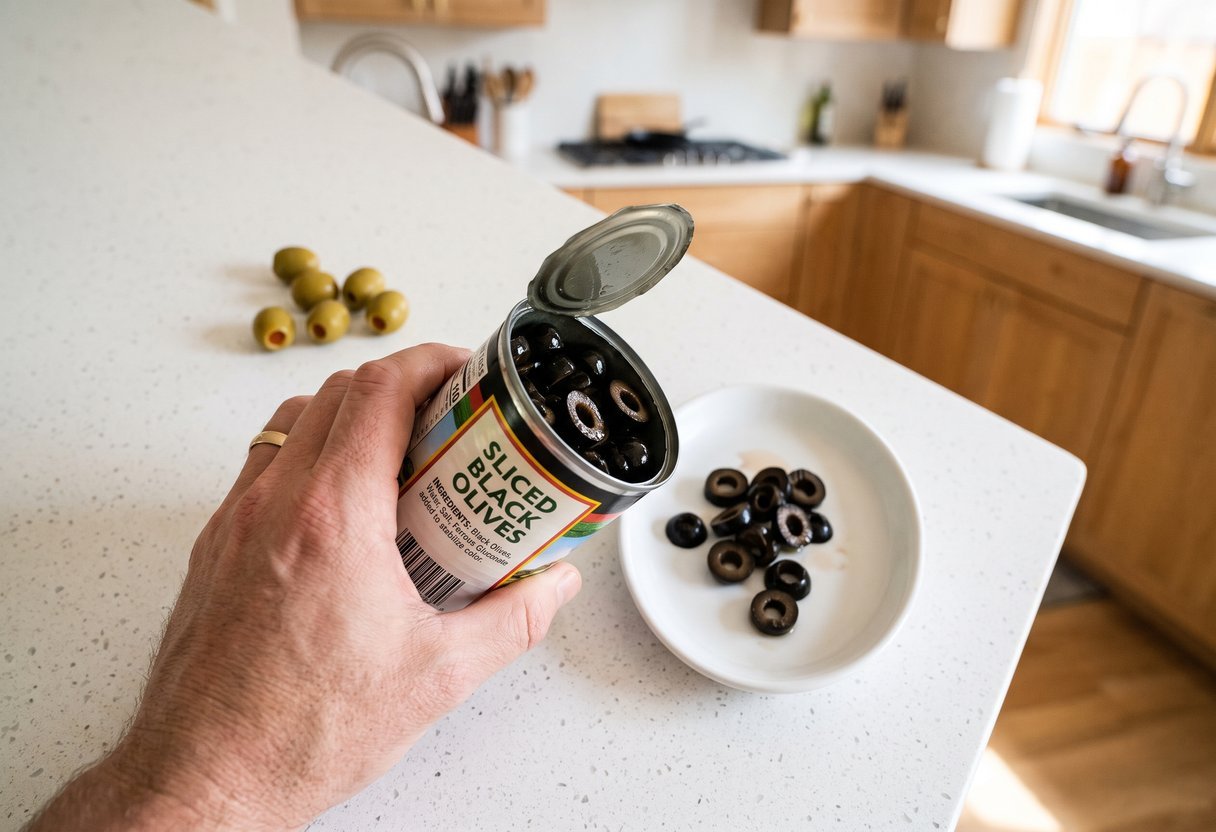
At the supermarket, a shopper reaches for a can of black olives to add to a salad. Their color seems to tell a simple story about how they ripened, but appearance alone can be misleading. A small detail on the can offers a better clue.
Most canned black olives started out green
The common canned black-ripe olives in US grocery stores were picked green, before they ripened on the tree. Processing turns them black, and the ingredient ferrous gluconate helps keep that color uniform. This is different from olives that darken naturally as they mature.
A can labeled “Ripe Olives” does not necessarily contain olives that ripened to black on the tree. On a sliced black olive ingredient label, the words “ferrous gluconate added to stabilize color” provide a more useful clue to how the olives were made.
Ferrous gluconate keeps the color consistent
Oxygen is what darkens the olives during processing. Ferrous gluconate is added to stabilize the resulting pigment, helping the finished olives retain an even black appearance. Its presence on an ingredient list is a strong sign that the olives were color-processed rather than left to darken on the tree.
Ferrous gluconate is an iron-based color additive regulated by the FDA under rules for ferrous gluconate use. Finding it on a label explains the color; it does not mean the ingredient should be added to olives at home or used without the restrictions that apply to commercial food production.
The California process darkens green olives
In the California black-ripe process, harvested green olives are treated with lye, a high-pH solution, and exposed to oxygenated water. The treatment promotes oxidation of compounds in the fruit, turning the olives dark. Ferrous gluconate is then used to stabilize the black color.
The sequence matters: the olives do not become black simply because ferrous gluconate is added. Lye treatment and oxygen exposure produce the darkening, while the additive helps preserve its appearance. Lye is caustic, so this industrial process is not a kitchen method to try with fresh olives; anyone interested in curing olives at home should use established food-preservation instructions instead.
Ripe olive labels describe a processed product
California’s black-ripe olive industry took shape in the early 1900s, with Freda Ehmann helping establish it in Oakland. The process created the familiar, consistently black canned olive, distinct from Greek-style black olives that darken naturally on the tree and Spanish-style fermented green olives.
The USDA maintains grade standards for canned ripe olives, assessing qualities such as color, flavor, defects and character. Those grades describe the finished product, not whether an olive turned black on the tree. For that distinction at the store, the ingredient list is more informative than the word “ripe” on the front of a can.
The ingredient list helps narrow the choice
Ferrous gluconate is a useful clue, but its absence alone does not prove that olives ripened naturally. Someone seeking tree-ripened olives can look for a product that describes how the olives were harvested or cured, then check its ingredients. The California process makes olives uniformly black; it does not make them the same product as naturally ripened olives.
Color also cannot establish whether canned olives are safe to eat. Do not use a leaking or swollen can, regardless of its label or contents; discard it instead. For an ordinary, intact can, check the ingredient list before buying: “ferrous gluconate” answers the question that the black color cannot.
Leave a Reply