

You get home from the grocery store and put the eggs away without a second thought. But when breakfast plans change, one overlooked detail could affect how long they stay fresh.
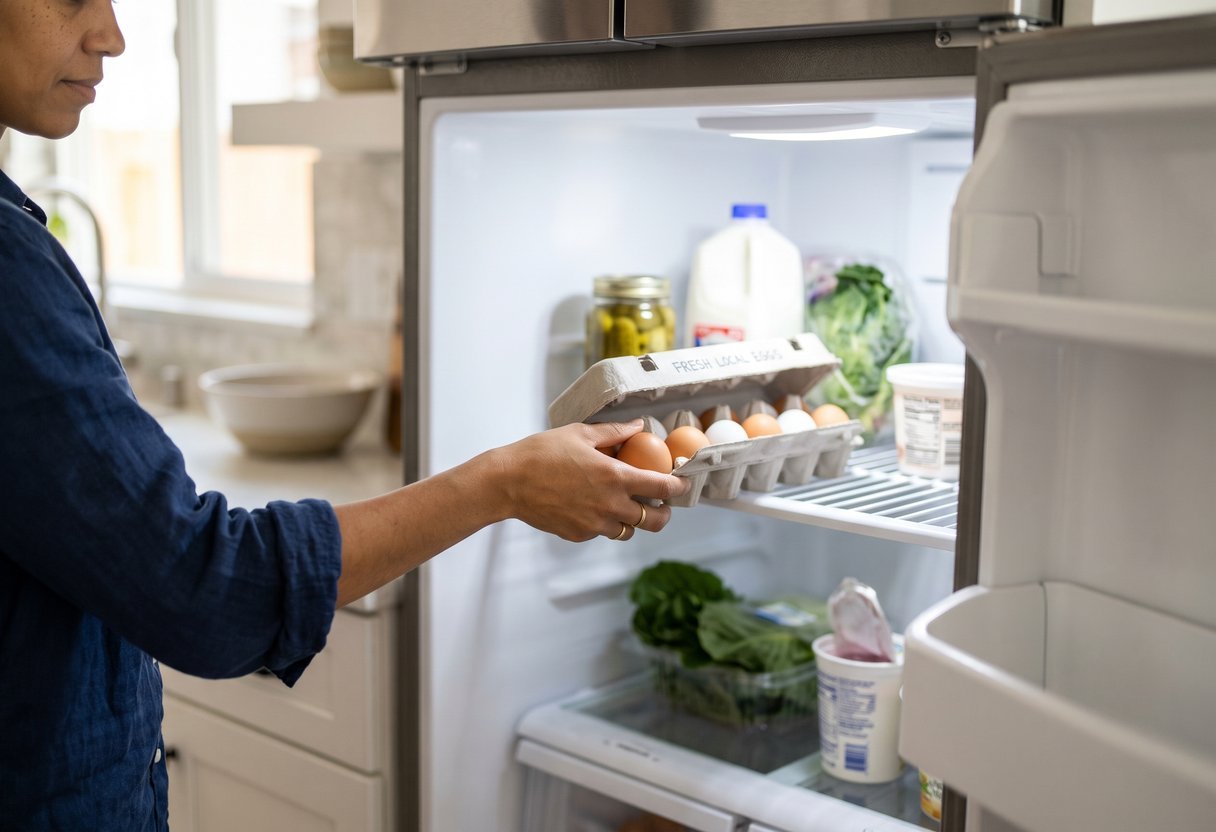
The refrigerator door swings open again during dinner prep, and the eggs wobble in their built-in tray. That tray is convenient, but convenience alone does not tell whether eggs will stay fresh. Even moving the carton onto a shelf can miss an important detail. The difference comes down to a more specific spot than most egg holders suggest.
Eggs belong in their carton on an interior shelf
Store purchased shell eggs in their original carton toward the back of a middle refrigerator shelf, not in the door or on the counter. That location helps keep them consistently cold, which slows bacterial growth and helps preserve quality. Moving the whole carton is all that is needed; eggs do not keep better in an open container.
- Neither oven cleaner nor baking soda, the way to clean the inside of an air fryer basket without ruining the coating
- Your kitchen scissors come apart on purpose, and the hinge is the reason they went dull
Egg storage matters because temperature changes can affect both safety and freshness. A convenient spot is not necessarily a good one: the refrigerator door warms more often than the main compartment, while a kitchen counter does not keep eggs chilled at all.
A steady temperature matters more than a built-in egg tray
The USDA recommends keeping eggs at 40°F (4°C) or colder. Opening the refrigerator exposes items in the door to warmer air, so a built-in door tray is a poor choice even if it was made to hold eggs. The back of an interior shelf is less exposed to those changes.
Keep the carton in the coldest practical part of the refrigerator, away from the front edge of the shelf. If that area does not stay at 40°F (4°C) or colder, moving the eggs within the same warm refrigerator will not fix the problem; the refrigerator temperature needs attention. Cold storage slows bacterial growth, but it does not make an egg that has been mishandled safe again.
The original carton protects more than the shells
The carton cushions fragile eggs and helps limit moisture loss through the tiny pores in their shells. Keeping eggs enclosed also reduces their exposure to odors from other foods. An open bowl or decorative egg holder gives up those protections without offering a storage advantage.
Leave eggs in the carton they came in rather than transferring them to a refrigerator-door compartment or open-top container. This also makes it easier to keep the eggs together and move them to a colder shelf. A carton helps maintain quality, but it cannot substitute for proper refrigeration.
Refrigerated eggs have a limited storage window
Raw shell eggs kept at 40°F (4°C) or colder generally stay fresh for 3 to 5 weeks from purchase. That window assumes they have been kept chilled; it is not extra time to add after eggs have spent hours on the counter. Quality can decline during storage even when eggs remain refrigerated.
A water float test can suggest that an egg has aged, but it cannot establish whether the egg is safe to eat. Likewise, the absence of an off smell is not a safety guarantee. Discard an egg with an off smell rather than trying to use it before the rest of the carton.
Counter storage has a firm limit
Do not leave refrigerated eggs at room temperature for more than 2 hours. As cold eggs warm, moisture can form on their shells, creating conditions that favor bacterial growth. If eggs have been left out longer, discard them rather than putting them back in the refrigerator.
After bringing eggs home, place the closed carton directly on an interior shelf. It is a small change from using the door tray, but it keeps the eggs in the steadier, colder spot they need.




Leave a Reply