

Fruit jelly, panna cotta, and mousse often depend on gelatin to hold their shape, but the ingredient comes from animal collagen. That means desserts made with conventional gelatin aren’t suitable for vegetarians or vegans, even when the rest of the recipe contains no meat or animal-derived ingredients.
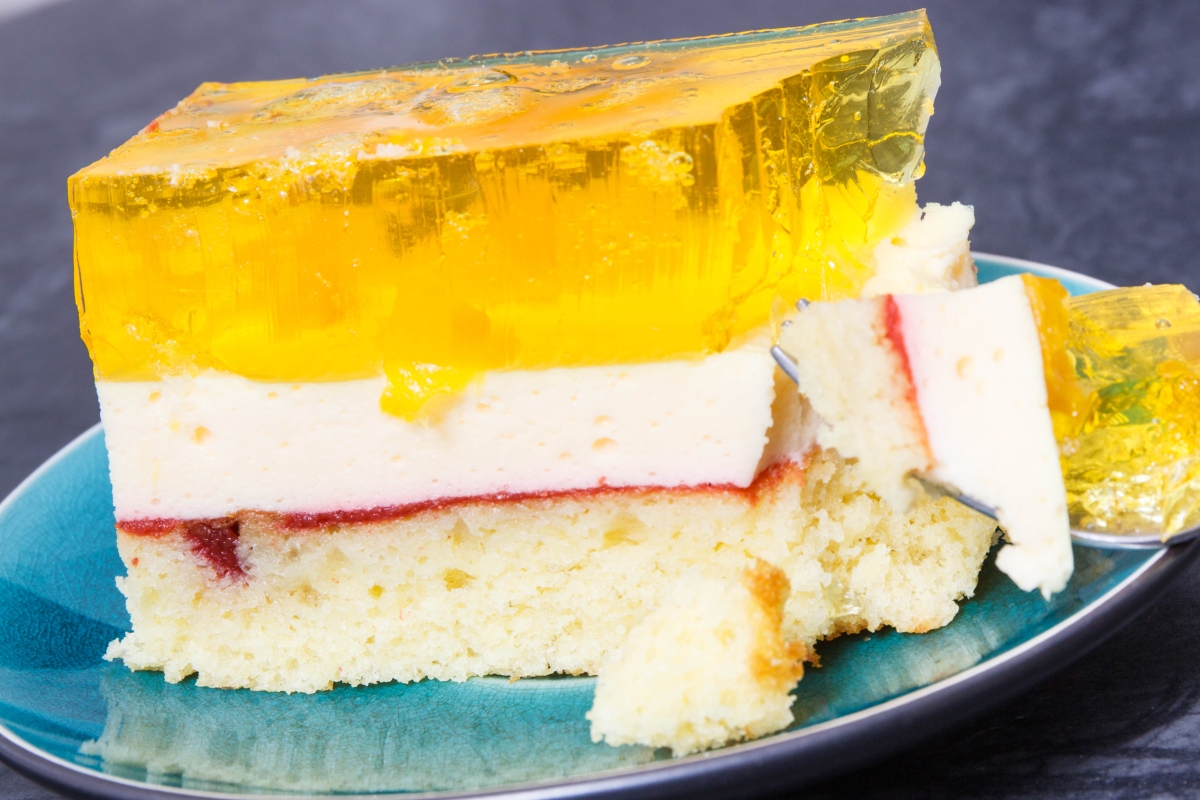
Agar-agar offers another way to set those desserts. Made from algae, this seaweed-derived ingredient can turn liquid into a firm gel without using animal collagen. It also behaves differently from gelatin, setting as it cools and often becoming firm at room temperature.
The difference matters when replacing gelatin in a recipe. Agar can create a similar-looking dessert, but its texture tends to be firmer and less wobbly than the soft gel associated with conventional gelatin.
Agar-agar comes from algae, not animal collagen
Traditional gelatin is produced from collagen found in animal tissues, which gives it the ability to form a gel when dissolved and cooled.
Agar-agar comes from algae and is used in desserts, jellies, and other foods that need a firm structure.
It is sold as powder, flakes, or bars, although powdered agar is easier to measure and incorporate into recipes.
Unlike gelatin, which can dissolve in warm liquid, agar needs sufficient heat to dissolve and activate its gelling properties.
Once dissolved, the mixture begins setting as it cools. Agar can form a gel at room temperature, often within about an hour, without requiring the refrigerator to become firm.
The finished texture is more rigid and less elastic than gelatin, which makes agar suitable for desserts that need to hold a defined shape.
The amount matters when replacing gelatin
The Kitchn offers a starting guideline of one teaspoon of agar powder for one cup of liquid, noting that substitution amounts may need adjustment.
The same guide gives an approximate comparison of one teaspoon of gelatin to one teaspoon of agar powder, but the two ingredients don’t produce identical results.
Agar flakes and bars require different measurements and preparation.
According to the guide, one teaspoon of agar powder corresponds to approximately one tablespoon of agar flakes or half an agar bar.
For powdered agar, combine it with the recipe’s liquid and heat according to the product instructions until dissolved.
Pour the mixture into molds or serving dishes, then allow it to cool and set.
The amount needed depends on the liquid, its acidity, and whether the dessert should have a firm or softer texture.
The finished dessert won’t wobble the same way
Gelatin produces a flexible gel that softens in the mouth, while agar creates a firmer structure that holds its shape at warmer temperatures.
That difference can be useful for molded fruit jellies, but it may require adjustments in desserts where a delicate, creamy texture is important.
For softer puddings and mousses, carrageenan is another seaweed-derived option discussed by The Kitchn. Different forms produce different gel textures, with iota carrageenan suited to softer preparations and kappa carrageenan used for firmer gels.
Agar remains a straightforward starting point for replacing animal gelatin in firm jellies, provided the recipe is adjusted for its stronger setting behavior.
The unexpected ingredient is seaweed, but the important distinction is how it works. Agar can set a dessert without animal collagen or refrigeration, although the finished texture won’t be an exact copy of conventional gelatin.
Leave a Reply