

Hummus usually gets its flavor from chickpeas, tahini, lemon, and garlic, but adding fresh basil brings a different character to the familiar dip. The herb introduces a fresh, aromatic taste, while extra garlic gives the mixture a stronger savory bite without changing its creamy base.
The recipe comes from Christal Sczebel of Nutrition in the Kitch, who combined basil and garlic with a small amount of greens powder to create a green hummus. Lemon juice and white vinegar provide acidity, balancing the richness of olive oil and tahini.
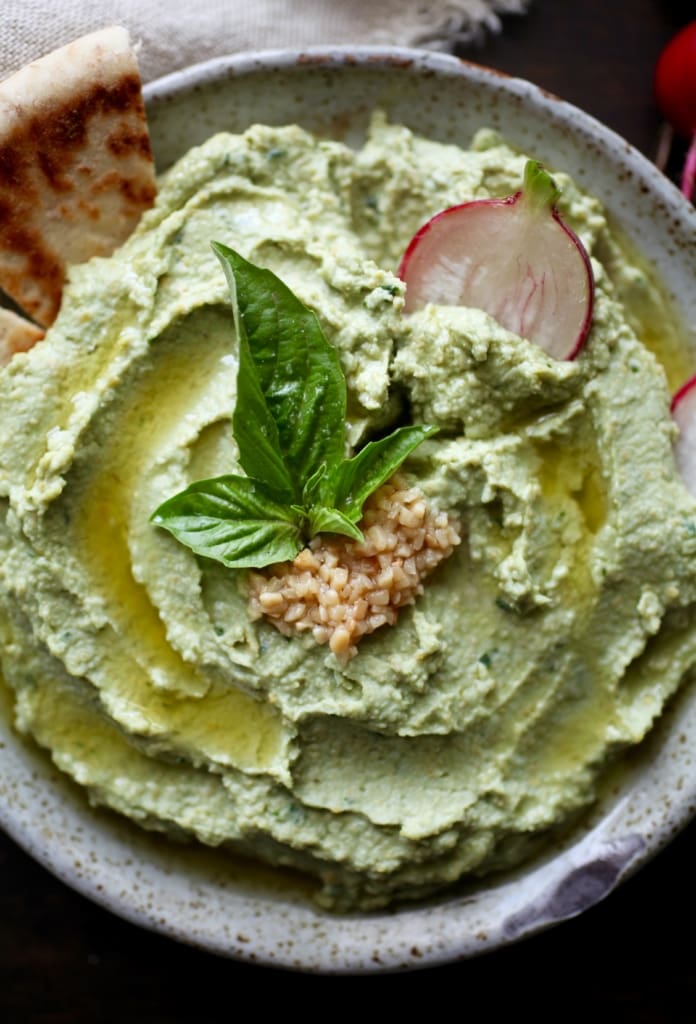
The result takes about ten minutes in a food processor and works as a dip for vegetables, a spread for sandwiches, or a topping for warm pita bread.
Fresh basil goes into the hummus after the chickpeas
Start with one 15-ounce can of chickpeas, rinsed and drained, along with ¼ cup olive oil and 2½ tablespoons tahini.
Blend the ingredients in a food processor for about 30 seconds to begin forming the creamy base.
Add ⅓ cup water, one teaspoon sea salt, two teaspoons minced garlic, and one teaspoon white vinegar.
Process for another one to two minutes, stopping to scrape the sides until the mixture becomes smooth.
The garlic adds a sharp, savory flavor that contrasts with the mild chickpeas and nutty tahini.
Once the base is blended, add ¼ cup chopped fresh basil and the juice of one small lemon.
Processing the basil near the end incorporates its flavor into the dip without requiring it to cook.
The green color comes from more than basil
The original recipe also includes one teaspoon of vegan greens powder, which contributes to the green appearance.
Sczebel used Genuine Health vegan greens+ O, a product containing plant ingredients such as spirulina and broccoli sprouts. The original post was sponsored by the brand.
The powder is part of the published recipe, but basil and garlic provide the main herb and savory flavors.
Blend the greens powder with the basil and lemon juice for another 30–60 seconds until incorporated.
The finished hummus has a smooth chickpea base with a green tint and a stronger herb flavor than a conventional version.
Serve it with sliced vegetables, crackers, or warm pita bread. It can also replace a standard hummus spread in sandwiches.
The recipe makes approximately six to eight servings without requiring cooking or additional preparation beyond blending.
The difference comes from the combination of fresh basil and garlic. Basil brings an aromatic note to the chickpeas, while garlic adds intensity, creating a dip that keeps the familiar hummus texture but changes its flavor.
Leave a Reply