

You unload the dishwasher and notice that the forks still look dull, even though they’re clean. Something unusual in the utensil basket has people taking a second look at this familiar chore.
At the dinner table, a serving spoon looks cloudy beside the clean plates. Running it through the dishwasher again may remove food residue, but another wash will not necessarily change how the metal looks. That makes an unexpected item in the cutlery basket worth a closer look, especially since what happens during a wash has limits.
A foil ball may brighten cutlery that touches it
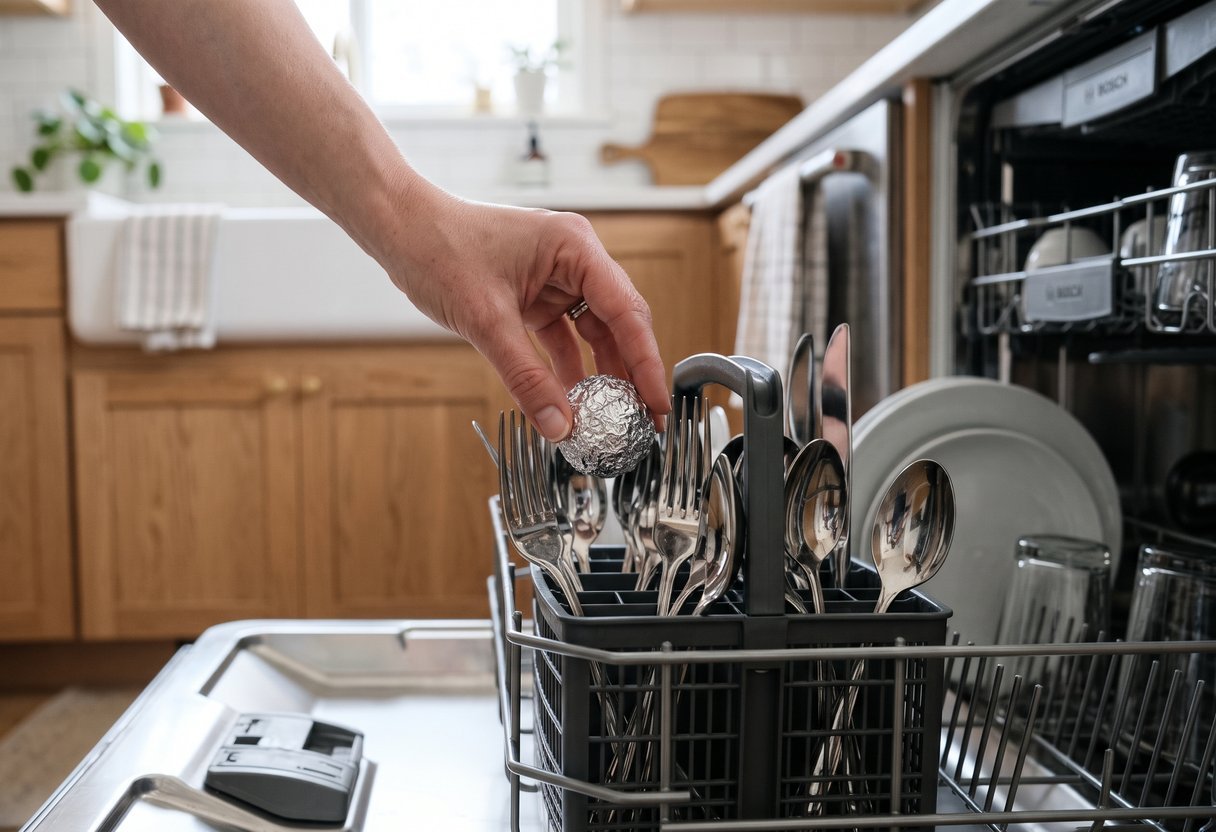
A small ball of aluminum foil goes in the dishwasher cutlery basket to help shine silver-plated and stainless steel flatware. It is there for contact with the utensils, not to scrub them or clean the rest of the load. Only pieces touching the foil are likely to benefit.
- Not in the fridge door and not in the carton on the shelf, where eggs keep the longest
- Neither oven cleaner nor baking soda, the way to clean the inside of an air fryer basket without ruining the coating
Silver develops tarnish when it reacts with sulfur compounds, leaving a dark layer of silver sulfide. Stainless steel can look dull for a different reason: residue and mineral deposits can leave spots or streaks. A foil ball may improve the appearance of some cutlery, but those 2 problems do not have the same cause.
Contact helps remove tarnish from silver
When foil, silver, warm water and dishwasher detergent come together, an electrochemical reaction can help reverse silver tarnish. Aluminum bonds more readily with sulfur than silver does. The foil does not polish by rubbing against forks and spoons, and it cannot reach tarnish on pieces that never touch it.
Results are limited by the crowded space inside a cutlery basket. Expect the method to affect roughly 4 or 5 pieces per wash, rather than every utensil or dish. Any improvement to stainless steel should not be mistaken for removal of silver tarnish: cloudy mineral spots on stainless steel are a different kind of buildup.
A tight ball belongs in the cutlery basket
Tear off a small piece of standard aluminum foil and crumple it into a tight ball. Place it securely in the cutlery basket against the flatware to be treated, add the usual dishwasher detergent, and run 1 normal cycle. Keep the ball contained so it cannot move freely or obstruct a spray arm.
Use this approach only with flatware that is suitable for the dishwasher. Skip delicate finishes and textured designs that could lose their appearance with repeated washing. Do not add vinegar, bleach or ammonia to try to strengthen the reaction; bleach must never be mixed with vinegar or ammonia. Keep loose foil away from children and pets.
Polishing is a better choice for stubborn marks
A foil ball cannot repair scratches, pits or worn plating. It also will not clean glasses, plates or utensils outside its contact area. If silver-plated pieces are valuable or have delicate details, hand-polishing with a silver-specific cleaner, following its directions, offers more control than another dishwasher cycle.
A separate silver-cleaning method uses foil, baking soda, salt and boiling water, but it requires a heat-safe setup and careful handling of hot water. For routine care, check that the flatware is dishwasher-safe first. Then place a contained foil ball next to just a few suitable pieces, rather than expecting it to brighten the whole basket.





Leave a Reply