

Your cutting board still looks questionable after dinner, and the sponge smells off even after a rinse. Reaching for bleach can feel like overkill, but what else belongs in your kitchen cleanup routine?
A plastic food container still looks yellow after a wash, even though the inside feels clean. Scrubbing it again may not lift the discoloration, while bleach has an odor that some people cannot tolerate. A familiar household staple offers another option, but it is not the right choice for every kitchen cleanup job.
Hydrogen peroxide suits 7 kitchen cleaning jobs where bleach has drawbacks
Wood cutting boards, plastic cutting boards, sponges, plastic food containers, refrigerator shelves, refrigerator walls, and refrigerator door gaskets can all benefit from cleaning with 3% hydrogen peroxide. Its advantages are most useful when bleach odor or sensitivity is a concern, or when treating stains on plastic, not because it disinfects every surface better than bleach.
- Your microwave has a wattage printed inside the door, and every cook time on a frozen box assumes a different number
- Lining your ironing board with foil under the cover, what it’s for and why it cuts ironing time
Hydrogen peroxide works through oxidation, which can damage microorganisms and break down some stains. It also breaks down into water and oxygen rather than producing the chlorinated byproducts associated with bleach. That does not make every bottle a substitute for an EPA-registered disinfectant: when disinfection is essential, follow the product label for approved surfaces and contact time.
Cutting boards and sponges need cleaning before sanitizing
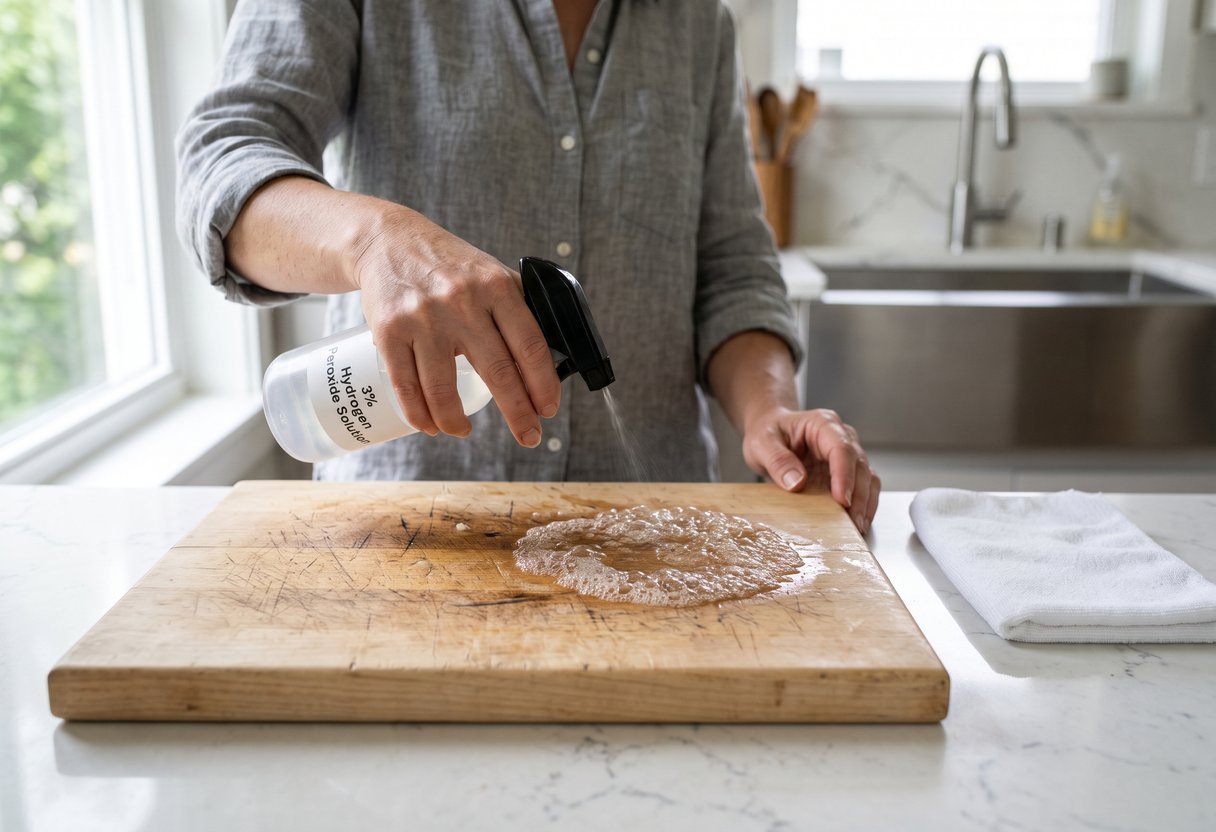
Food residue can remain in cutting-board knife marks, so wash the board first. For a wood board, pour 3% hydrogen peroxide directly over the surface, allow it to sit for a few minutes, then rinse with clean water and let the board dry. The same approach offers a bleach-free option for a plastic board, but a deeply scored board that cannot be cleaned thoroughly should be replaced.
Ohio State University Extension suggests hydrogen peroxide for people who cannot use bleach on cutting boards. It is an alternative, not a stronger standard: University of Maine Cooperative Extension recommends a diluted bleach solution for cutting-board sanitizing.
A sponge holds both moisture and food particles. Submerge it fully in equal parts 3% hydrogen peroxide and water for about 5 minutes, then rinse it thoroughly and let it dry completely. Replace a sponge that is falling apart or cannot be cleaned rather than relying on repeated soaking.
Peroxide can lighten plastic stains and clean visible refrigerator mold
For a yellowed plastic food container, submerge the stained surface in 3% food-grade hydrogen peroxide and place it in direct sunlight for 24 to 48 hours. Oxidation can lighten discoloration left by food, but heavily stained plastic may not return to its original color. Wash and rinse the container before using it for food again.
After removing food from a moldy refrigerator, spray 3% hydrogen peroxide directly onto visible mold on shelves, walls, or door gaskets. Follow the product label’s contact time, then wipe the area clean and rinse surfaces that will touch food. If mold remains in a damaged gasket or keeps returning, cleaning alone is not enough; address the moisture problem and replace parts that cannot be cleaned.
Some situations call for a different disinfectant
Hydrogen peroxide is not a universal replacement for bleach or an EPA-registered disinfectant, particularly when a specific pathogen is the concern. Use a product labeled for that purpose and follow its directions. Keep cleaning products away from children and pets, and never mix hydrogen peroxide with vinegar or bleach; never mix bleach with vinegar or ammonia.
For everyday use, start by removing food and grime, then choose peroxide for a suitable surface when avoiding bleach is the priority. Check the label before treating a food-contact surface, and rinse it as directed before preparing food.


Leave a Reply