

You pull a bag of flour from the back of the pantry halfway through a weekend baking project. Before it goes into the mixing bowl, one small detail could change your plans.
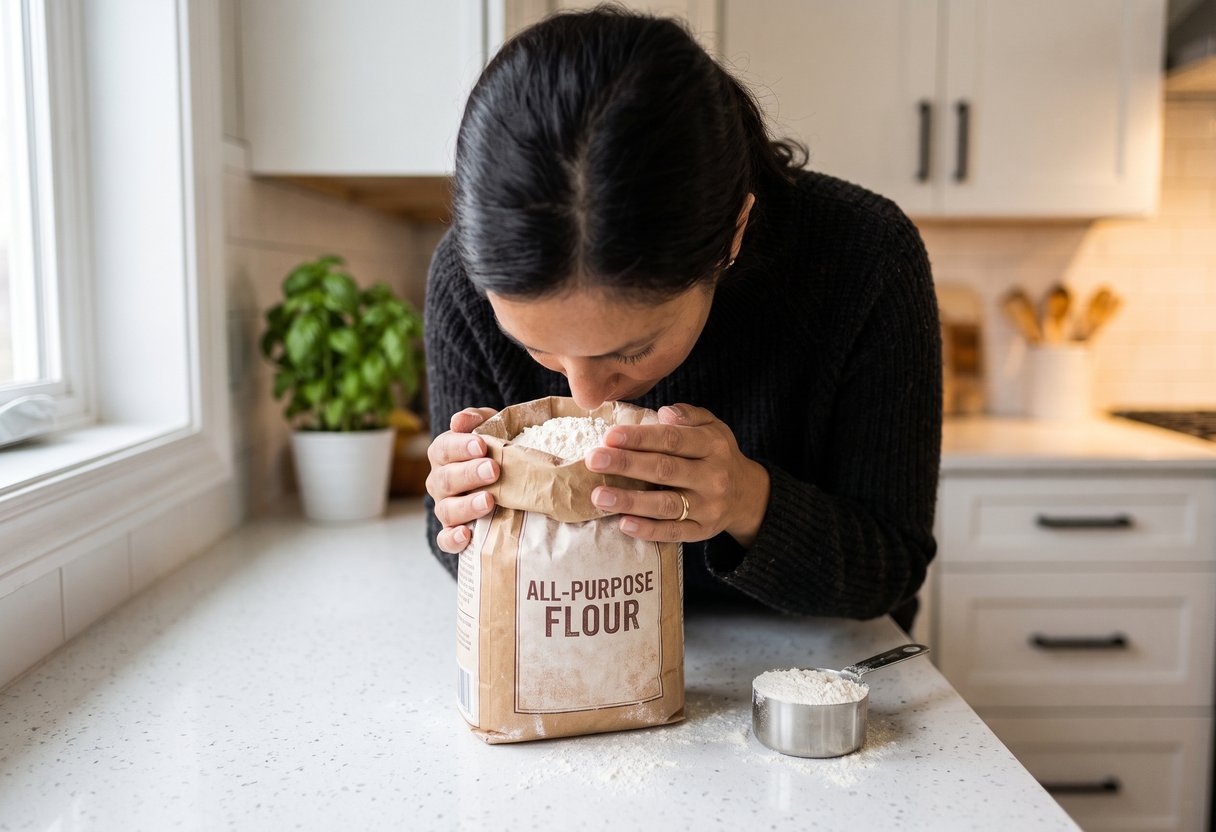
The measuring cup dips into flour that looks as pale and powdery as it did months ago. It is tempting to trust that familiar appearance or the label on the bag, but neither tells the whole story after flour has been stored. One quick check before measuring can catch a problem that is easy to miss, especially with whole wheat or almond flour.
An off smell usually means flour has gone rancid
Flour can smell musty, sour, or otherwise off when its natural fats and oils oxidize. This process, called rancidity, affects the flavor of anything baked with the flour, even if the bag looks normal. Air and heat can speed the change, so storage matters as much as the date printed on the package.
- Neither bleach nor vinegar, the way to get the brown ring out of the toilet bowl for good
- Neither dish soap nor vinegar, the way to get the sticky label glue off jars you want to keep
Whole wheat flour goes rancid faster than white flour because it includes the grain’s oil-rich bran and germ. Refined white flour has less of that oil and generally keeps longer. Nut flours, including almond flour, contain even more fat and are especially prone to developing an unpleasant flavor.
Flour shelf life depends on the type
An unopened bag of white all-purpose flour can keep for up to 12 months in the pantry, while an opened bag can keep for up to 8 months if stored properly. Sealed airtight in the freezer, white flour can keep for up to 2 years. These are quality estimates, not guarantees that flour will remain fresh under every storage condition.
Unopened whole wheat flour keeps for about 3 months in the pantry and up to 1 year in the refrigerator or freezer. Once opened, it keeps for roughly 1 to 3 months in the pantry. Nut flour has a shorter shelf life than whole wheat flour because of its higher oil content, so the refrigerator or freezer is a better choice than a pantry for longer storage.
Smell and appearance matter more than the printed date
A “best by” date estimates quality; it does not mark a strict safety cutoff. Flour past that date may still be usable if it was stored properly, but flour past its date should be checked before baking. If it smells musty, sour, or off, discard it rather than hoping the odor will disappear in the oven.
Also discard flour with unusual yellowish or grayish discoloration, visible mold, moisture-related clumps, or insects. Rancid flour can taste bitter, but tasting raw flour is not a good freshness test because raw flour should not be eaten. Smell and sight provide a way to check it without that risk.
Airtight, cool storage helps flour last longer
After opening a bag, transfer the flour to a clean, airtight container and mark it with the flour type and opening date. A sealed container limits exposure to air and moisture, while a cool, dry pantry helps prevent damp clumps and pests. Avoid spots near the stove or in a damp basement, where storage conditions can work against freshness.
For longer storage, seal flour airtight and refrigerate or freeze it, especially whole wheat and nut flours. Cold slows the changes that lead to rancidity, but it cannot restore flour that already smells off. Before starting a recipe, check the stored flour for odor, discoloration, moisture, and insects; replace it if any of those signs appear.





Leave a Reply