

You’re standing at the sink with a bag of rice, wondering whether to rinse it before dinner. The choice may matter for reasons that aren’t obvious when you look at the finished bowl.
The pot lid comes off, and the rice is clumped together instead of light and separate. Using the same prep routine for every bag may be convenient, but it does not always produce the texture a dish needs. One small decision before cooking can also affect more than the finished bowl.
Rice type determines whether rinsing helps
Rinse basmati rice for separate, fluffy grains and sushi rice to remove excess surface starch before cooking. Skip rinsing enriched white rice, which can lose added nutrients, and risotto rice, which needs its surface starch for creaminess. The right choice depends on both the package label and the dish.
- Not vinegar and not baking soda, the way to get the black off a glass casserole dish without an hour of scrubbing
- The hole in your potato peeler has a job, and it isn’t for hanging it on a hook
Rinsing is often treated as a standard preparation step, but it changes more than cleanliness. Water carries away some of the loose starch on rice grains, and it can also carry away nutrients added during processing.
Surface starch affects the finished texture
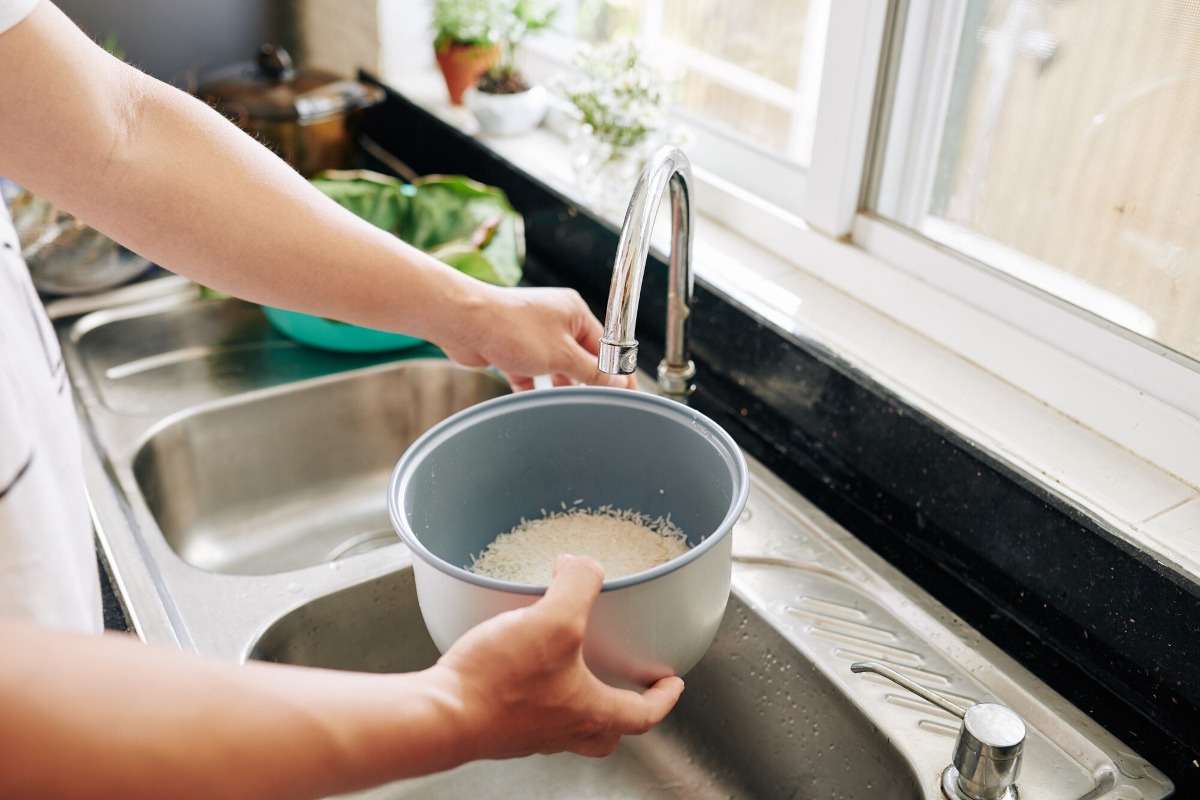
For basmati rice, rinsing removes excess surface starch that can make the grains sticky or gummy. Place the rice in a bowl, cover it with cool water, swish gently, and drain. Repeat the rinse, then drain well before cooking; rinsing does not require soaking.
For sushi rice, use the same order of steps and rinse 3 to 4 times before cooking. Removing excess surface starch helps prevent an overly mushy result and allows the cooked rice to absorb its seasoned vinegar mixture. Sushi rice will still hold together when prepared for sushi; the goal is to avoid excess starch, not to make every grain separate.
Arborio and Carnaroli rice need the opposite treatment when used for risotto. As the rice cooks, its starch helps create the dish’s creamy texture, so washing it away works against that result. Check the package before rinsing ordinary white rice, too: rice labeled “enriched” has added thiamine, niacin, iron and folic acid that washing can remove.
Rinsing is not a reliable arsenic-reduction method
Rice absorbs arsenic from soil and water more readily than many other crops. The FDA says a pre-cooking rinse has a minimal effect on arsenic in the cooked grain, while washing nutrients from polished and parboiled rice. Rinsing for texture should not be treated as a way to make rice arsenic-free.
A study measuring bio-accessible arsenic, the portion available for absorption, found a larger reduction after washing. That is a different measure from the FDA’s assessment of arsenic in cooked rice, so the findings do not make an ordinary rinse a dependable substitute for an arsenic-reduction cooking method.
Cooking in extra water involves a trade-off
To reduce inorganic arsenic, the FDA describes cooking rice like pasta in 6 to 10 parts water for 1 part rice, then draining it when cooked. This method can reduce inorganic arsenic by 40% to 60%, depending on the rice, but it can also remove 50% to 70% of nutrients added to enriched polished or parboiled rice. It is a less suitable choice when retaining those added nutrients is the priority.
Another option is to boil rice for 5 minutes, drain it, and finish cooking it in fresh water. Tests of this method found reductions in inorganic arsenic in brown and white rice, though it does not remove all arsenic. For everyday cooking, read the rice label first, rinse only when it helps the intended texture, and refrigerate cooked leftovers promptly.





Leave a Reply