

While peeling potatoes for dinner, you might notice a small opening on your peeler that you have never given much thought. What is it doing there, and have you been overlooking something useful?
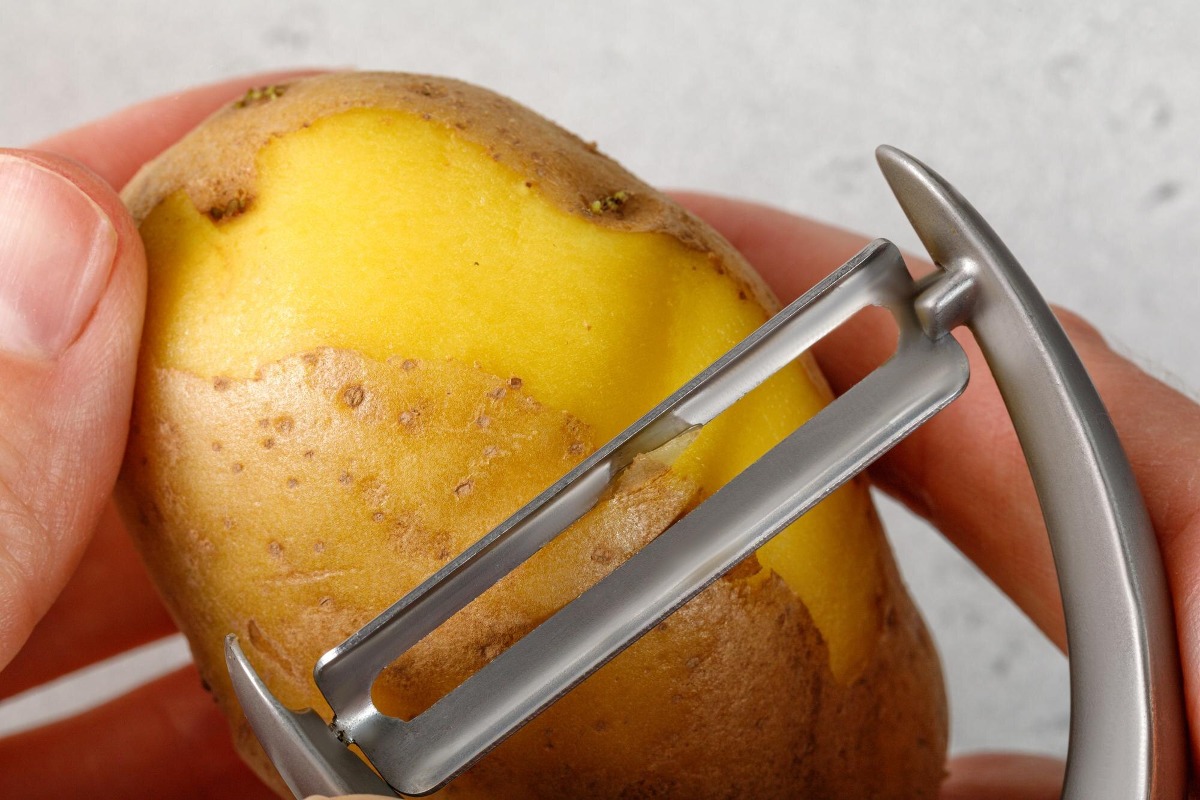
A dark spot remains on a potato after the skin comes off, and another pass with the peeler barely touches it. A paring knife can remove the spot, but it may take a sizable chunk of potato with it. Before reaching for another tool, it is worth taking a closer look at the peeler already in hand.
The handle hole and blade notch have different jobs
The hole at the end of many potato peeler handles is for hanging the tool, not for removing potato eyes. A separate pointed notch or scoop near the blade digs out eyes and small blemishes without switching to a paring knife. Both features can be easy to overlook, especially when the blade gets most of the attention.
- The vanilla in most American kitchens isn’t vanilla, and the bottle admits it in one word
- Mice get in through the dryer vent more often than the front door, and a $5 part stops them
Peelers vary, so the eye remover may sit at the side or tip of the blade. Some peelers do not have one at all. Check the tool’s shape before pressing any part of the handle into a potato: the hanging hole is not designed to cut into the flesh.
The hole provides a place to hang the peeler
On the OXO Good Grips peeler described by the Smithsonian National Museum of American History, the hole is at the end of the handle and is meant for hanging. The museum identifies a separate scoop at the blade tip for removing potato eyes. The handle hole can keep the peeler accessible on a hook, but it does not replace the scoop.
The Good Grips handle was designed to be easier to hold for people who find ordinary kitchen tools difficult to use. Its comfortable grip, rather than its hanging hole, is the feature intended to help steady the tool during peeling. A peeler that slips in the hand should be set aside in favor of one that can be held securely.
The pointed scoop removes small eyes and blemishes
To use the scoop, hold the potato steady on a cutting board, place the point beside an eye, and lift out the eye and the flesh immediately around it. Work carefully so the point does not slip toward the hand holding the potato. Removing a small area this way avoids cutting away a larger section with the peeling blade.
Potato eyes and sprouts deserve attention because solanine and chaconine, naturally occurring compounds, are concentrated in sprouts and the areas around eyes, among other parts of the plant. A scoop is useful for an isolated eye, but it cannot make a badly deteriorated potato suitable for cooking. Iowa State University Extension and Outreach advises tossing potatoes with extensive sprouts, shriveling, or deep green discoloration within the tuber.
Peeler design has long focused on easier handling
Vegetable peelers have changed through many designs since the late 1800s and early 1900s. Henry Trust received a U.S. patent for a vegetable peeler in 1913. Those developments help explain why peelers today can have several small features with separate purposes.
Smart Design created the original OXO Good Grips peeler in 1989 with Betsey Farber, who had arthritis, in mind. Its rubber grip was developed to make the tool easier to handle. That history is a reminder that a peeler’s handle and blade deserve separate attention when choosing one.
Careful use matters more than the extra feature
Rinse the blade and scoop after use to remove trapped potato pieces, then dry the peeler before hanging or storing it. Keep fingers clear of both the cutting edge and the pointed scoop. If the scoop is damaged or missing, use a paring knife carefully for a small blemish instead of trying to dig it out with the handle hole.
Before cooking, inspect the whole potato rather than relying on the scoop alone. Remove an isolated eye with the pointed feature, but discard a potato with extensive sprouting, shriveling, or deep green flesh.


Leave a Reply