

At the grocery store, two small bottles promise the vanilla flavor your cookies need, but one costs a lot more. Back home, it’s easy to miss what sets them apart.
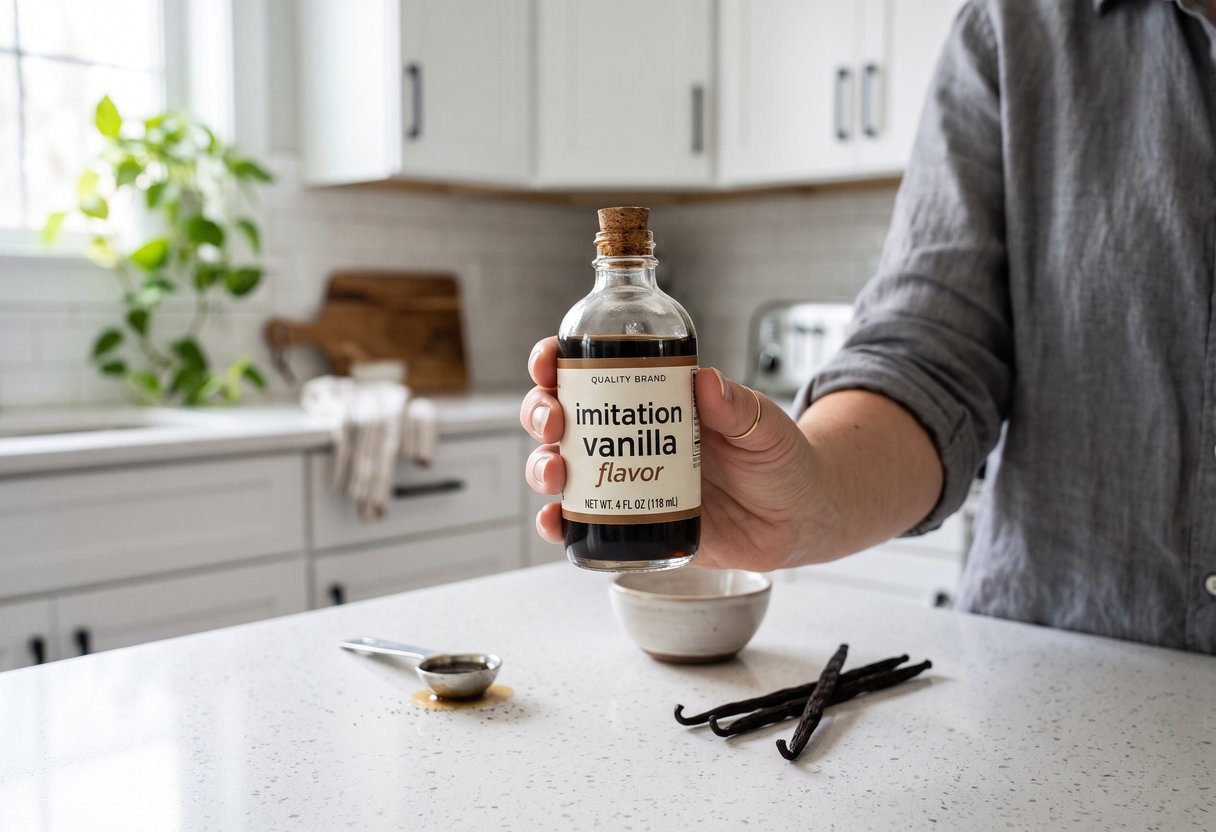
A teaspoon of brown liquid goes into the cookie dough, and the bottle returns to the cabinet. Its familiar smell and dark color may seem like enough to judge what is inside, but both can be misleading. One small detail gives a clearer answer.
Much of the world’s vanilla flavor comes from synthetic vanillin
Much of what is sold as vanilla flavor is synthetic vanillin, made to provide the familiar vanilla aroma without extracting it from vanilla beans. It is widely used because producing vanilla from harvested beans is more costly and limited by the supply of those beans. An estimated 99% of the world’s vanilla comes from synthetic sources, but that figure does not measure what is in American kitchens.
- Mice get in through the dryer vent more often than the front door, and a $5 part stops them
- Neither oven cleaner nor steel wool, the two-ingredient paste that lifts the brown off old baking sheets
That distinction matters at the grocery shelf: a bottle can taste like vanilla without being pure vanilla extract. The product name and ingredient list are more useful than its color or the word “vanilla” alone.
Pure extract contains more than vanillin
Under the FDA’s standard of identity, pure vanilla extract must contain extractives from at least 13.35 ounces (378 g) of vanilla beans per gallon (3.8 L), extracted with alcohol at a concentration of at least 35% by volume. Vanilla beans supply vanillin along with hundreds of other flavor compounds, which give pure extract a more complex aroma.
Imitation vanilla gets almost all its vanilla flavor from vanillin. Synthetic vanillin is made primarily using petrochemical precursors such as guaiacol and glyoxylic acid; a smaller share comes from lignin, a byproduct of wood-pulp processing. Those production routes describe where the flavor compound comes from, not how a finished bottle will perform in every recipe.
The label tells more than the color
A product made mainly with synthetic vanillin instead of meeting the federal standard for vanilla extract must be labeled “imitation vanilla extract” or “imitation vanilla flavor.” FDA labeling rules also require “imitation” to be as prominent as the rest of the product name when a food resembles a standardized food but is nutritionally inferior to it. Check the front label first, then read the ingredients for vanillin, coloring and alcohol.
A brown liquid is not proof that vanilla beans were used: imitation vanilla can be tinted with caramel color. Clear imitation vanilla can also be sold, so appearance is not a dependable substitute for the label. Anyone avoiding alcohol should check the ingredients rather than assume imitation vanilla is alcohol-free; pure vanilla extract contains alcohol by definition.
Choose based on how noticeable the vanilla will be
Pure extract is a sensible choice for custard or ice cream, where vanilla is a prominent flavor and the bean’s additional aroma compounds have room to stand out. Imitation vanilla is a lower-cost option for baked goods when other flavors or high heat make those differences less noticeable. It will not provide the same complexity in a recipe built around vanilla.
When substituting, use the amount of vanilla flavoring the recipe calls for, then judge the finished flavor before changing that amount next time. Neither type can fix a recipe in which the vanilla is overwhelmed by stronger ingredients.
Synthetic vanillin has a long history
Vanillin was isolated as a relatively pure substance in 1858. Ferdinand Tiemann and Wilhelm Haarmann achieved its first commercial synthesis in 1874, and production from wood-pulp lignin waste became more available in the 1930s. These methods helped make vanilla flavor less dependent on harvested beans.
For the next bottle, compare the front label with the ingredient list and choose pure extract when bean-derived flavor matters most, or imitation when a simpler vanilla note will do.



Leave a Reply