

You open the fridge for breakfast and spot dark specks tucked into the door seal, even though the shelves look clean. Why does that one overlooked spot keep looking dirty after everything else sparkles?
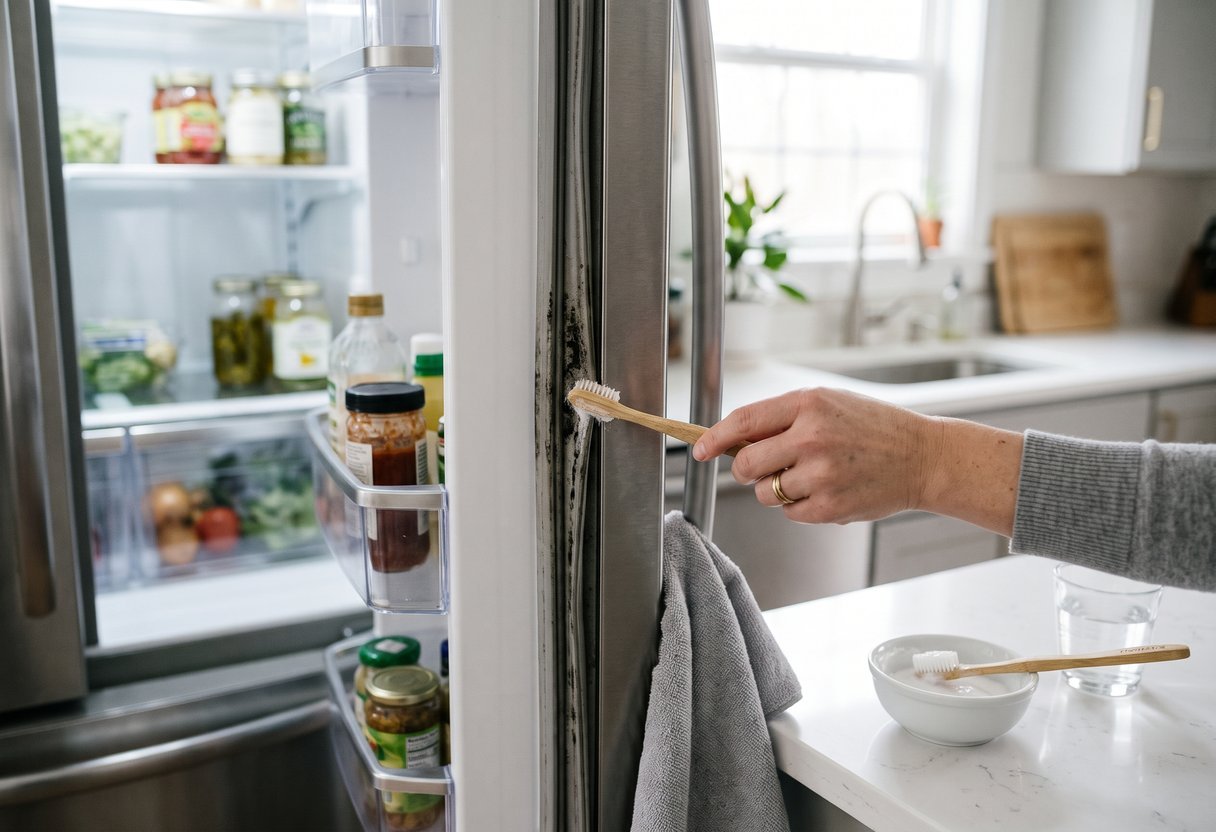
After groceries are put away, a cloth run along the refrigerator door picks up a black streak from the flexible seal. A quick wipe may clean the surface while leaving marks tucked inside its folds. Scrubbing harder or using a harsh cleaner can damage the seal without addressing the buildup. A gentler approach and a little regular attention can make the difference.
Baking soda and water can clean mold from a refrigerator gasket
A baking soda solution is a gentle, bleach-free way to remove visible mold and grime from a refrigerator door gasket. The solution helps loosen buildup while a soft toothbrush reaches into the folds where moisture and crumbs collect. Mix 1 tablespoon of baking soda with 1 quart of warm water.
Dip the toothbrush in the solution and gently scrub the gasket grooves, taking care not to pull or tear the seal. Wipe away the loosened buildup with a cloth dampened with warm water, then dry every fold completely with a microfiber towel. Scrubbing can remove mold on the surface, but it cannot restore a gasket with cracks or mold that remains embedded after cleaning.
Moisture and crumbs help mold grow in gasket folds
Refrigerator gaskets sit around a door that opens and closes throughout the day. Moisture can linger in their dark folds, while trapped crumbs and spills add material for mold to grow on. Cleaning and drying the folds matters as much as removing the visible spots: dampness left behind can allow mold to return.
Peroxide and vinegar are other bleach-free options
For moldy areas that need another pass, spray 3% hydrogen peroxide directly onto the gasket and let it sit for several minutes. Wipe the area with a damp cloth, then dry it thoroughly. Peroxide may also help lift stains, but a stain that remains does not necessarily mean more scrubbing will fix the seal.
White vinegar is also a commonly recommended option. Mix equal parts white vinegar and water in a spray bottle, apply it to the gasket, and wipe with a microfiber cloth. Follow with a damp cloth to remove the solution, then dry the folds; vinegar is an alternative to baking soda, not something that must be used with it.
Bleach can damage the gasket without solving deeper mold
Bleach is not a good routine choice for a refrigerator gasket. It can damage rubber and nearby plastic, and it may not reach mold embedded in the gasket material. The Environmental Protection Agency does not recommend chlorine bleach as a routine practice for mold cleanup; its general guidance favors scrubbing with detergent and water.
Avoid ammonia-based cleaners on the gasket as well, since harsh cleaners may dry out the material and contribute to cracks. Never mix bleach with vinegar or ammonia. Keep cleaning products away from children and pets, and use one cleaning solution at a time.
Weekly wiping and a seal check can prevent a repeat
Wipe the gasket with a damp cloth each week to remove crumbs and spills before they collect in the folds, then dry it. Check the seal by closing the door on a dollar bill halfway and gently pulling. If the bill slides out easily, inspect that section of the gasket for dirt, folds or damage.
If mold remains after gentle cleaning, or the gasket has cracks or tears, replacement may be more useful than repeated scrubbing. A gasket can last roughly 5 to 10 years with proper care, but visible wear and a poor seal matter more than age alone. An appliance repair technician can assess or replace a gasket when the correct fix is unclear.
Leave a Reply