

Dinner is over, but your glass casserole dish still has a stubborn black crust that won’t budge with a sponge. The easiest way to tackle it may be hiding in an unexpected part of your home.
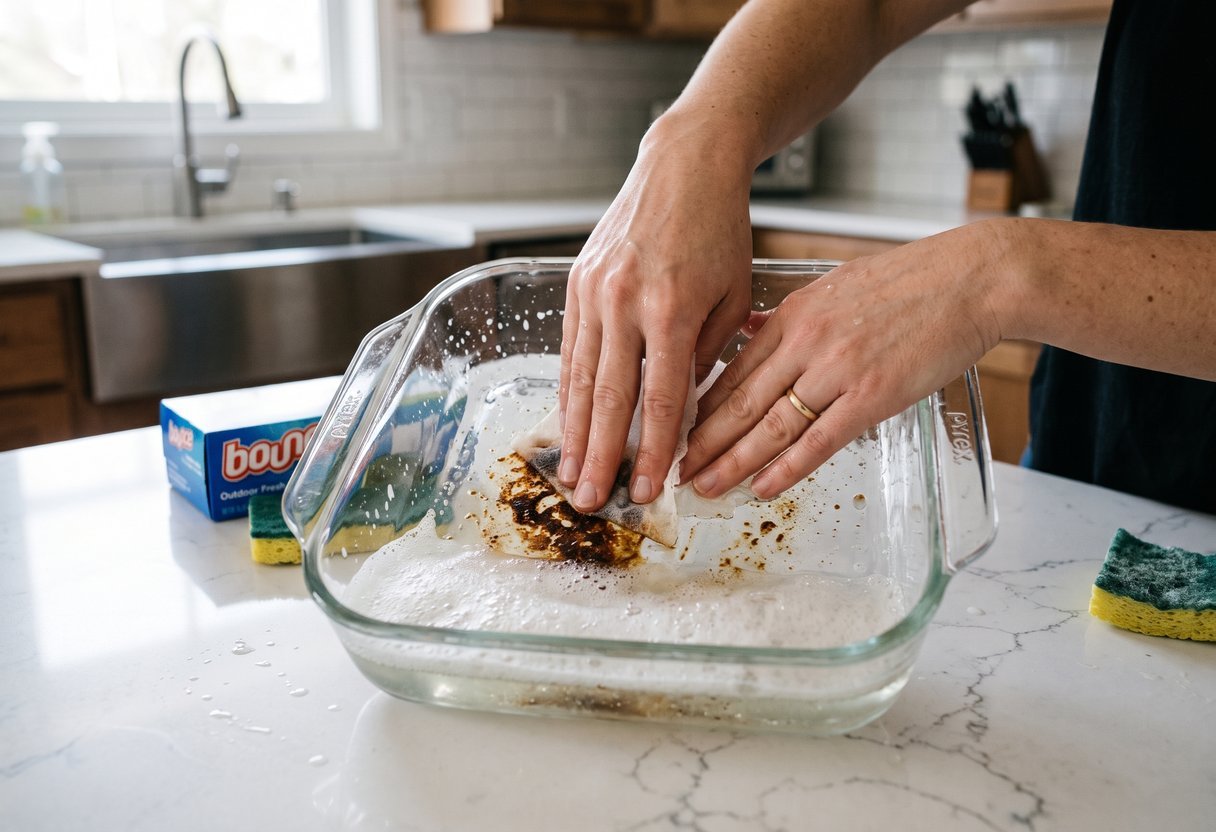
The glass casserole dish comes out of the dishwasher with dark patches still stuck in the corners. Another cycle may leave them untouched because the residue has baked onto the glass rather than simply dried there. Scrubbing harder takes time and can still miss the edges. A simple step before the next wash can help loosen the buildup.
A dryer sheet soak can loosen baked-on residue
Place 1 dryer sheet in a cooled glass baking dish, cover it with warm water, and let it soak for 15 minutes before wiping the residue. The water softens dried food, while the sheet’s fabric-conditioning coating may help loosen greasy buildup so the dish needs less scrubbing.
- The hole in your potato peeler has a job, and it isn’t for hanging it on a hook
- The vanilla in most American kitchens isn’t vanilla, and the bottle admits it in one word
Glass bakeware can develop dark, stubborn patches where cooking oil, sauces, or sugary foods have baked onto the surface. Repeated heating can leave layers that a quick wash with dish soap does not lift. A dryer sheet soak is worth trying on those patches, but it is not a substitute for washing the dish afterward.
Warm water and a saturated sheet do most of the work
Lay a single dryer sheet flat on the bottom of the cooled dish. Add enough warm water to fully submerge it, then press the sheet under the water until it is saturated. Warm water helps soften the buildup and release the sheet’s coating into the soak.
After 15 minutes, use the wet sheet to gently rub the stained areas, then wipe with a sponge. If the residue is still firmly attached, let the dish soak for a few hours and try again. Some heavily soiled dishes may be left overnight, but the sheet should not be expected to remove thick, charred layers without further cleaning.
Discard the sheet when finished. Wash the bakeware with dish soap and water, paying attention to corners and handles, then rinse it thoroughly to remove any remaining fabric conditioner. A dryer sheet is a cleaning aid, not a food-safe finishing wash.
Let the glass cool before soaking or rinsing
Do not pour water into a glass dish straight from the oven. Sudden temperature changes can cause thermal stress in glass, increasing the risk of breakage. Pyrex advises against placing hot glass on a cold or wet surface.
Set the dish on a dry, heat-safe surface and allow it to cool before starting the soak. After using warm or hot water, avoid an abrupt cold-water rinse; let the dish and water cool first. Keep used dryer sheets and soaking dishes away from children and pets.
Baking soda or vinegar can help with remaining stains
If a dryer sheet leaves dark residue behind, make a spreadable paste with baking soda and enough water to moisten it. Apply the paste to the remaining buildup, let it sit for 10 to 20 minutes, then scrub gently with a non-abrasive sponge and wash the dish. Stubborn layers may need another application rather than harder scraping.
A separate option is to cover the stained area with white vinegar for 10 to 20 minutes before gentle scrubbing and washing. Do not mix vinegar with bleach or ammonia. If the glass is chipped or cracked, stop using the dish rather than trying another cleaning method; for intact bakeware, repeat the gentle soak before reaching for an abrasive tool.


Leave a Reply