

You open the dishwasher after a fresh cycle, but a sour smell lingers and the plates still feel gritty. Running another load might not help, because an easy-to-miss problem could be hiding inside.
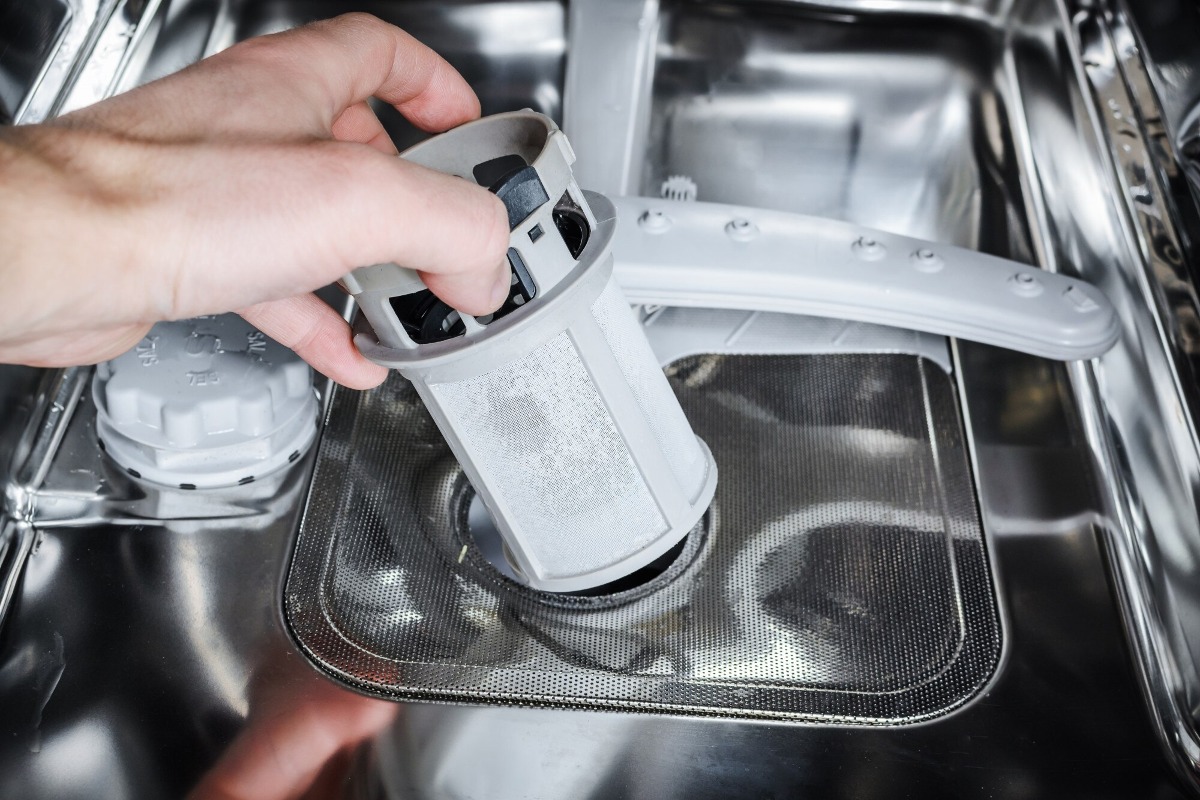
A few food scraps are still sitting on the dishwasher floor when the bottom rack slides out after a cycle. Wiping them away tidies the visible surface, but the next load may have the same problem. Adding more detergent will not help if the wash cycle keeps leaving something behind. One simple check can show where to look next.
The filter traps food that can cause dishwasher odors
A dishwasher filter catches food debris near the bottom of the tub so it does not keep circulating through the wash water. When trapped food builds up in a manual-clean filter, it can leave an unpleasant smell, gritty residue on dishes, and less effective cleaning. Most modern dishwashers have this type of filter beneath the bottom rack, near the center or back of the tub.
- Not vinegar and not a magic eraser, the way to get the brown ring out of a coffee thermos for good
- Say goodbye to the kitchen sponge, what cleaning pros use instead and why it never smells
Older self-cleaning designs use a built-in grinder to break up food instead of relying on a removable fine-mesh filter. That distinction matters: a grinder-equipped dishwasher may not have a filter that can be removed and rinsed by hand. Check the owner’s manual before trying to lift or twist any part.
A clogged filter needs gentle cleaning
A manual filter works by holding debris in its mesh. As that mesh fills, water and food particles cannot move through the filtration system as intended, which can leave dishes dirty and allow odors to persist. In some cases, a severe clog can also damage mechanical parts, so it is worth addressing poor cleaning or gritty dishes promptly.
Cleaning the filter is usually simpler than cleaning the entire dishwasher, but the parts vary by model. Some systems have an interlocking assembly with a center cylinder that unscrews. Forcing a part that does not move as expected can damage the mesh or seals; use the manual’s removal instructions instead.
Remove and wash the filter in order
Wait until the dishwasher has stopped running, then remove the bottom rack to expose the filter. Keep small children and pets away from the open dishwasher and loose parts while cleaning.
- Find the filter beneath the lower spray arm, usually near the center or back corner. Follow the model’s instructions to unlock or unscrew it and lift it out.
- Rinse the filter under warm running water to clear loose food. If grime remains, soak the removable parts in hot water with a few drops of dishwashing detergent for 15 to 20 minutes.
- Gently loosen stuck-on particles with a soft-bristled brush. Rinse away the detergent and debris, then let excess water drain for a few minutes.
- Reinstall each part in its proper position and lock it securely before replacing the bottom rack. The filter-removal instructions for the specific model take priority over general steps.
Cleaning frequency depends on use and water
A monthly filter cleaning is a useful starting point, but it is not a fixed rule. Monthly filter cleaning is recommended depending on how often the dishwasher runs; some manufacturers call for more frequent cleaning. Homes with very hard water may need to check the filter weekly, particularly if buildup or poor cleaning appears sooner.
If the smell remains after the filter is clean, inspect the door seals, spray arms, and drain area for trapped grime rather than repeatedly washing the filter. A dishwasher with a self-cleaning grinder that makes unusual grinding noises needs attention according to its manual, not an attempt to remove a filter it may not have. The next time dishes come out gritty or the tub smells stale, pull out the bottom rack and check which filter system the dishwasher uses.


Leave a Reply