

You reach for the sponge after dinner, but its sour smell makes the clean dishes feel questionable. The problem may have less to do with your dishwashing habits than with something you rarely think to replace.
By lunchtime, the sponge used to wipe up breakfast is still sitting beside the faucet. Another rinse removes visible crumbs, but a clean-looking sponge is not necessarily a clean one. That is why washing it off after each use may not be enough. A simple change at the sink could make the next cleanup easier to trust.
A dish brush can replace a kitchen sponge for washing dishes
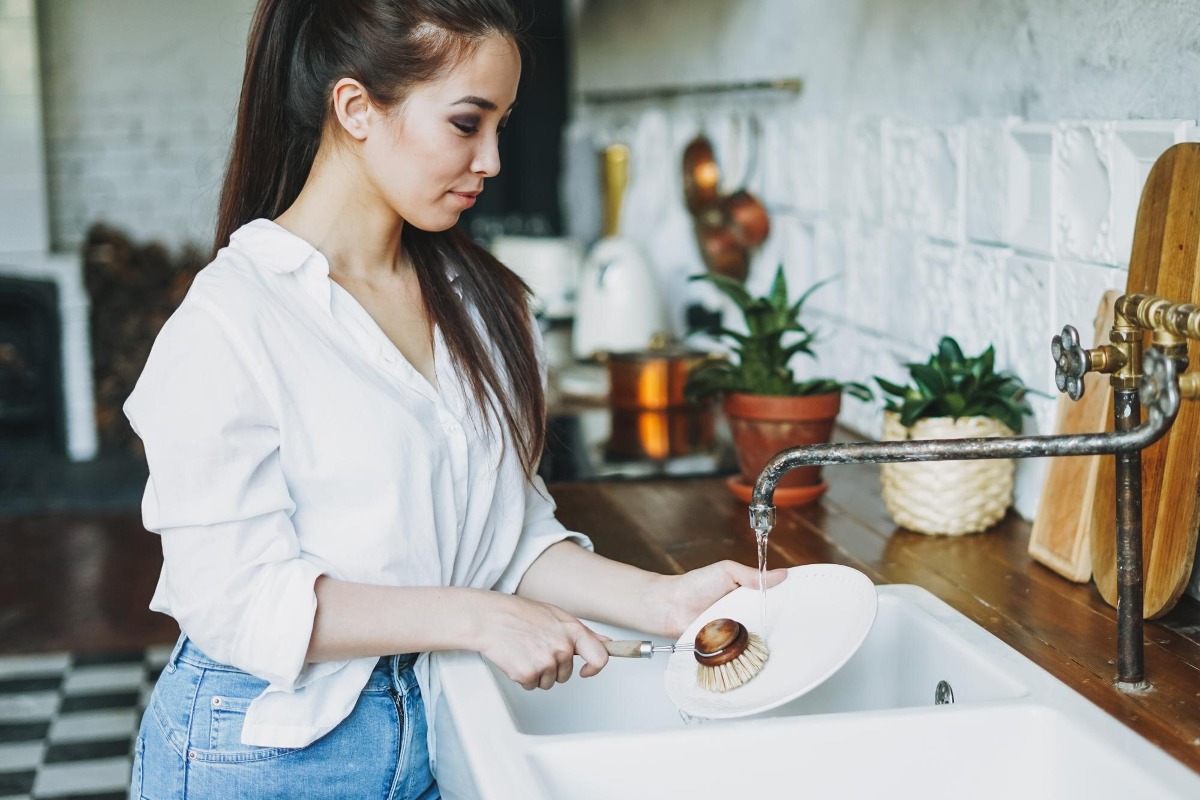
A plastic or silicone dish brush is a practical replacement for a kitchen sponge when scrubbing plates, pans and utensils. Its bristles reach stuck-on food, and the brush dries more readily between uses. That matters because bacteria persist more easily in the moisture a sponge holds.
- A ball of aluminum foil in the dryer, what it does and why people have stopped buying dryer sheets
- You’ve Been Opening Heinz Ketchup Bottles the Same Way for Years, but There’s Another Way to Use the Cap
In a 2022 study of tools used in homes, brushes had lower overall bacterial levels than sponges, and Salmonella died off faster on brushes. Drying was a key difference: brushes dry between uses, while sponges tend to stay damp. A brush still needs cleaning, and it cannot make a contaminated dish safe without thorough washing.
Damp sponges give bacteria places to grow
A sponge’s pores trap food residue and water, even after a quick rinse. In a 2011 NSF International study involving 22 families, the sponge or dish rag was the germiest of 30 household items tested in most homes. Coliform bacteria, which can indicate fecal contamination, appeared on 77% of the sponges and rags tested.
Research led by Markus Egert in 2017 also found dense bacterial communities in used kitchen sponges, including Acinetobacter, Moraxella and Chryseobacterium species. Clemson University’s Home & Garden Information Center notes that a sponge can harbor more than 7.9 million bacteria. These findings do not mean every sponge will cause illness, but they explain why a damp, food-filled sponge is a poor tool to keep indefinitely.
Swedish dishcloths serve a different purpose
For wiping counters and soaking up small spills, a Swedish dishcloth offers an absorbent alternative. These cloths are typically made from cellulose and cotton, and they dry faster than a thick sponge when spread out after use. Their materials are biodegradable, although disposal instructions may depend on the particular cloth.
Swedish dishcloths have not been directly compared with sponges in the same kind of published bacteria study that supports dish brushes. Claims that 1 cloth replaces 15 to 17 rolls of paper towels come from sellers, not an independent laboratory test. A dishcloth can still collect food residue and needs washing; it is not a substitute for scrubbing stuck-on food.
Cleaning and drying matter with every tool
After washing dishes, remove food from a brush, wash it with soap and water, rinse it, and leave it where air can circulate around the bristles. Use a dishwasher only if the brush’s care instructions allow it. Wash a Swedish dishcloth according to its label when soiled, then spread it out to dry rather than leaving it bunched beside the sink.
For households keeping a sponge, NSF guidance calls for microwaving a wet, microwave-safe sponge for 2 minutes daily and replacing it every 1 to 2 weeks, sooner if it smells or looks worn. Let it cool before handling, and never microwave a sponge with metal or one not labeled microwave-safe; replacement is the safer choice when its materials are uncertain. Do not mix bleach with vinegar or ammonia when cleaning the sink area. Keep a clean, dry brush by the sink for dishes, and retire any tool that remains dirty or develops an odor.





Leave a Reply