

After dinner, your wooden cutting board looks clean until dark marks catch your eye under the kitchen light. Before you toss it, consider why your usual cleaning routine leaves those stains behind.
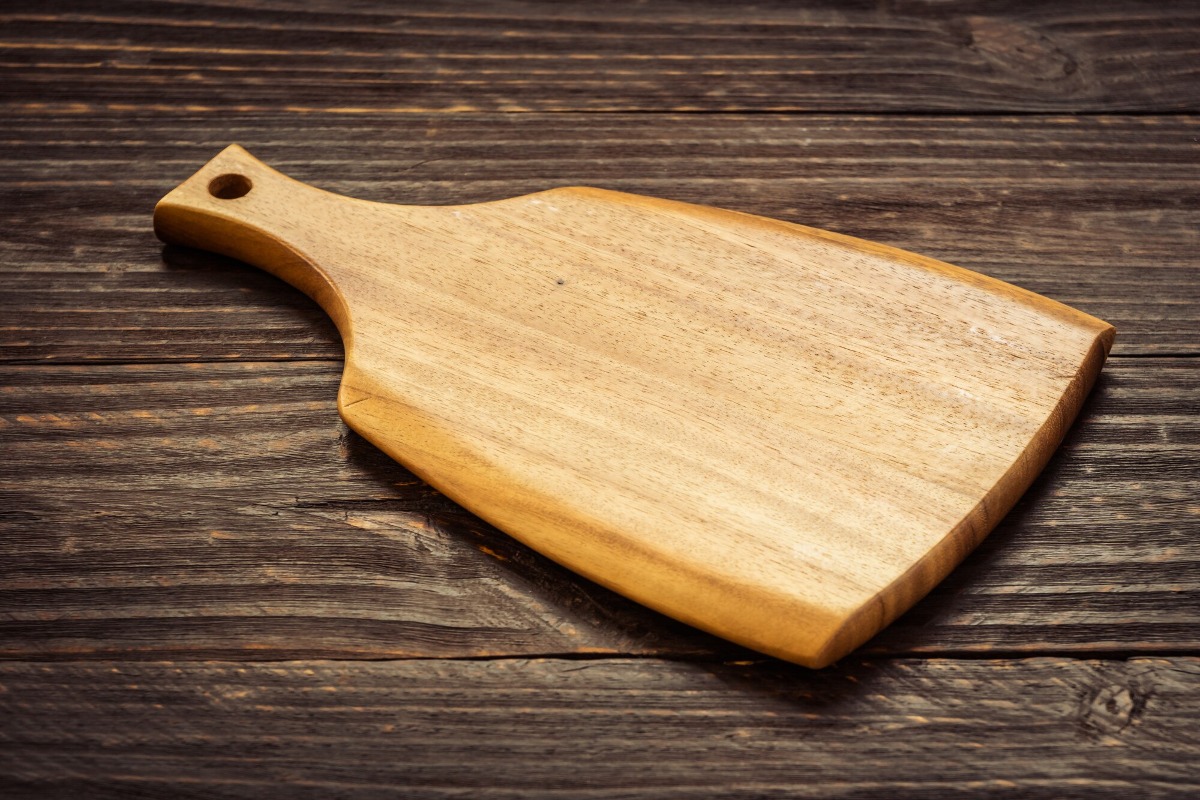
A soapy sponge glides over a wooden cutting board at the sink, but a dark patch remains when the suds rinse away. Soap removes food residue, yet it may not lift discoloration from the wood, and bleach is a poor choice for stain removal on a porous board. A gentler approach using 2 common pantry items can address the stain, though stain removal is not the same as sanitizing.
Coarse salt and lemon can lift surface stains
Coarse salt and a halved lemon are the 2 pantry staples to try first on dark stains on a wooden cutting board. Salt gently scrubs away surface residue, while lemon juice helps loosen some discoloration. Together, they are most useful for stains near the surface, not marks that have soaked deep into the wood.
- Before you buy a new shower head, hang a sandwich bag on the old one overnight
- The rust spots on your forks come off with a potato, and the reason is what’s inside it
Sprinkle enough coarse salt to cover the stained area. Place the juicy side of half a lemon on the salt and scrub in circular motions, pressing firmly without digging into the wood. Let the salt and juice sit for about 5 minutes, then rinse with warm water and dry the board immediately.
Wood is porous, so moisture and pigments from foods such as berries or beets can sink below the surface. A dark mark that remains after scrubbing may be too deep for salt and lemon to reach. Avoid repeated hard scrubbing if the surface starts to feel rough.
Baking soda and lemon can address stains and odors
Baking soda offers another gentle abrasive when a board has both discoloration and lingering odors. Sprinkle a thin layer over the stained area, squeeze lemon juice onto it to form a paste, and scrub with a lemon half. Let the paste sit for 5 to 10 minutes, then rinse thoroughly with warm water and dry the board.
The bubbling comes from a reaction between baking soda and lemon juice, but it should not be mistaken for disinfection. This method may freshen the board and help with surface residue; it cannot reliably remove an old stain absorbed into the wood. Wash the board with hot, soapy water as part of its regular cleaning routine, especially after food preparation.
Hydrogen peroxide is an option for deeper discoloration
For a stain that remains after washing, 3% hydrogen peroxide provides a different approach. It is an oxidizer, so it can break down some staining compounds rather than simply scrubbing them away. Cover the top of the board with the peroxide, spread it evenly using a clean sponge, and leave it for 5 to 10 minutes before rinsing thoroughly with warm water and drying immediately.
Use peroxide in moderation, and keep the bottle and wet board away from children and pets during treatment. A brief stain treatment does not guarantee that deeply embedded marks will disappear or establish that every part of the board has been sanitized. If the surface is cracked or cannot be cleaned thoroughly, replace the board.
Stain removal and sanitizing require different decisions
Bleach is not the first choice for removing dark stains: porous wood can absorb the solution, and repeated use may roughen the surface. That does not mean bleach is never appropriate for food safety. The USDA says wooden boards can be sanitized with 1 tablespoon of unscented liquid chlorine bleach per gallon of water; flood the surface, let it stand for several minutes, then rinse and dry.
Never mix bleach with lemon juice, vinegar, ammonia, or other cleaners. For everyday care, wash the board with hot, soapy water after use, rinse it, and dry it promptly. Treat a new stain soon after cleaning, before more moisture and pigment settle into the wood.


Leave a Reply