

After dinner, the pans beneath your electric stove burners still have black rings that won’t budge with a sponge. It’s tempting to scrub harder, but those stubborn marks call for a different approach.
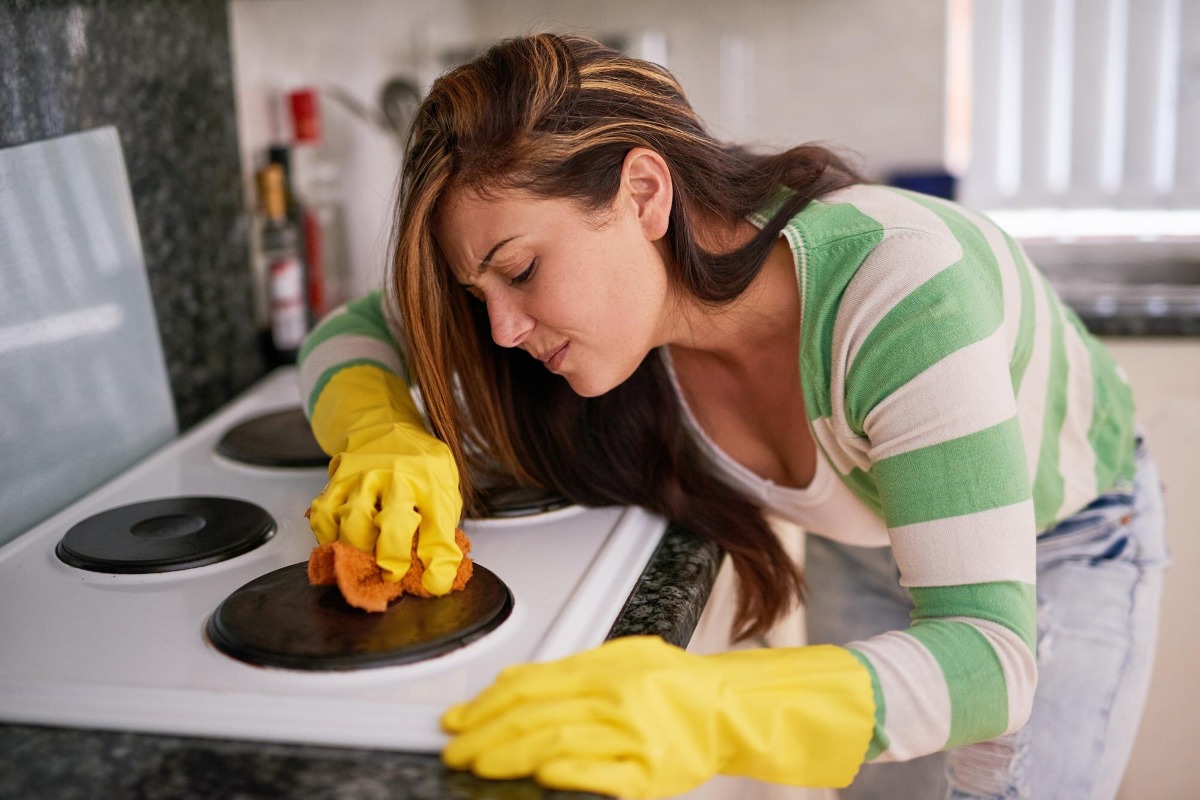
While wiping up a boil-over, a dark crust along the electric stove’s drip pan catches the dishcloth. Hot water and dish soap may remove fresh spills, but they often leave baked-on grease behind. Scrubbing harder with steel wool can scratch the pan, and oven cleaner is not suitable for aluminum pans. The stubborn ring calls for a gentler approach, with a few safety precautions before cleaning begins.
Ammonia fumes can loosen burnt-on grease
For removable electric coil-stove drip pans, sealing each pan in a plastic bag with about 1/4 cup of household ammonia overnight can loosen the black, baked-on grease rings. The trapped fumes soften the residue so it can be rinsed or wiped away with less scrubbing. This method is for drip pans beneath electric coils, not glass or ceramic smooth-top stoves.
- Your wooden spoons aren’t supposed to go in the dishwasher, and the crack down the handle is the proof
- Not vinegar and not bleach, the way to get the sticky film off silicone spatulas and baking mats
Drip pans catch grease, splashes and food that fall around the burner. Repeated heating can harden oily residue and trap charred food particles, leaving dark rings that ordinary washing may not lift. Scrubbing harder is not necessarily better, especially on thin metal or a finished surface.
An overnight soak gives the fumes time to work
Turn off the stove and let the burners and pans cool completely before removing the pans. Put each drip pan in its own sturdy plastic bag that can be sealed, then add about 1/4 cup of household ammonia to each bag. Seal the bags tightly and leave them undisturbed overnight, for at least 12 hours, in a secure, well-ventilated place away from children and pets.
Open each bag carefully, keeping it away from the face to avoid breathing the fumes. Wearing gloves, remove the pan, rinse it thoroughly under running water and wipe loosened residue with a soft sponge if needed. Dry the pan with a soft cloth before putting it back on the stove.
Ventilation and cleaner choice matter
Household ammonia can irritate the eyes, skin and airways, so avoid splashes and do not open a bag in a confined space. Never mix ammonia with bleach or a bleach-based cleaner: the combination produces hazardous chloramine gases. Do not use the ammonia method on a pan that still has another cleaner on it; rinse off the other product first.
Avoid steel wool and abrasive cleaners on chrome drip pans and trim rings. GE Appliances warns that they scratch those surfaces, and scratches can give grease more places to cling. Do not use lye-based oven cleaner on aluminum drip pans; it attacks aluminum and can release flammable hydrogen gas. If the pan material or finish is uncertain, check the appliance’s care instructions before choosing a cleaner.
Some dark marks will not wash away
If grease remains after the first soak, wipe away what has loosened and repeat the bag treatment for another overnight period. A dark area that does not budge may be discoloration or surface damage rather than removable grease. More forceful scrubbing is unlikely to restore the finish and may make it worse.
Some aluminum drip pans can go in the dishwasher, but that option depends on the manufacturer’s instructions and may discolor the metal. If a pan is badly damaged or remains stained after cleaning, look for a replacement compatible with the stove model. For routine care, cleaning cooled pans before spills bake on again is easier than removing another hardened ring.



Leave a Reply