

You scrub the oven door after dinner, but brown streaks still cloud the glass from somewhere you can’t reach. Why do they linger when the rest of the door looks clean?
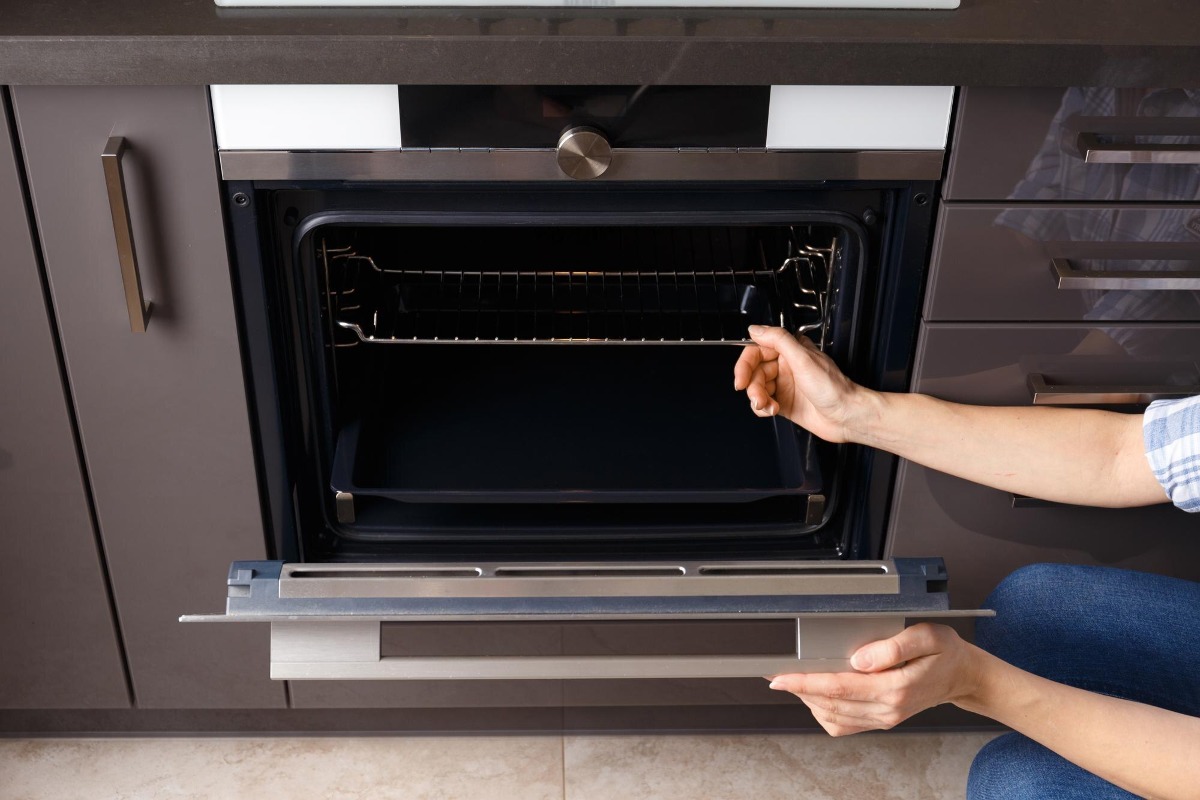
As a casserole bakes, brown lines across the oven door make it hard to see whether the top is done. Rubbing baking soda paste or oven cleaner over the glass may leave those marks unchanged because they do not behave like ordinary surface grime. A gentler, more targeted approach can clear the view without taking the door apart.
The bottom vent provides a way to reach streaks between the glass
A thin tool wrapped in a cloth can reach between oven door glass panes through a bottom vent, so the door does not have to be taken apart. The vent lets air move through the insulating gap as the oven heats, helping prevent pressure from building up between the panes. Most oven doors have 2 or 3 panes, and the gap also helps keep the outer door cooler.
- The pumpkin pie that doesn’t crack on top comes down to one oven step most recipes skip
- Tie a bag around your kitchen faucet overnight, and the white crust is gone by breakfast
Grease vapor and steam from cooking can travel through the small openings and leave brown streaks on surfaces that ordinary wiping cannot reach. Before cleaning, turn the oven off and let the door cool completely. Keep children and pets away from the work area while the drawer is out or a tool is in the door.
A damp cloth on a thin tool can lift light residue
With the oven door closed, remove the bottom drawer to look for a slot leading between the glass panes. On a model without a drawer, look for narrow openings along the bottom of the door. If the openings are not accessible or their purpose is unclear, check the oven manual rather than forcing a tool into the door.
Straighten a wire coat hanger, or use a yardstick that fits the opening. Wrap 1 end with a microfiber cloth or paper towel and secure it tightly with a rubber band so nothing slips off inside. Lightly dampen the cloth with warm water and a few drops of dish soap; a cloth dampened with vinegar and water is another option. It should be moist, not dripping.
Slide the wrapped end through the slot and wipe the visible streaks with smooth, gentle motions. Withdraw the tool, replace the damp covering with a dry cloth or paper towel, and pass it through again to remove remaining moisture and buff the glass. A dryer vent brush wrapped in a paper towel may reach some designs more easily, but the covering must stay secure to avoid scuffing the glass.
Keep liquid and harsh cleaners out of the door
Never spray cleaner directly into the vent or between the panes. Pooled liquid can fog the glass or corrode components inside the door, while caustic oven-cleaner residue near the seal can damage it. Avoid ammonia-based cleaners in the gap because their fumes are difficult to clear and may affect the seals; never mix bleach with vinegar or ammonia.
Baking-soda paste and abrasive scrubs may be used on accessible glass, but they are poor choices between panes because the residue is difficult to reach and rinse away. The oven’s self-cleaning cycle addresses the oven interior, not grime trapped inside the door.
Persistent buildup may require direct access
The vent method is best for light to moderate streaks. Heavy, baked-on residue may remain where a wrapped tool cannot make firm contact. A deeper clean may require removing the door and separating its glass panes, which means handling the gasket and seals carefully during reassembly.
Consult the model’s instructions or seek professional help rather than loosening unfamiliar fasteners. For doors with an accessible vent, wiping between the panes during a deep oven clean every 3 to 6 months can keep light grease film from becoming harder to remove.


Leave a Reply