

Your favorite mug comes out of the dishwasher with the same stubborn brown ring inside. It looks permanent, but a simple fix may be hiding somewhere you would not think to check.
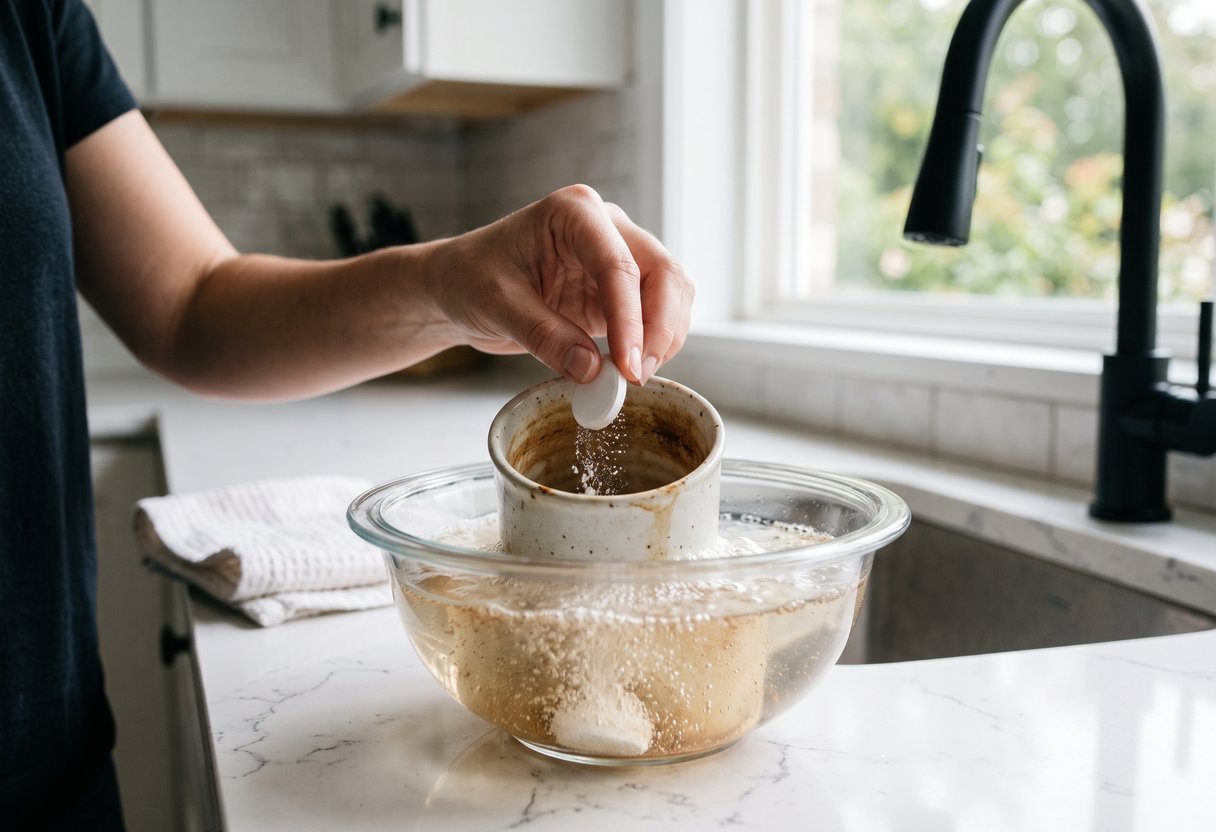
At the sink, a soapy sponge slides over a tea-stained mug, but the inside still looks dingy. Compounds in tea and coffee can cling to tiny imperfections in the surface, so routine washing may leave the discoloration behind. Scrubbing harder is not always necessary. A gentler approach may clear fresh stains in 5 minutes, though older buildup can take longer.
Denture tablets can lift brown stains from mugs
A denture tablet can remove brown tea or coffee stains from a nonporous mug without bleach or baking soda. Dissolved in warm water, it releases oxygen that helps loosen the buildup so it can be rinsed away. It is a useful first choice for a mug that can safely soak, though a quick soak may not clear an older stain.
- Does rinsing canned beans do anything, and the sodium number says yes
- Your oven dial has been off by up to 25 degrees, and a $7 gadget proves it
Tea and coffee contain tannins that cling to mug surfaces. Over time, the discoloration becomes more noticeable, especially where tiny scratches or other surface imperfections give the tannins places to collect.
Oxygen bubbles loosen tannin buildup
Denture tablets contain sodium percarbonate, which releases oxygen when it dissolves in water. The fizzing and gentle oxidation help lift stain particles without the rubbing needed for an abrasive cleaner. The method is suited to nonporous ceramic, porcelain, glass, plastic, and metal mugs that can safely sit in warm water.
Denture cleansers have also been evaluated for removing tea stains from denture acrylic in a laboratory study of staining. Acrylic is not the same as every mug finish, so a tablet should not be assumed safe for decorative paint or other delicate surfaces.
A short soak is the first step
Fill the stained mug with warm, not boiling, water, then drop in 1 denture tablet. Let the tablet dissolve fully and leave the mug to soak for 3 to 5 minutes. Empty it and rinse thoroughly with clean water before using it for a drink.
That short soak is most likely to help with light or recent stains. If brown marks remain, a longer soak of 2 to 3 hours may help on a mug that tolerates soaking; stubborn discoloration may still require more cleaning. Keep the soaking mug and tablet out of reach of children and pets, and do not add bleach or another cleaner to the solution.
Salt offers another option for faint stains
For a faint stain, put 4 teaspoons of salt, 1 cup of crushed ice, and 1 tablespoon of water in the mug. Stir so the salt and ice rub against the stained interior, then empty and rinse the mug. Unlike the tablet, this method relies on abrasion, so avoid it on a finish that scratches easily.
Another option is to mix table salt with enough distilled white vinegar to make a paste. Rub it onto the stain with a damp cloth, let it sit for 5 minutes, then wash and rinse the mug. Never combine vinegar with bleach, and skip the salt paste if the mug’s finish is delicate.
For an unpainted stainless steel travel mug, add 1 tablespoon of coarse salt, a handful of ice cubes, and a splash of cold water. Cover the top securely, shake for 1 to 2 minutes, then rinse. If a mug is unglazed, porous, or decorated with a finish that may be damaged by soaking or rubbing, follow its care instructions instead of repeatedly scrubbing a stain that may be ingrained.


Leave a Reply