

After dinner, plates pile up beside the sink, and the dishwasher is ready for another load. As your water bill climbs, which cleanup routine is quietly costing you more?
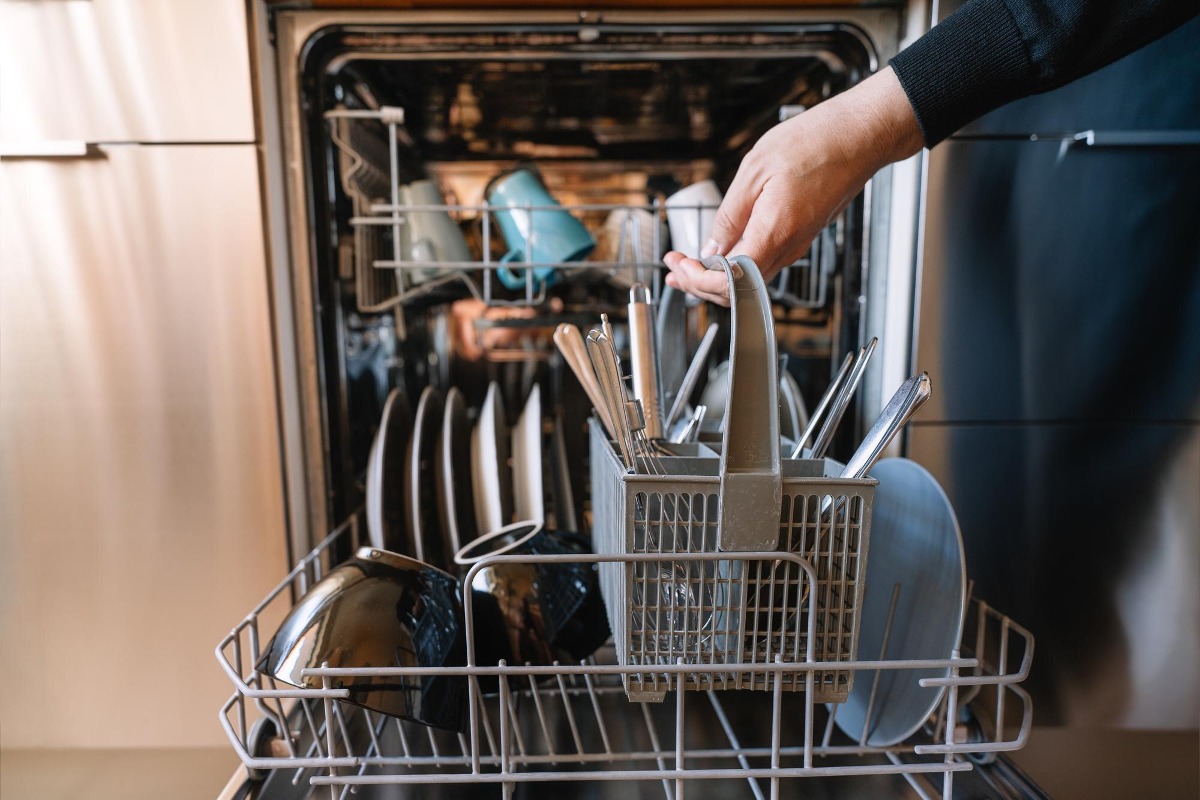
The faucet runs while someone scrubs a sticky oatmeal bowl, then runs again to rinse the spoons and mugs. Washing by hand can feel more restrained than starting a machine, but time at the sink does not show how much water went down the drain. Looking at the same load of dishes in both routines makes the comparison more useful, though the result still depends on washing habits and the dishwasher’s age.
A full dishwasher usually uses less water than hand washing
For a comparable full load of dishes, a modern dishwasher generally uses less water than washing by hand. The difference is greatest when the faucet runs throughout hand washing: a machine limits the water added during its cycle, while an open tap keeps supplying fresh water.
- Putting a bowl of water in the microwave with the leftovers, what happens to the rice and the chicken
- Neither oven cleaner nor baking soda, the way to get the burnt sugar off the bottom of the oven
That does not mean every dishwasher load saves water. Machine age, the number of dishes in each load, and whether the faucet stays on all affect the comparison. A careful hand washer who uses basins instead of a running tap can use much less water than someone washing under an open faucet.
Hand-washing technique changes the total
University of Bonn research found that hand washing a full comparable load used 26.4 gallons (100 liters) of water on average. Results ranged from 8.7 gallons (33 liters) to 116.2 gallons (440 liters), depending on technique. The dishwasher used about 3.4 gallons (13 liters) for the same load.
Leaving the tap on is a major reason those totals vary. The EPA notes that a faucet running for 5 minutes while dishes are washed can waste 10 gallons of water (38 liters). Turning it off while scrubbing prevents that water from going straight down the drain.
Dishwasher age and load size matter
A new standard-size ENERGY STAR certified dishwasher uses no more than 3.2 gallons (about 12 liters) per cycle. Dishwashers made before 1994 can use 10 to 15 gallons (about 38 to 57 liters) per load, so an older machine may offer a smaller advantage over careful hand washing.
A cycle uses water whether the racks are full or partly empty. Waiting until the dishwasher is full spreads that water use across more dishes; the EPA estimates that eliminating 1 load a week this way can save an average family nearly 320 gallons (about 1,210 liters) a year. Do not pack dishes so tightly that water cannot reach their surfaces.
Water savings do not tell the whole energy story
Heating water also takes energy. In the University of Bonn research, hand washing used about 2.5 kWh, mostly for hot water, compared with 1 to 2 kWh for the dishwasher. Those figures describe the methods studied, not every household or machine.
Water use and greenhouse gas emissions are different measures. A University of Michigan-led study found that a running-tap method used more water and energy than any other method it tested. Under 1 best-practice hand-washing scenario, however, hand washing produced 18% lower greenhouse gas emissions than machine washing using recommended practices.
Small changes reduce water use either way
For a dishwasher, scrape food from plates instead of rinsing them under a running faucet, then run a full load. If an older machine needs replacing, an ENERGY STAR certified model uses substantially less water than machines made before 1994.
For hand washing, fill 1 basin with soapy water and another with clean water for rinsing, rather than leaving the tap on. Keep dishwasher detergent away from children and pets, and never mix bleach with vinegar or ammonia when cleaning the sink. The practical choice is a full, efficient dishwasher load or hand washing with the faucet off.


Leave a Reply