

Last night’s spaghetti leftovers are gone, but the plastic container still looks orange after a thorough wash. Before you toss it or hide it in the back of a cabinet, there’s something worth trying.
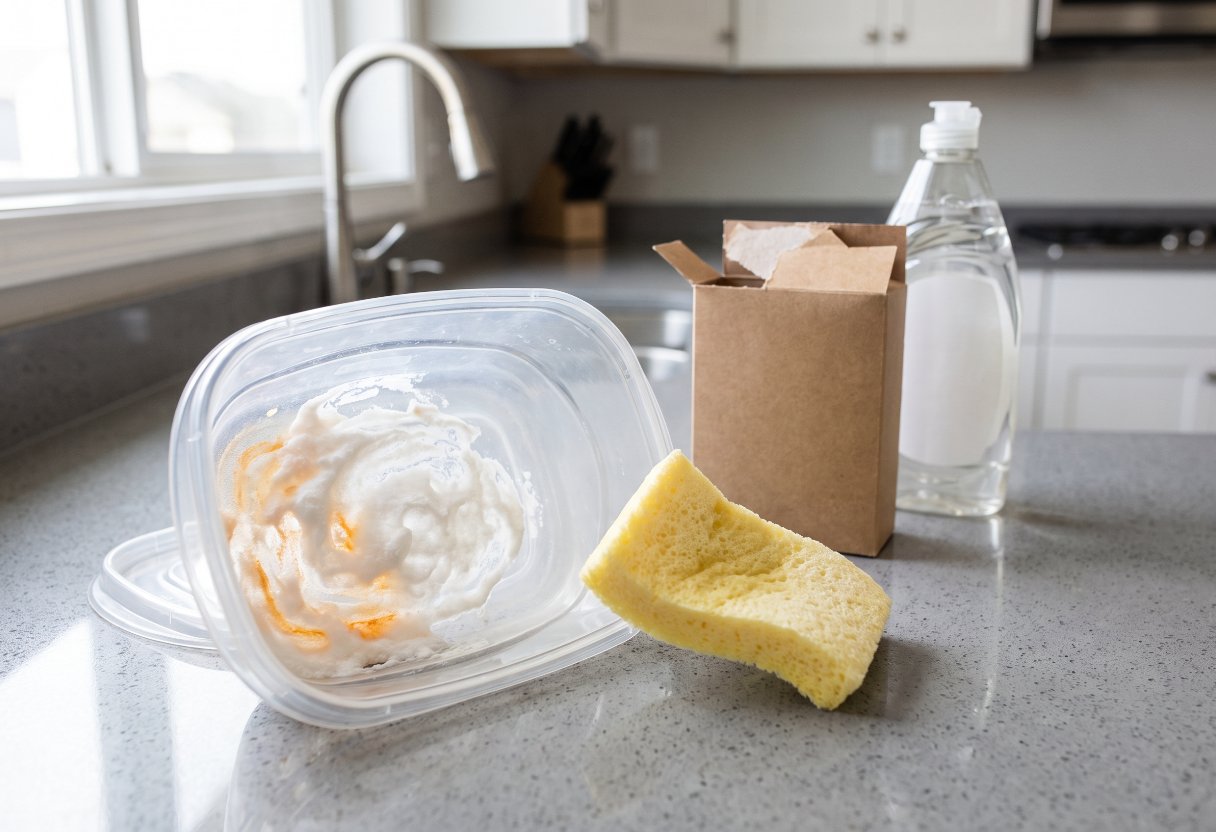
While packing lunch, the only container with a matching lid has an orange ring inside. Another pass with the sponge can remove leftover food, but the tomato pigment clings to plastic and may leave the color behind. The stain is cosmetic, and a simple extra cleaning step may help lift it.
Baking soda and dish soap can lift tomato stains
Baking soda and dish soap, mixed with a little water, make a paste for lifting orange tomato stains from plastic food containers. Dish soap helps loosen oily residue, while baking soda gently scrubs pigment from the surface. Try the paste when ordinary washing leaves color behind.
- Plumbers don’t pour bleach on the brown ring in the toilet bowl, and the $3 stone they use instead
- Goodbye to the dish drying rack, more and more kitchens are replacing it with something that keeps the counter clear
Mix 2 tablespoons of baking soda, 1 teaspoon of water, and 1/4 teaspoon of dish soap into a thick paste. Spread it over the stain and scrub gently with a sponge or soft brush. Leave the paste in place for at least 15 minutes, then scrub the area again. Rinse thoroughly with warm water until no paste remains.
A soft sponge matters because a rough scrubber can scratch the plastic without necessarily removing the color. Wash the container after the treatment and check it once dry. A stain that remains after cleaning may not come out completely, especially if it has been there for some time.
Tomato pigment clings to plastic
Tomatoes contain the pigment lycopene, which gives tomato sauce its red color. Lycopene repels water and clings to plastic surfaces, so a water-only rinse may leave an orange tint even after the sauce is gone. Dish soap helps remove the oily material around the pigment, giving the baking soda paste a better chance to reach it.
Heat can make the problem harder to address. A dishwasher’s high-heat cycle may set a tomato stain more deeply, so hand-wash a stained container before putting it through the dishwasher. Cleaning the container soon after it is emptied also gives pigment less time to remain on the surface.
Oil and sunlight offer additional options
For a fresh stain, rub a small amount of vegetable oil over the orange area before washing with dish soap. The oil can help loosen the water-repelling pigment, but it must be washed away afterward so the container does not stay greasy. To reduce future staining, a thin coating of cooking spray or vegetable oil inside the container can limit direct contact with tomato sauce, though it will not guarantee a stain-free container.
After washing, placing a still-wet container in direct sunlight may help fade color that remains. Sunlight is a follow-up, not a substitute for washing away food residue. If neither method changes the stain, more scrubbing may do little besides wear the plastic.
Color alone does not decide whether a container stays in use
An orange tint left on an otherwise clean container is cosmetic, not by itself a food safety concern. Replace a container that is warped or so scratched that it cannot be cleaned thoroughly. Keep cleaning products away from children and pets, and do not add bleach to the paste or mix bleach with vinegar or ammonia.
Before recycling an unwanted container, remove food and wash it well. Heavily food-soiled plastic may be rejected during recycling, while an orange tint is different from leftover sauce. Check local recycling rules for that type of container, then decide whether to keep, replace, or recycle it.




Leave a Reply