

After dinner, clean plates crowd the counter beside the sink, leaving barely enough room to prep tomorrow’s breakfast. The familiar dish rack is starting to look less inevitable, but what’s taking its place?
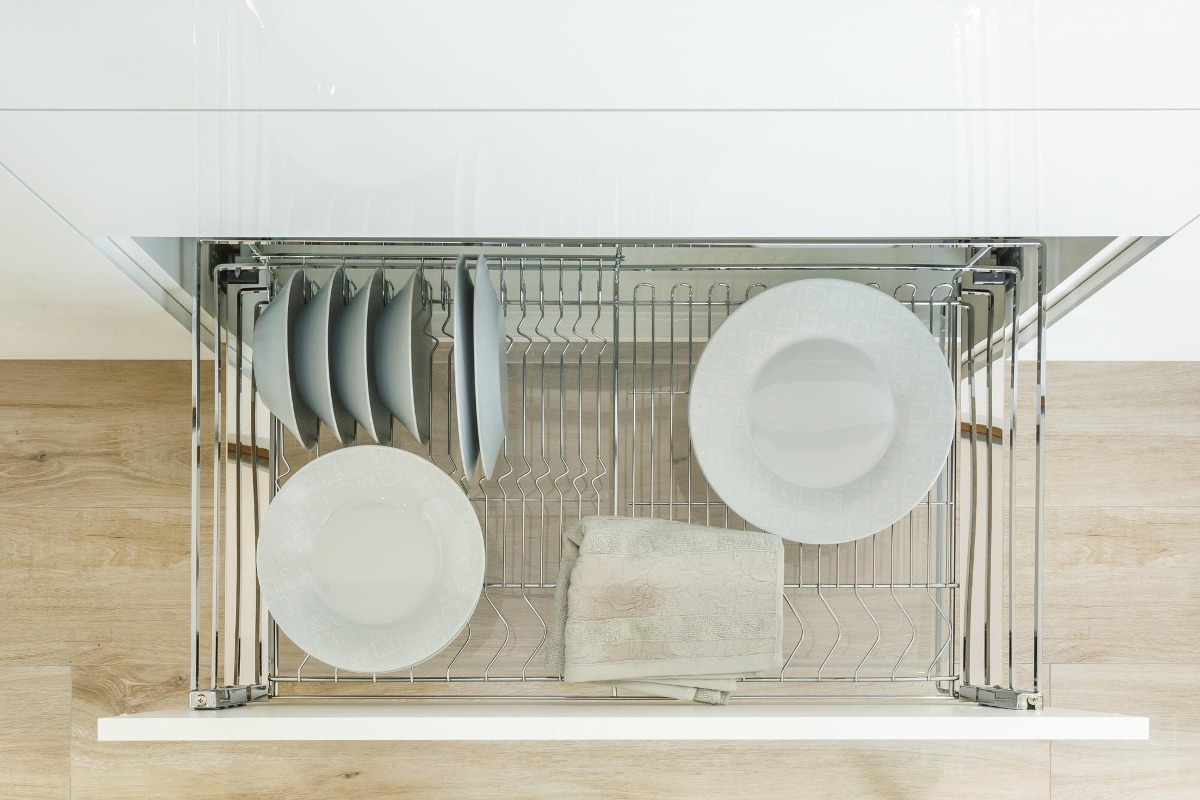
At breakfast, a damp patch sits beneath the dish rack just as the counter is needed for a cutting board. Moving the rack aside frees that spot briefly, but it does not stop water from collecting under the next load of dishes. A different arrangement may ease both problems, especially in a small kitchen.
Over-the-sink racks keep drying dishes off the counter
An over-the-sink rack is a dish-drying surface that sits above the basin, keeping washed dishes off the countertop. Water drips back into the sink instead of collecting in a tray beside it, leaving more room for food prep. For kitchens short on counter space, that change can matter more than replacing a rack with a different-looking one.
- Not steel wool and not baking soda, the way to get the black off the bottom of a scorched stainless pot
- Does washing raw chicken do anything, and the USDA number on splashed bacteria is hard to unsee
Traditional countertop racks still work, but a full rack can occupy space throughout the day. Water trapped beneath its tray can also leave mineral marks or keep the counter damp. Moving the drying area over the sink addresses those problems, though it does not mean every kitchen needs to give up its existing rack.
Roll-up racks can be put away after dishes dry
A roll-up rack stretches across the sink while dishes dry, then rolls into a compact shape for storage in a drawer or cabinet. Models such as the Kraus KRM-10 and the Stylish 20-inch rack offer this approach without a permanent countertop setup. Place the rack across the sink before setting washed dishes on it, and roll it up only after the dishes and rack are dry.
Check the rack’s dimensions against the sink before buying. A small or irregularly shaped basin may not give it a stable place to rest, and a rack spanning the basin can get in the way when the sink is needed. Keep dishes balanced, and follow the product’s load limits rather than piling heavy cookware onto it.
Cabinet and wall-mounted drainers use vertical space
The Finnish dish-drying cabinet, or astiankuivauskaappi, has been used in Finnish kitchens since the 1940s. Mounted directly above the sink, its open bottom and wire or dowel shelves let dishes drip into the basin while they dry. It also keeps the drying area out of the main workspace, but fitting one into an existing kitchen typically means replacing or redesigning an upper cabinet.
There are less extensive wall-cabinet options. IKEA’s UTRUSTA drainer is installed inside a wall cabinet during assembly and includes a tray to collect runoff, so it should not be treated as an open-bottom cabinet that drains into the sink. IKEA’s KUNGSFORS drainer also has a drip tray and can be wall-mounted above a sink or adapted for a cabinet. Either installation needs suitable space and secure mounting, which may rule it out for renters.
Smaller drying setups can work without installation
If an overhead rack blocks the sink or mounting is impractical, a silicone drying mat can be put away after use. An in-sink drainer keeps dishes off the counter but takes up basin space; a sink with a built-in drainer board offers another option when a sink replacement is already planned. A double-drawer dishwasher is a larger appliance choice, not a simple substitute for a rack.
Empty and clean any drip tray or mat so standing water does not linger, and let it dry before storing it. If cleaning products are used, never mix bleach with vinegar or ammonia. Choose the drying surface that fits the sink and daily dish load, then keep runoff directed into the basin or a tray that can be emptied.



Leave a Reply