

You lift the lid on your Crock-Pot after a long workday, expecting thick stew, but find a thin, disappointing broth. The recipe seemed right, so what went wrong before you even turned it on?
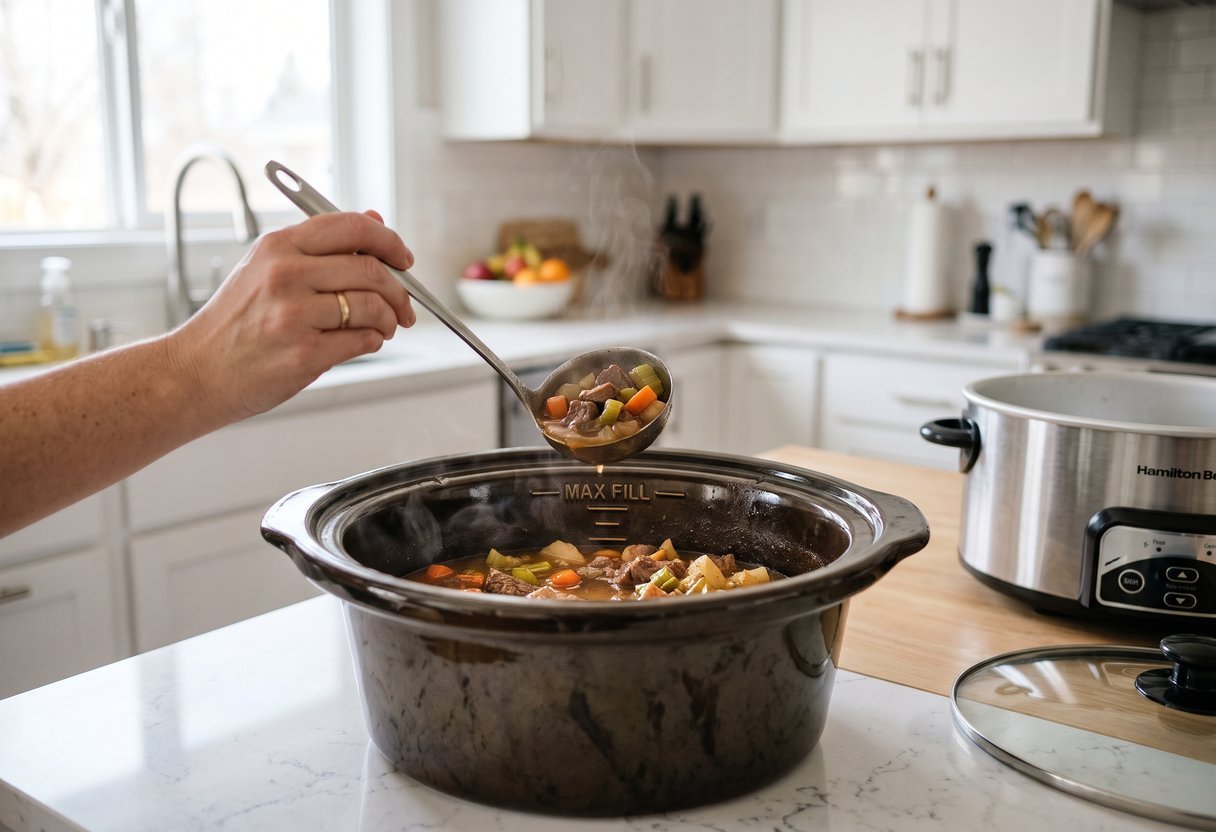
Chopped carrots and potatoes are ready to go into the Crock-Pot, and the recipe calls for one more can of tomatoes. Measuring the broth carefully may seem like enough to prevent a watery dinner, but the amount of liquid is not the only factor. Before the lid goes on, an easy-to-miss detail is worth checking.
The fill line helps keep slow cooking even
On some Crock-Pot models, a line inside the insert marks a fill limit meant to support even cooking and prevent spills. Filling beyond that limit can crowd the pot, so food may not heat as evenly or thoroughly as it should. Crock-Pot’s general advice is to fill a slow cooker between one-half and two-thirds full, although some model manuals allow a higher maximum.
- A lemon half in the dishwasher cutlery basket, why so many people run it that way
- Diners have kept rice in the salt shaker for decades, and the reason still works at home
A slow cooker also holds on to much of the moisture released by food. Steam condenses on the lid and drips back into the dish, so adding more ingredients and liquid does not make a stew cook down the way it might in an uncovered pot. An overfilled dinner can turn out thinner than expected, particularly when the recipe already contains plenty of liquid.
Overfilling can change texture and cooking time
When ingredients are packed above the recommended level, heat has more food to move through, making even cooking less reliable. A crowded pot may take longer than the recipe suggests, and its contents may not develop the intended texture. The fill limit is therefore a cooking guideline, not just a way to keep the counter clean.
Overfilling does not always make food watery. If food pushes against the lid and prevents it from sitting properly, steam can escape and the dish may end up drier instead. A poorly seated lid and liquid near the rim also increase the risk of hot spills, so removing ingredients before cooking is safer than trying to balance the lid on top.
The correct maximum depends on the model
Check the insert for markings, then check the manual for that specific cooker. The Crock-Pot Designer Series manual describes minimum and maximum lines inside its stoneware, but a visible line should not be assumed on every ceramic insert. Some Crock-Pot stoneware manuals allow filling to three-quarters full, rather than the two-thirds maximum in the brand’s general advice.
For an unmarked slow cooker, the half-full to two-thirds range is a practical guide for safe, even heating. Avoid going below half full, too: a small batch in a large cooker can cook differently and may overcook. If a recipe falls outside the model’s recommended range, use a better-sized cooker or make a different-sized batch.
Multi-cooker markings need separate attention
An Express Crock multi-cooker has a metal pot with fraction markings and a MAX line. Those markings are not interchangeable with the guidance for a ceramic slow cooker, especially when using another cooking function. Follow the instructions for the selected function and never load the pot above its marked MAX line.
A watery dinner can be reduced after cooking
If the food has finished cooking but the sauce is too thin, remove the lid and cook on High for another 30 minutes to 1 hour, allowing steam to escape. For faster reduction, transfer the food to a stovetop pot and simmer it uncovered, watching it so the liquid does not reduce too far.
Reducing liquid will not fix food that cooked unevenly or make an overfilled cooker safe to keep using. Before the next batch, check the model’s fill guidance and leave room below its maximum line.

Leave a Reply